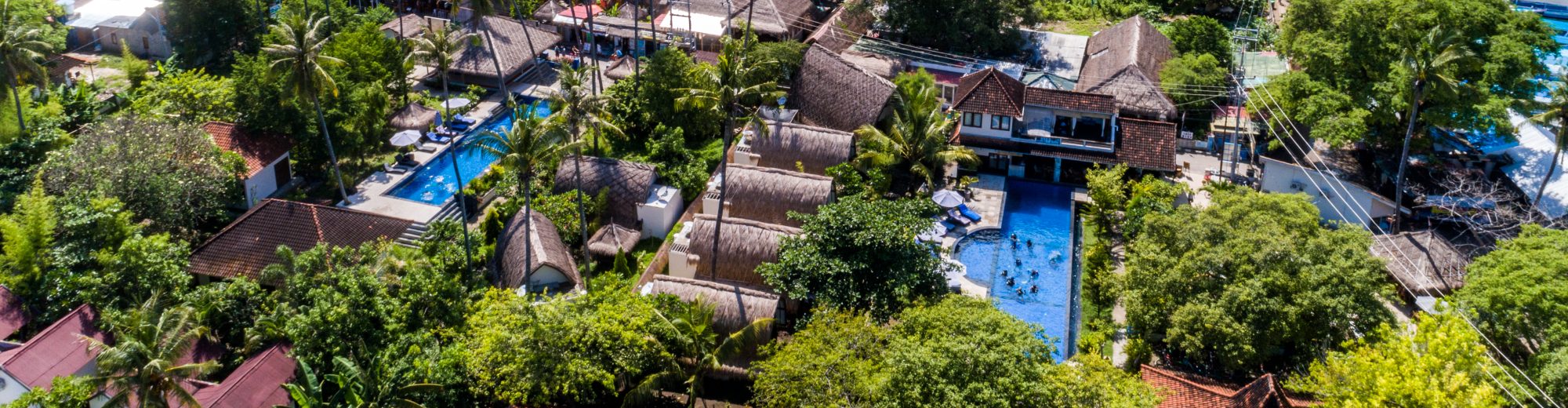
Gili Meno, Gili Air, and Gili Trawangan

Long, long ago—before beach clubs, dive shops, yoga shalas, and sunset swings—the story of the Gili Islands began quietly on Gili Air.
Fishermen from Sulawesi, navigating the seas between Lombok and Bali, discovered something rare and precious on this small coral island: fresh water. In a region where tiny islands often meant salt wells and temporary shelter, fresh water meant life. The fishermen settled. Simple homes appeared. Gardens were planted. Chickens wandered. From this modest beginning, the human story of the Gilis unfolded.
From Gili Air, knowledge of the surrounding islands spread. Over time, people explored and settled Gili Meno and Gili Trawangan, and although the three islands sit only minutes apart by boat, they evolved in strikingly different ways. Today, each Gili attracts a different kind of traveler—each offering a distinct version of island life.
Yet among them all, many seasoned travelers find themselves returning to the same question:
What is it about Gili Air that feels just right?
To understand that, we need to look at all three islands—and how they grew into what they are today.
Gili Trawangan: Energy, Parties, and the Backpacker Boom
Gili Trawangan, often called Gili T, is the largest and most developed of the three islands. It is also the loudest, the busiest, and the most famous.
Its rise began in the late 1980s and 1990s, when backpackers discovered its wide beaches, strong currents for diving, and lack of motorized vehicles. What started as a sleepy stopover quickly turned into a social hub. Guesthouses multiplied, dive schools opened, and nightlife followed.
Today, Gili T is known for:
- Lively beach bars and late-night parties
- A large backpacker and digital nomad crowd
- Fast-paced energy and constant activity
- Some of the best dive infrastructure in Indonesia
For many travelers—especially first-time visitors to Southeast Asia—Gili T is unforgettable. It’s easy to meet people. Something is always happening. The island buzzes from morning until well past midnight.
But that same energy can also feel overwhelming. Noise travels far on a small island. Crowds can dilute the feeling of escape. For travelers seeking stillness, nature, or cultural connection, Gili T can sometimes feel more like a tropical festival than an island retreat.
Gili T doesn’t pretend to be anything else. It knows what it is—and for the right traveler, it’s perfect.
Gili Meno: Silence, Romance, and Untouched Beauty
If Gili T is extroverted, Gili Meno is its complete opposite.
Gili Meno is the smallest and quietest of the three islands. Development came slowly here, partly due to land disputes and conservation efforts, and partly because the island simply resisted change. Even today, much of Gili Meno feels untouched.
Travelers come to Gili Meno for:
- Absolute peace and quiet
- Honeymoon-style resorts and private villas
- Empty beaches and crystal-clear water
- Long, silent days with little distraction
This is the island of slow mornings, barefoot walks, and early nights. There are few bars, limited restaurants, and very little social scene. For couples or solo travelers craving solitude, Gili Meno can feel like a dream.
But silence has its limits.
Some travelers find Gili Meno too quiet. After a few days, the lack of variety can feel isolating. Dining options are limited. Social interaction is minimal. If the weather turns bad or you simply crave movement, there’s little to do beyond swimming and reading.
Gili Meno is beautiful—but it’s a place you visit when you know exactly what you’re looking for.
Gili Air: Where Life, Balance, and Soul Meet
And then there is Gili Air.
The island where it all began.
Gili Air sits physically closest to Lombok, and spiritually somewhere between Gili T’s energy and Gili Meno’s calm. It is the most balanced of the three islands—social without being loud, peaceful without being isolating, developed without losing its soul.
Unlike Gili T, Gili Air never chased excess. Unlike Gili Meno, it never withdrew from life. Instead, it evolved organically, shaped by local families, long-term residents, and travelers who stayed longer than planned.
Gili Air attracts:
- Conscious travelers and slow travelers
- Yogis, freedivers, creatives, and couples
- Families and solo travelers alike
- People who want connection, not chaos
Here, the days have rhythm.
Mornings begin with yoga or a swim. Fishermen still head out at sunrise, just as they did generations ago. Cafés serve good coffee, but no one rushes you. You hear bicycles on sandy paths, not bass from beach clubs.
Afternoons are for snorkeling, working remotely, or doing absolutely nothing. Evenings bring sunset drinks—but the music stays soft enough to hear the ocean.
And nights? They’re calm. Conversations replace noise. Stars replace strobes.
Culture and Community: Gili Air’s Hidden Strength
One of Gili Air’s greatest strengths is something many travelers don’t immediately notice: its community.
Gili Air has the strongest local population of the three islands. Many families trace their roots back generations, and daily island life still revolves around ceremonies, prayer, and tradition. You’ll see locals heading to the mosque, children playing in village lanes, and offerings placed outside homes.
This gives Gili Air a depth that the other islands lack.
Travelers don’t just pass through—they interact. They return to the same cafés, learn names, and become part of the island’s rhythm. Long-term expats integrate rather than dominate, and many businesses are locally owned or community-driven.
It feels less like a tourist product and more like a living place.
Nature, Beaches, and the Best of Both Worlds
All three Gilis share turquoise water and coral reefs—but Gili Air offers variety.
On one side of the island, the beaches are calm, perfect for swimming and paddleboarding. On the other, the reef drops off quickly, attracting turtles and schools of fish. Snorkeling is accessible straight from shore, without needing a boat.
Unlike Gili T, where beaches can feel busy, or Gili Meno, where they can feel empty to the point of loneliness, Gili Air’s beaches feel alive but spacious.
You can always find:
- A quiet stretch to read
- A social spot to meet people
- A sunset view without crowds
Why Gili Air Wins Hearts
So what makes Gili Air so attractive above the other islands?
It’s not louder.
It’s not quieter.
It’s not flashier.
It’s truer.
Gili Air offers what many travelers don’t realize they’re looking for until they arrive: balance. A place where you can rest and engage, disconnect and connect, be alone and feel part of something.
It holds onto its history—the fishermen, the fresh water, the roots—while welcoming the world without losing itself.
Gili T is a memory you talk about.
Gili Meno is a dream you visit.
Gili Air is a place you return to.
And maybe that’s why, long after the parties fade and the honeymoon ends, the story of the Gili Islands still quietly lives where it began—on Gili Air.