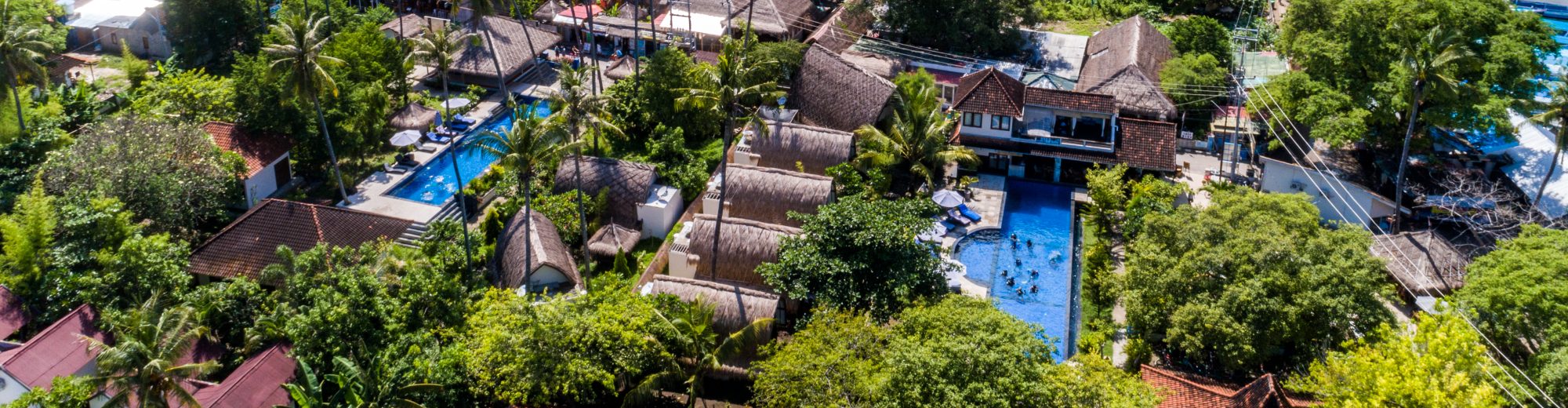
The Hidden Battle Between Tourism, Illegal Buildings, and Conservation Laws in Paradise

For years, the Gili Islands looked unstoppable.
Every season brought:
- new villas,
- new beachfront restaurants,
- rooftop bars,
- luxury accommodations,
- beach clubs,
- cafés,
- dive shops,
- and endless construction projects.
The tropical dream was selling faster than ever.
Everybody wanted a piece of paradise.
But now, something is changing on the Gili Islands… and many business owners are starting to panic quietly behind the scenes.
Since March 2026, reports have been spreading that the government is denying new building permits on the Gili Islands.
And suddenly everyone is asking the same question:
Did people build illegally for years inside a protected marine park… and is the government finally stepping in?
The Gili Islands Were Never “Normal” Islands
Most tourists have no idea that:
- Gili Air,
- Gili Trawangan,
- and Gili Meno
are located inside the Gili Matra Marine Protected Area.
That means these islands are not just tourist destinations.
They are conservation areas.
Protected areas.
Marine parks.
And according to Indonesian law, building inside protected zones comes with strict rules.
At least… on paper.
Because the reality on the Gili Islands has often looked very different.
Paradise Turned Into a Construction Site
After COVID, development exploded.
Investors arrived.
Digital nomads arrived.
Foreign money arrived.
Tourism came back aggressively.
And suddenly the islands transformed:
- beachfront land disappeared,
- buildings got bigger,
- hotels expanded,
- bars became louder,
- rooftops appeared everywhere,
- and construction spread rapidly across tiny islands that already struggled with infrastructure.
Many people started asking:
“How is all of this even allowed inside a marine park?”
And honestly… that question is becoming harder to ignore.
Indonesia Changed the Rules… But Nobody Stopped Building
Here is where the story gets interesting.
Indonesia officially tightened building and zoning regulations years ago.
The old IMB permit system was replaced by:
- PBG (Building Approval)
- SLF (Operational Safety Certificate)
The government also strengthened:
- zoning control,
- environmental compliance,
- coastal setback enforcement,
- conservation regulations.
But on the Gili Islands?
Construction often continued like nothing changed.
Some developers reportedly assumed:
“Build first. Legalize later.”
Others believed enforcement would never happen.
For years that strategy seemed to work.
Until now.
What Happens If You Don’t Have a Building Permit?
This is where things become serious.
Legally, Indonesia has enormous power over illegal construction.
Authorities can:
- stop construction,
- seal buildings,
- refuse operational licenses,
- deny electricity connections,
- issue heavy fines,
- force demolition,
- or shut businesses down completely.
Especially if buildings are:
- too close to the beach,
- inside conservation zones,
- violating zoning plans,
- or lacking environmental approval.
And suddenly many people on the islands are realizing something uncomfortable:
Not every building may actually be legal.
The “100 Meter Rule” Nobody Wanted to Talk About
One of the biggest controversies on the Gili Islands is coastal construction.
Indonesia has long applied coastal setback principles designed to protect beaches and marine ecosystems.
In many areas, this means:
- no permanent construction within roughly 100 meters from the highest tide line.
Now walk around the Gili Islands and ask yourself honestly:
How many businesses are sitting extremely close to the ocean?
Exactly.
For years, enforcement was inconsistent.
But if authorities suddenly decide to fully apply conservation and coastal regulations, the consequences could be massive.
Why Is the Government Suddenly Becoming Strict?
Because Indonesia is realizing something dangerous:
Over-tourism can destroy paradise.
The problems are already visible:
- beach erosion,
- wastewater problems,
- freshwater shortages,
- coral reef damage,
- overcrowding,
- illegal seawalls,
- environmental pressure.
The Gili Islands are tiny.
There is only so much land.
Only so much freshwater.
Only so much reef.
And once environmental damage becomes too severe, tourism itself collapses.
That is exactly what Indonesia is trying to avoid.
The Real Fear on the Gili Islands
The biggest fear right now is not about old buildings.
It is about what comes next.
Because if new building permits are denied, it could mean:
- no new hotels,
- no new villas,
- no expansion projects,
- no extra floors,
- no new tourism developments.
And if authorities begin checking existing buildings more aggressively?
Things could escalate quickly.
Could Buildings Actually Be Demolished?
Legally: yes.
Indonesia has already demolished illegal tourism structures in other coastal areas before.
Especially:
- buildings on protected land,
- beachfront encroachments,
- structures violating conservation zones,
- illegal coastal construction.
Will it happen massively on the Gili Islands?
Nobody knows.
But the legal possibility absolutely exists.
And that uncertainty alone is already creating tension.
The Islands Are Reaching a Breaking Point
For years the Gili Islands sold the dream:
- no cars,
- tropical island life,
- turtles,
- reefs,
- crystal clear water,
- barefoot tourism.
But behind the Instagram photos, the islands are under pressure.
And the government knows it.
Indonesia is now trying to balance:
- tourism money,
- environmental protection,
- and long-term sustainability.
That balance is becoming harder every year.
What Happens Next Could Change the Gili Islands Forever
The future could go in several directions.
Scenario 1 — Strict Enforcement
The government could begin targeting:
- illegal buildings,
- unlicensed businesses,
- protected coastal areas,
- environmental violations.
Scenario 2 — Development Freeze
The islands may simply stop growing.
No more large-scale tourism expansion.
Scenario 3 — Forced Legalization
Businesses may suddenly need:
- proper permits,
- wastewater systems,
- environmental compliance,
- fire safety,
- zoning approval.
And many may discover that legalization is not as easy as they thought.
Scenario 4 — Paradise Gets Protected
This is the optimistic view.
Stricter enforcement could:
- reduce overdevelopment,
- protect reefs,
- preserve beaches,
- improve tourism quality,
- and stop the islands from turning into another overcrowded Bali hotspot.
Because honestly…
If the Gili Islands lose:
- their reefs,
- beaches,
- marine life,
- and relaxed atmosphere,
then they lose the exact reason why tourists come in the first place.
The Big Question Nobody Can Ignore Anymore
For years the Gili Islands grew faster than regulation.
But now Indonesia appears ready to take conservation far more seriously.
And the question everybody is quietly asking behind closed doors is:
Did tourism development on the Gili Islands go too far… and is the government finally preparing to hit the brakes?