What to Expect from Your SSI Open Water Course

Learning to scuba dive is the beginning of an entirely new way to explore the world. Instead of looking at the ocean from the surface, you learn how to move comfortably underwater, control your buoyancy and observe marine life in its natural environment.
For many people, starting an Open Water course is exciting—but it can also feel slightly intimidating. Will breathing underwater feel natural? What happens if water enters your mask? Will you be able to equalise your ears? How deep will you go?
These are normal questions. You are not expected to arrive already knowing how to dive. That is exactly what the course is designed to teach you.
At Oceans 5 Gili Air, the SSI Open Water Diver course normally takes three days. It combines digital learning, six confined-water sessions in our purpose-built training pools and four ocean dives around Gili Air, Gili Meno and Gili Trawangan.
Here is what you can expect.
Before You Arrive: SSI Digital Learning
After booking your course, you receive access to SSI’s digital learning materials. You can begin studying before you arrive on Gili Air and work through the theory at your own pace.
The learning introduces subjects including:
- How scuba equipment works
- The effects of pressure underwater
- Equalising your ears and air spaces
- Buoyancy and correct weighting
- Breathing gas and air management
- Dive planning and depth limits
- Underwater communication
- Safe ascents and descents
- Responsible behaviour around marine life
Digital learning gives you the background knowledge, but it does not replace your instructor. During the course, your instructor reviews the most important subjects, answers your questions and connects the theory to what you will experience in the water.
You do not need to memorise everything before your first session. The aim is to understand the principles and gradually learn how to apply them.
Day One: Meeting Your Instructor and Entering the Pool
Your course begins at Oceans 5 Gili Air, located directly opposite the harbour. You meet your SSI instructor, complete the required paperwork and medical questionnaire, become familiar with the dive centre and discuss the course schedule.
Before entering the water, your instructor introduces the scuba equipment. You learn how to assemble it, check it and use it correctly. You will also practise the buddy check that divers complete before entering the water.
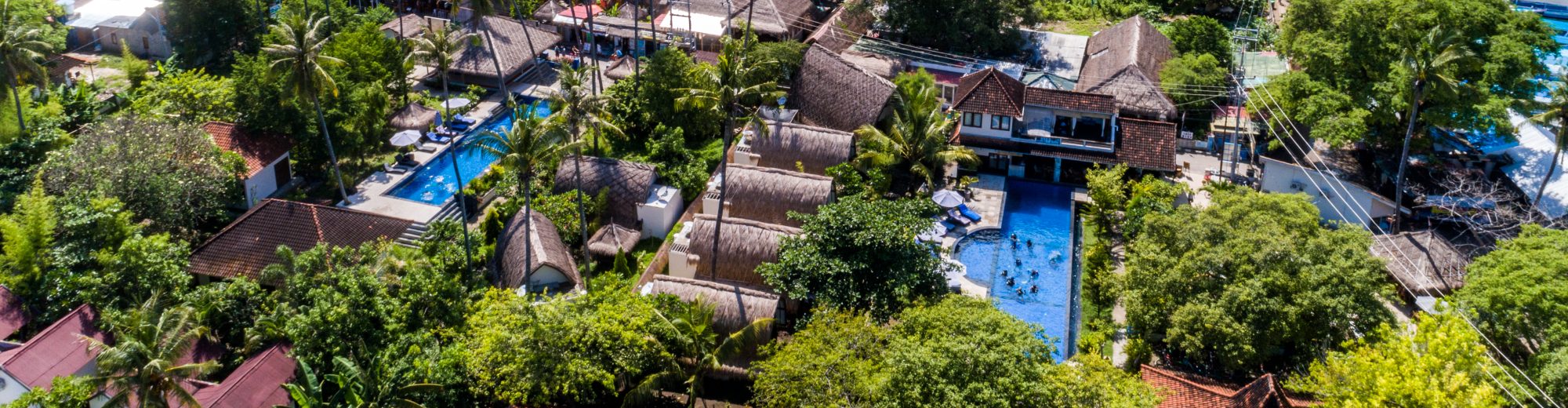
Your first underwater experience takes place in one of Oceans 5’s two purpose-built training pools. Beginning in controlled conditions allows you to concentrate on breathing, communication and equipment without dealing with waves, current or boat traffic.
The first breath through a regulator can feel unusual. Some students relax immediately; others need a little more time. Neither response is wrong. Your instructor will give you time to become comfortable before moving to the next exercise.
During the pool sessions, you learn essential skills such as:
- Breathing slowly and continuously underwater
- Clearing water from your mask
- Removing and replacing your mask
- Recovering and clearing your regulator
- Sharing air with another diver
- Controlling your buoyancy with your breathing and BCD
- Making safe descents and ascents
- Entering and exiting the water safely
- Responding calmly to common diving situations
Skills are introduced step by step. If one exercise takes longer, that does not mean you are failing. It simply means you need more time and practice—and that is what the pool is for.
Learning Buoyancy Instead of Learning to Kneel
Good diving is not about completing a skill while resting on the bottom. It is about remaining controlled in the water while managing yourself, your equipment and the situation around you.
At Oceans 5, students begin developing buoyancy and body-position awareness from the start. Whenever appropriate, skills are practised while neutrally buoyant and in a realistic diving position rather than routinely kneeling on the floor.
This approach helps you understand how your breathing, weighting, body position and BCD work together. It also prepares you for the ocean, where a responsible diver should avoid standing or kneeling on coral and other living surfaces.
Buoyancy does not become perfect in one day. Even experienced divers continue to improve it. However, building the correct habits during your first course gives you a much stronger foundation. You can read more in our article about why buoyancy matters during entry-level diver training.
Your Four Ocean Training Dives
Once you have developed the required knowledge and pool skills, it is time to enter the ocean.
The SSI Open Water Diver course includes four ocean training dives. Oceans 5’s boats depart directly from the dive centre, and the training location is selected according to the weather, current, course requirements and comfort of the students.
There is no single dive site that is always best. Conditions around the Gili Islands can change with the tides, wind and water movement through the Lombok Strait. Your instructor chooses from the many dive sites around the Gili Islands and adapts the plan to the group.
Before entering the water, you receive a complete briefing. It explains the site, maximum depth, planned route, entry and exit procedures, communication, important skills and what to do if you become separated from the group. As we explain in A Dive Briefing Is Not a Formality, listening carefully before the dive makes you better prepared once you are underwater.
During the ocean dives, you repeat and apply selected skills from the pool. But the dives are not only exercises. You also begin exploring the reef and experiencing what it means to be a diver.
You may encounter green or hawksbill turtles, clownfish, pufferfish, moray eels, blue-spotted stingrays, octopus, cuttlefish and many colourful reef fish. Juvenile reef sharks may also appear. Wildlife is never guaranteed, but the Gili Islands give new divers the opportunity to learn in a varied tropical marine environment.
If seeing a turtle is one of your dreams, our article about diving with turtles in the Gili Islands explains where they live and how to observe them responsibly.
How Deep Will You Dive?
Your depth increases gradually as your ability and comfort develop. The purpose is not to reach the maximum depth as quickly as possible. The purpose is to learn how to dive safely and confidently within the limits of your training.
After successful completion, an adult SSI Open Water Diver is certified to dive with a buddy to a maximum depth of 18 metres, within the limits of their training and experience.
Children can begin the course from the age of ten. Divers aged ten and eleven receive a Junior Open Water Diver certification with a maximum depth of 12 metres. Other age-related supervision and depth restrictions apply under SSI standards.
What If You Feel Nervous?
Feeling nervous before your first dive is completely normal. Breathing underwater is a new experience, and people adjust at different speeds.
Common concerns include:
- Breathing through the regulator
- Water entering the mask
- Equalising the ears
- Being below the surface
- Remembering the hand signals
- Controlling movement and buoyancy
The solution is not to rush. Your instructor demonstrates every exercise and gives you time to practise it in controlled conditions. If something feels uncomfortable, stop, communicate and try again when you are ready.
Oceans 5 teaches a maximum of four Open Water students per instructor. Small groups make it easier for the instructor to observe each student, identify difficulties and provide personal attention.
If you would like to experience scuba diving before committing to the complete certification course, an SSI Introduction Dive on Gili Air combines theory, pool training and one supervised ocean dive. When completed within the program requirements, that ocean dive may be credited toward an SSI Scuba Diver or Open Water Diver program if you continue within six months.
Do You Need to Be a Strong Swimmer?
You do not need to be a competitive swimmer, but you must have adequate swimming ability and feel reasonably comfortable in the water.
Your instructor will explain the required water-fitness assessment. The purpose is not to test speed or athletic performance. It is to confirm that you can support yourself in the water and swim the required distance without scuba equipment.
If you are worried about your swimming ability or water comfort, discuss it with Oceans 5 before booking. An honest conversation helps the team recommend the most suitable first step.
Medical Fitness and the Diver Medical Questionnaire
Every student must complete the required diver medical questionnaire before starting in-water training.
Answer the questions honestly. A “yes” answer does not automatically mean that you cannot dive, but it may mean that you need clearance from a doctor before participating. Do not hide a medical condition because you are worried about missing the course. The questionnaire exists to protect you.
If you have a medical condition, take prescription medication, are pregnant or are uncertain about your fitness to dive, contact Oceans 5 before travelling. This gives you time to obtain any required medical advice or documentation.
What Is Included in the Course?
The SSI Open Water Diver course at Oceans 5 includes:
- SSI digital learning materials
- Knowledge-development sessions with your instructor
- Six confined-water training sessions
- Four ocean training dives
- All required standard scuba equipment
- Tanks, weights and air fills
- Boat transport to the dive sites
- SSI Open Water Diver certification after successful completion
- Training in a group of no more than four students per instructor
The course price is IDR 7,000,000. The Gili Matra Marine Park fee of IDR 100,000 is charged separately. Accommodation, meals, transport to Gili Air and personal travel or diving insurance are not included.
For the latest course information and booking details, visit the SSI Open Water Diver course page.
What Should You Bring?
Bring:
- Swimwear
- A towel
- A reusable water bottle
- Reef-safe sun protection
- Your phone or tablet for digital learning
- Any required medical clearance
- A willingness to ask questions and learn
All standard scuba equipment is provided. If you wear glasses or contact lenses, tell the team before the course. Prescription masks may be available.
Becoming Certified Is the Beginning
Passing your Open Water course does not mean that you have finished learning. It means you have demonstrated the knowledge and skills required to begin diving independently with a qualified buddy within the limits of your training.
Your confidence, buoyancy, awareness and air consumption will continue to improve as you gain experience. New divers often compare their air use with that of an instructor or experienced Divemaster, but this is rarely helpful. Relaxation, trim, breathing, movement and experience all influence consumption. Our guide to improving your scuba air consumption explains what you can work on after certification.
Once certified, you can join fun dives around Gili Air, Gili Meno and Gili Trawangan. Oceans 5 operates separate boat departures during the day, allowing you to choose one dive or several dives according to your plans.
The most important goal after your course is not collecting certifications as quickly as possible. Continue diving, practise what you learned and build genuine experience.
Why Learn to Dive on Gili Air?
Gili Air offers warm tropical water, short boat journeys and access to a wide range of dive sites around all three Gili Islands. Training dives can include sandy areas, sloping reefs, coral formations and encounters with marine life.
Oceans 5 has two large training pools, purpose-built dive boats and an experienced SSI teaching team. Courses begin every day, and training groups are limited to a maximum of four students per instructor.
The teaching philosophy is simple: students should not merely complete exercises and receive a certification card. They should learn how to become comfortable, controlled and responsible divers.
Ready to begin? Read the complete SSI Open Water course information or contact Oceans 5 Gili Air with your questions.
Frequently Asked Questions
How long does the SSI Open Water Diver course take at Oceans 5?
The course normally takes three days. A four-day schedule may be possible if you prefer a more relaxed pace.
Do I need previous scuba-diving experience?
No. The Open Water Diver course is designed for complete beginners. If you would prefer to try scuba diving first, you can complete an SSI Introduction Dive.
How many pool and ocean sessions are included?
The course includes six confined-water sessions and four ocean training dives.
What is the maximum group size?
Oceans 5 teaches a maximum of four Open Water students per instructor, allowing more personal attention throughout the course.
What is the minimum age?
The minimum age is ten. Divers aged ten and eleven receive a Junior Open Water Diver certification and are limited to a maximum depth of 12 metres.
How deep can I dive after certification?
Adult SSI Open Water Divers are certified to dive to a maximum depth of 18 metres with a buddy, within the limits of their training and experience. Age-related limits apply to younger divers.
Is scuba equipment included?
Yes. The standard scuba equipment required for the course is included.
Will I see turtles during the course?
Green and hawksbill turtles live around the Gili Islands and are seen regularly, but no responsible dive centre can guarantee an encounter with a wild animal.
What happens if I struggle with a skill?
Your instructor will explain the skill again and give you additional time to practise. Students learn at different speeds, and the controlled pool environment is designed for repetition and gradual progress.
Does an SSI Open Water certification expire?
The certification itself does not expire. However, if you stop diving for an extended period, you should complete an appropriate scuba refresher before returning to open-water diving.