
Weather, Conditions and Marine Life
September can be one of the most enjoyable months for scuba diving around the Gili Islands. The busiest weeks of July and August are coming to an end, but the dry-season weather generally continues. The water remains warm, the dive sites offer encounters with turtles, reef sharks and colourful reef fish, and Gili Air gradually returns to a more relaxed rhythm.
However, no two days in the ocean are identical. Visibility, currents and water temperature can change from one dive site—or even one dive—to the next. That is why choosing an experienced dive centre and listening to the advice of local dive professionals is more important than relying on a monthly weather chart.
Here is what you can realistically expect when diving the Gili Islands in September.
Is September a Good Month for Diving the Gili Islands?
Yes, September is generally a very good month for diving around Gili Air, Gili Meno and Gili Trawangan.
September normally falls toward the end of the drier period in the Lombok region. Visitors can often expect sunny days, relatively little rain and good conditions for outdoor and marine activities. Nevertheless, Indonesia’s weather can vary from year to year, so travellers should always check the latest forecasts from Indonesia’s official meteorological agency, BMKG, before travelling [1].
One of the advantages of September is that it comes directly after the busiest European summer-holiday period. Gili Air remains lively, but the island can feel slightly less crowded than during July and August.
This makes September attractive for divers who want:
- Warm tropical water
- Generally favourable surface conditions
- A choice of dive sites around all three Gili Islands
- Fewer peak-season crowds
- Suitable conditions for courses and fun diving
- A relaxed island atmosphere between dives
September is not a “secret season,” and it can still be busy. However, it often offers a pleasant balance between reliable diving conditions and a less hectic atmosphere.
What Is the Weather Like on Gili Air in September?
September days on Gili Air are usually warm and sunny. Air temperatures are tropical throughout the year, and evenings remain comfortable enough to eat outside or walk around the island.
Rain is still possible. A dry-season label does not mean that every day will be completely dry. Short showers can occur, and weather patterns are becoming less predictable. The good news is that a brief tropical shower does not automatically mean poor diving.
Divers should remember that weather above the surface and conditions underwater are not always directly connected. It can rain during the night and still be a beautiful diving day the following morning.
The most relevant conditions for a dive centre are:
- Wind direction and strength
- Wave height
- Surface conditions
- Current strength and direction
- Underwater visibility
At Oceans 5 Gili Air, the dive team evaluates the conditions each day before deciding which dive sites are most appropriate for each departure.
Water Temperature in September
Water temperatures around the Gili Islands are warm throughout the year. In September, divers will commonly experience temperatures of approximately 27–29°C, although cooler areas or thermoclines can sometimes be encountered.
Some divers are comfortable in a 3 mm shorty, while others prefer a full-length 3 mm wetsuit. Your choice should depend on your personal sensitivity to cold and the number of dives you plan to make.
A diver completing one shallow dive may feel perfectly warm in a short wetsuit. Someone making three dives a day for several consecutive days may become colder over time, even in tropical water.
Oceans 5 provides the appropriate basic diving equipment for guests booking dives or courses. Divers are also welcome to bring their own masks, dive computers or exposure protection if they prefer familiar equipment.
What Is the Visibility Like?
Underwater visibility around the Gili Islands is often good in September, but it should never be guaranteed.
Visibility can change because of plankton, tides, currents, wind, rainfall and local water movement. One site may offer clear water while another side of the islands has reduced visibility on the same day.
Rather than promising a particular number of metres, a professional dive centre should select the site according to the actual conditions. Good visibility is enjoyable, but it is not the only thing that makes a dive worthwhile. Some of the most interesting macro animals are found in areas that do not always have perfect visibility.
Divers should also understand that plankton in the water is not necessarily bad news. Plankton is an important part of the marine food web and can attract feeding marine animals.
Are There Strong Currents in September?
Currents are a normal part of diving around the Gili Islands. They are influenced more by tides, moon phases, water movement through the Lombok Strait and the individual dive site than by the name of the month.
The Lombok Strait forms part of the Indonesian Throughflow, an important system that transfers water between the Pacific and Indian Oceans [2]. This movement contributes to the changing currents experienced around the Gili Islands.
Some dives may have very little current. Others may become drift dives. Conditions can also change during the dive.
This does not mean that the Gili Islands are unsuitable for beginners. It means that the dive site, entry point and dive plan must match the divers’ experience.
At Oceans 5 Gili Air, local dive professionals:
- Check the current before entering the water
- Choose entry points based on the conditions
- Adapt the dive plan when necessary
- Keep certified diving groups to a maximum of four divers per guide
- Carry and use a surface marker buoy
- Give a site-specific briefing before the dive
The best site is not necessarily the most famous site. It is the site offering the best and safest experience for that particular group at that particular time.
What Marine Life Can You See in September?
The waters surrounding Gili Air, Gili Meno and Gili Trawangan are part of the Gili Matra National Marine Conservation Area. Indonesia’s Ministry of Marine Affairs and Fisheries describes the area as important habitat for coral reefs, seagrass, turtles and reef sharks [3].
September divers may encounter:
- Green turtles
- Hawksbill turtles
- Whitetip reef sharks
- Blacktip reef sharks
- Blue-spotted stingrays
- Moray eels
- Pufferfish
- Angelfish
- Butterflyfish
- Surgeonfish
- Trevallies
- Clownfish
- Cuttlefish
- Octopus
- Nudibranchs
Turtles are among the best-known animals around the Gili Islands, but they should never be treated as guaranteed attractions. They are wild animals moving freely through a protected marine environment.
There is also much more to Gili diving than turtles.
Divers who slow down and look carefully may find frogfish, pipefish, flatworms, nudibranchs, scorpionfish and small crustaceans. Around Gili Air, some of the most rewarding dives are those where the guide pays attention to the smaller animals hiding between coral, rubble and seagrass.
The official Indonesian tourism website also highlights the reefs, turtles and marine activities of the Gili Islands as important attractions for visitors to Lombok [4].
Is September Suitable for Beginner Divers?
Yes. September can be an excellent time to learn to dive on Gili Air.
Good training is not created by the month alone. It depends on the instructor, group size, facilities, dive-site selection and the way skills are taught.
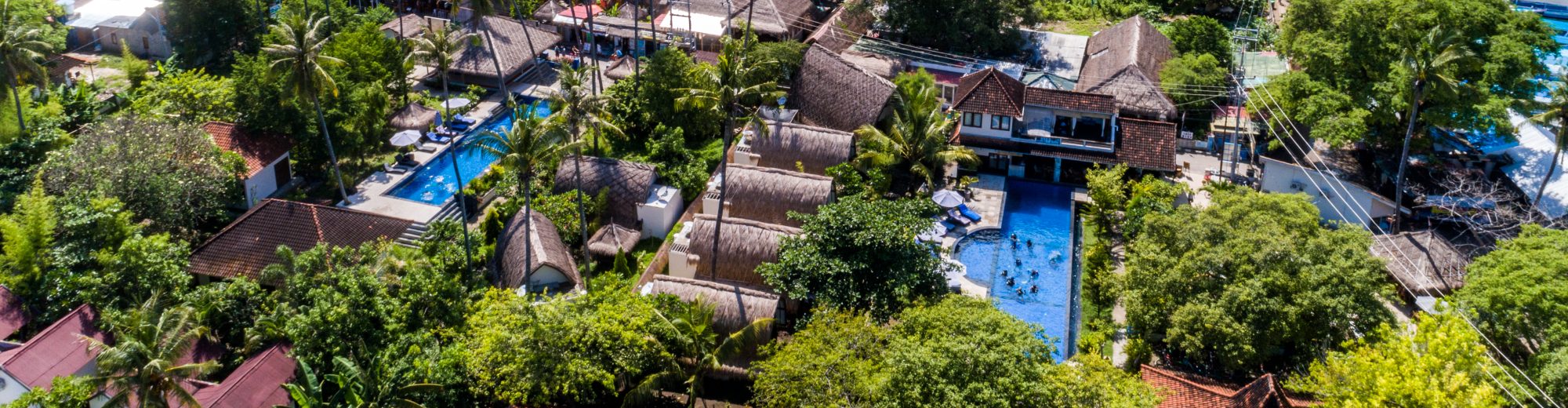
At Oceans 5 Gili Air, Open Water Diver students begin in one of two purpose-built training pools. This gives students time to become comfortable with their breathing, equipment and buoyancy before entering the ocean.
During the course, students are taught to perform their skills while neutrally buoyant whenever possible. The goal is not simply to complete a checklist. The goal is to create divers who can control their position, protect the reef and respond calmly underwater.
Beginners should not automatically be taken to a site simply because it is famous. If currents or surface conditions are unsuitable, a different site may provide a safer and more enjoyable learning environment.
Flexible Diving From Gili Air
One of the advantages of diving with Oceans 5 is the flexible daily schedule.
Oceans 5 normally operates three scheduled daytime dive departures:
- 08:30
- 11:30
- 14:30
Night dives are available on request.
Divers do not have to commit to a compulsory two-dive or full-day package. You can choose one dive, return to the dive centre, relax by the pool, have lunch or explore Gili Air before deciding whether you want to dive again.
This one-dive-at-a-time system is particularly comfortable for:
- New divers
- Families
- Underwater photographers
- Divers travelling with non-diving partners
- Guests who do not want to spend the entire day on a boat
- Divers who prefer a relaxed holiday schedule
The dive sites around the three Gili Islands are generally reached by boat, with many sites located within approximately 10–30 minutes of Gili Air.
Responsible Diving Inside a Marine Conservation Area
The Gili Islands are not simply a tropical diving destination. They are located inside a nationally managed marine conservation area [3].
In 2024, the International Maritime Organization also designated Gili Matra and Nusa Penida as a Particularly Sensitive Sea Area. This international designation recognises the ecological importance and vulnerability of these waters to shipping-related impacts [5].
Divers therefore have a responsibility to minimise their impact.
Responsible behaviour includes:
- Maintaining neutral buoyancy
- Never standing or kneeling on coral
- Not touching or chasing marine animals
- Keeping a respectful distance from turtles and- Keeping a respectful distance from turtles sharks
- Securing gauges and alternate air sources
- Avoiding contact with the reef while taking photographs
- Following the guide’s instructions
- Taking nothing from the ocean
- Leaving no rubbish behind
At Oceans 5, conservation is integrated into diver training and daily operations. Dive professionals are expected to act as ocean ambassadors and demonstrate the behaviour they want their guests and students to follow.
Why Choose Gili Air in September?
Gili Air offers a balance that is difficult to find elsewhere.
It has restaurants, accommodation and enough activity to make a holiday enjoyable, while retaining a calmer atmosphere than Gili Trawangan. There are no cars on the island, and Oceans 5 is located only a short walk from the harbour.
For divers, its location provides access to sites around Gili Air, Gili Meno, Gili Trawangan and the Lombok coast. This allows the dive team to choose between different areas according to the day’s weather, currents and diver experience.
Oceans 5 also offers:
- Maximum four certified divers per guide
- Local, professionally certified dive guides
- Two purpose-built training pools
- Three dive boats
- Daily recreational diving
- Beginner through professional SSI training
- Nitrox and 15-litre tanks on request
- Night diving
- Marine-ecology speciality courses
- A long-term commitment to marine conservation
September Diving: Come Prepared, but Stay Flexible
September is generally a great month to dive the Gili Islands, but the ocean does not follow a fixed calendar.
Weather forecasts, visibility estimates and seasonal averages can help you plan your holiday. They cannot predict the exact conditions at Shark Point, Turtle Heaven, Hans Reef or any other dive site at the moment you enter the water.
The best diving comes from combining preparation with flexibility.
Listen to the local dive team. Choose sites based on actual conditions. Respect the marine park. Control your buoyancy. Look beyond the most famous animals—and remember that sometimes the smallest creature becomes the highlight of the dive.
At Oceans 5 Gili Air, we do not promise that every September dive will be identical. We promise to evaluate the conditions, select an appropriate dive site and do our best to give every diver a safe, responsible and memorable experience.
Frequently Asked Questions
Is September a good time to dive the Gili Islands?
Yes. September usually offers warm water, generally favourable weather and access to dive sites around Gili Air, Gili Meno and Gili Trawangan. Conditions can still vary daily.
What is the water temperature in September?
Water temperatures are commonly around 27–29°C, although thermoclines and cooler water are possible. Many divers use a 3 mm wetsuit.
Is the visibility good in September?
Visibility is often good, but it cannot be guaranteed. It is affected by tides, currents, plankton, rainfall and local weather conditions.
Are the currents strong?
Some dives have little current, while others become drift dives. Currents depend on the tide, moon phase and location. The dive team should select sites appropriate for the experience of the group.
Can beginners learn to dive in September?
Yes. September is suitable for beginner courses when the dive centre uses appropriate training facilities and chooses sites according to the conditions.
Can I see turtles in September?
Green and hawksbill turtles live around the Gili Islands throughout the year, so sightings are common. However, no responsible dive centre should guarantee an encounter with a wild animal.
Can I see sharks around the Gili Islands?
Whitetip and blacktip reef sharks can be seen around the Gili Islands. They are generally shy and should be observed calmly without chasing, touching or surrounding them.
Do I have to book two dives?
Not at Oceans 5 Gili Air. Divers can join individual departures and decide how many dives they would like to make each day.
How many daytime dives does Oceans 5 offer?
Oceans 5 normally schedules three daytime departures at 08:30, 11:30 and 14:30. Night dives can be arranged on request.
Should I book in advance?
Advance booking is recommended if you need accommodation, are travelling with a family or want to complete a course. Fun divers may also benefit from booking ahead, even though September is usually less crowded than the busiest summer weeks.
References
[1] BMKG – Indonesia’s official Meteorology, Climatology and Geophysics Agency. Weather observations, climate information and forecasts: BMKG Climate Information
[2] Sprintall, J. et al. The Indonesian Seas and Their Role in the Coupled Ocean–Climate System. Nature Geoscience. Background on the Indonesian Throughflow and water movement through the Indonesian seas: Nature Geoscience
[3] Indonesian Ministry of Marine Affairs and Fisheries – Gili Matra conservation information. The area contains important coral-reef, seagrass, turtle and reef-shark habitats: BKKPN Kupang and Gili Matra Conservation
[4] Indonesia Travel – Official tourism information covering Lombok, the Gili Islands, diving, reefs and turtles: Lombok Attractions and the Gili Islands
[5] Indonesian Ministry of Marine Affairs and Fisheries – IMO designation of Gili Matra and Nusa Penida as a Particularly Sensitive Sea Area: Gili Matra PSSA Designation