
One Dive at a Time
Many dive destinations organize their daily schedule around two-tank trips. Divers leave in the morning, complete two dives and return several hours later. This system can work well, especially when dive sites are far away.
But it is not the only way to organize a great day of diving.
At Oceans 5 Gili Air, we take a different approach. Instead of automatically placing everyone on a two-tank trip, we organize separate dive departures throughout the day. Divers can join one, two or three dives depending on their experience, energy level and holiday plans.
Our regular dive departures are:
- 08:30 – Morning dive
- 11:30 – Midday dive
- 14:30 – Afternoon dive
On Fridays, we organize dives at 08:30 and 14:30, allowing our local team time for Friday prayers.
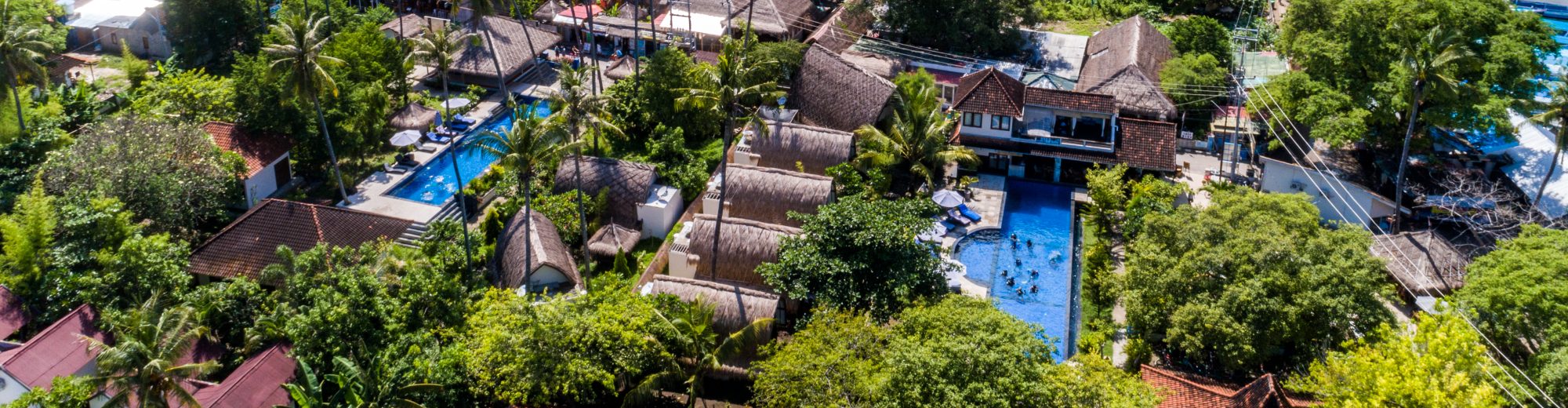
This flexible system is possible because Oceans 5 is located directly beside the harbour of Gili Air and most dive sites around the Gili Islands can be reached relatively quickly. It allows us to provide something that is becoming increasingly valuable during a diving holiday: choice.
Your Holiday Should Not Be Controlled by the Dive Schedule
When you book a diving holiday, you may want to dive as much as possible. But you may also want to enjoy breakfast with your partner, relax beside the pool, explore Gili Air or spend time with family members who do not dive.
A fixed two-tank trip can take up a large part of the day. Even when the actual dives are not particularly long, guests must remain with the boat and group during equipment changes, travel and the surface interval.
At Oceans 5, you return to the dive centre after every dive.
You can complete the morning dive and then decide what you want to do next. You might join the 11:30 dive, have lunch at the resort, relax beside one of our pools or spend the afternoon discovering the island.
You are not automatically committed to a second dive simply because you boarded the boat for the first one.
Dive Once, Twice or Three Times a Day
Every diver has different goals.
Some guests arrive on Gili Air specifically to dive three times a day. Others want to complete one relaxed morning dive before spending the rest of the day with their family. Some divers prefer to start slowly and increase their number of dives once they feel comfortable.
Our system allows you to build your own diving day.
For example, you could:
- Join only the 08:30 dive and keep the afternoon free.
- Dive at 08:30 and 11:30 before having a late lunch.
- Enjoy a relaxed morning and join the 14:30 dive.
- Complete all three scheduled dives.
- Add a night dive when available.
- Take a day off without disrupting a prepaid diving package.
You can discuss your preferred schedule with our team. Your diving plan should match your holiday—not the other way around.
Proper Surface Intervals Still Matter
The time spent at the surface between two dives is called the surface interval. During this period, the body continues eliminating some of the excess nitrogen absorbed during the previous dive.
A second dive completed within the relevant period is treated as a repetitive dive. The remaining nitrogen must therefore be considered when calculating the limits of the next dive [1].
Modern dive computers calculate this information continuously, but the principle remains the same: your previous dive affects the planning of your next one.
At Oceans 5, every dive is planned using the diver’s personal computer, certification, experience and previous dive profile. A flexible schedule never replaces proper repetitive-dive planning.
Returning to the dive centre also creates a comfortable break between dives. Guests can drink water, eat something, rest and prepare without remaining on a small boat for the entire surface interval. SSI also emphasizes that surface intervals are an important part of safely managing multiple dives [2].
A longer break does not make a diver invulnerable to decompression illness, and no diving schedule can eliminate all risk. Divers must still remain within their training, follow their computers, ascend slowly and respect appropriate no-fly times after diving.
Divers Alert Network recommends waiting at least 12 hours before flying after a single no-decompression dive and at least 18 hours after multiple dives in one day or multiple days of diving [3].
More Time to Rest, Eat and Hydrate
Diving is relaxing, but it still requires physical and mental energy.
Heat, sun exposure, swimming, carrying equipment and repeated boat journeys can all contribute to fatigue. Some divers are comfortable completing several dives every day. Others need more time to recover—especially when returning to diving after a long break.
Because we come back to the dive centre after every dive, you can:
- Refill your water bottle.
- Have breakfast or lunch.
- Rest in the shade.
- Review your photographs.
- Change equipment if something feels uncomfortable.
- Discuss the previous dive with your guide.
- Decide honestly whether you feel ready for another dive.
The number of dives you complete is not a competition. One comfortable and enjoyable dive is better than a second dive completed because you felt pressured to join it.
A Better Option for Couples and Families
Not everyone travelling together wants to follow the same diving schedule.
One person may be an enthusiastic diver, while their partner prefers snorkelling, yoga or relaxing beside the pool. Parents may need to share childcare responsibilities. A family may also want to have lunch together or spend part of the day exploring Gili Air.
Separate dive departures make this much easier.
A diver can join the 08:30 trip, return to the resort and spend most of the day with their family. Alternatively, a parent can join one dive while their partner looks after the children and then switch responsibilities later.
You do not need to choose between diving and spending the entire day with the people you travelled with.
Small Groups Can Be Reorganized for Every Dive
Flexibility is not only about choosing your preferred time. Separate departures also allow us to organize the groups again before every dive.
At Oceans 5, we normally place a maximum of four certified divers with one Divemaster. When preparing the groups, we consider factors such as:
- Certification level.
- Diving experience.
- Recent diving activity.
- Air consumption.
- Preferred depth.
- Nitrox certification.
- Underwater photography interests.
- Preferred dive sites.
- Comfort in current.
- Marine-life interests.
The group you join during the morning does not necessarily have to remain together for the entire day.
Perhaps one diver wants to join a deeper second dive while another prefers a relaxed turtle dive. One guest may want to search for macro life, while someone else hopes to see reef sharks. When operational conditions allow, separate departures give our team more opportunities to create compatible groups.
The result is not just a more flexible schedule. It can also be a more personal diving experience.
You Can Respond to How You Actually Feel
Holiday plans are often made before we know how we will feel.
You may arrive on Gili Air after a long international journey. You might not have dived for six months. Your first dive could reveal that you need time to become comfortable again.
With a flexible schedule, you can start with one dive instead of committing immediately to a full day. If you feel confident and energetic afterwards, you may be able to join another departure. If you feel tired, cold or uncomfortable, you can stop and continue another day.
The decision should always be based on how you genuinely feel—not on the fear of losing the second dive in a package.
At Oceans 5, divers who have not been diving for six months or longer are required to complete a refresher before returning to regular fun diving. Flexible departure times help us integrate this preparation into a comfortable and realistic diving plan.
Different Dive Sites, Different Experiences
The Gili Matra Marine Tourism Park surrounds Gili Air, Gili Meno and Gili Trawangan. The protected area was originally established in 1993 and is now managed under Indonesia’s Ministry of Marine Affairs and Fisheries [4].
Within this area, divers can experience very different underwater environments:
- Turtle sites around Gili Meno.
- Shark and deeper reef sites near Gili Trawangan.
- Coral slopes and macro-diving locations around Gili Air.
- Drift dives between the islands.
- Shallow reefs suitable for less-experienced divers.
- Deeper sites for appropriately certified divers.
Conditions can change throughout the day. Currents, visibility, weather, diver experience and requests all influence the final site selection.
Separate departures allow the dive team to reassess these factors before every trip. However, flexibility does not mean that every requested site will always be available. Safety, marine-park regulations, weather and the abilities of the group remain more important than a guest’s preference for a particular location.
Flexibility Does Not Mean Less Organization
A relaxed diving schedule should never become a disorganized diving operation.
Before every departure, the Oceans 5 team prepares the equipment, confirms the groups and selects an appropriate dive site. Divers receive a briefing before boarding the boat. Nitrox divers analyse and record their gas, and a pre-dive safety check is completed before entering the water.
Our boats carry emergency oxygen, first-aid equipment, communication equipment and other required safety materials. Before departure, our team also completes the required operational procedures connected to diving within the Gili Matra Marine Park.
Returning after each dive gives the team another opportunity to check equipment, prepare cylinders and reorganize the next departure.
Flexibility works because there is a professional structure behind it.
Ideal for Underwater Photographers
Underwater photographers do not always want to complete two dives in quick succession.
After a dive, they may need to:
- Recharge or change batteries.
- Review images.
- Replace a memory card.
- Check the camera housing.
- Clean an O-ring.
- Adjust the setup for a different subject.
- Change from a wide-angle to a macro configuration.
Returning to Oceans 5 between dives provides time and space to prepare properly. It may also allow photographers to choose one departure that matches their preferred subject rather than committing to every trip.
When possible, we also try to group photographers with divers who have a similar pace and interest. A photographer looking for a tiny nudibranch usually dives differently from someone who wants to cover a large section of reef.
Better for Divers Who Want Personal Attention
Large, fixed boat schedules often require everyone to follow the same timeline. A diver who needs more preparation can feel rushed, while an experienced diver may feel that the day moves too slowly.
Smaller, separate departures give our team more opportunities to respond to individuals.
A diver who wants help improving buoyancy can speak with the guide after the first dive. Someone who used more air than expected can discuss breathing, weighting and positioning before going back into the water. Equipment can be adjusted, and the next dive can be selected according to what was learned during the first one.
Every dive becomes part of an ongoing experience rather than simply the next entry on a fixed itinerary.
One Dive at a Time Is Part of Our Philosophy
Oceans 5 Gili Air is not designed as a diving factory.
We believe guests should have time to ask questions, prepare properly and enjoy each dive. We keep groups small and employ trained local SSI Divemasters who know the sites and local conditions.
Our flexible schedule reflects that philosophy.
You do not have to rush through two dives because that is the only trip available. You do not have to sacrifice an entire day when you only want one dive. You do not need to choose between diving and spending time with your family.
You can simply take your diving holiday one dive at a time.
Plan Your Diving Day at Oceans 5 Gili Air
Whether you want one relaxed turtle dive or three dives in a day, our team can help you create a suitable schedule.
Our standard dive departures are at 08:30, 11:30 and 14:30, with two departures on Fridays at 08:30 and 14:30. Night dives can also be arranged on request, subject to availability, conditions and minimum participation requirements.
Tell us about your certification, experience, last dive and what you would like to see. We will help you select a realistic plan while considering the conditions and your safety.
Because the best diving schedule is not necessarily the one with the most dives.
It is the one that allows you to enjoy every dive.
Frequently Asked Questions
How many dives can I complete in one day at Oceans 5 Gili Air?
You can normally join one, two or three scheduled daytime dives. Our regular departures are at 08:30, 11:30 and 14:30. On Fridays, we offer the 08:30 and 14:30 departures.
Night dives may also be available on request.
Do I have to book a two-tank trip?
No. Our daytime dives are organized as separate departures. You can join one dive without being committed to a second dive on the same trip.
Do you return to Gili Air after every dive?
Yes. The boat returns to Oceans 5 after each dive. Our dive centre is located directly beside Gili Air harbour, making it convenient to return between departures.
Can I decide after my first dive whether I want to dive again?
Often, yes, provided there is space on the next departure and the dive is appropriate for your certification, experience and previous dive profile. During busy periods, we recommend reserving your preferred dives in advance.
Are separate dives safer than a two-tank trip?
Not automatically. Both systems can be operated safely when dives are properly planned.
Separate departures provide a comfortable surface interval and allow divers to rest, eat and hydrate at the dive centre. However, divers must still follow their computers, stay within their certification and respect repetitive-diving limits.
How long is the surface interval?
The exact interval depends on the return time from the previous dive and the next departure. Your Divemaster or instructor will confirm whether the interval and planned dive are appropriate for your profile.
The guidance of your dive computer must always be followed.
Can I request a particular dive site?
Yes, you can tell us which site or marine life you are interested in. We consider requests when planning the trips, but we cannot guarantee a particular site.
Currents, weather, certification levels, experience, marine-park rules and group safety determine the final decision.
Do you offer two dives from the same boat without returning?
Our regular system is based on separate departures that return to Gili Air after every dive. Special arrangements may occasionally be possible, but they are not part of the normal daily schedule.
Is the flexible schedule suitable for beginners?
Yes. It is especially helpful for new or recently inactive divers because they can start with one dive and evaluate how they feel before doing more.
Anyone whose last dive was six months ago or longer must first complete a refresher with Oceans 5.
Can non-diving family members join the boat?
Boat space is primarily reserved for divers, dive professionals and crew. Ask the Oceans 5 team in advance whether a non-diving passenger can join a particular departure.
Can I dive with Nitrox?
Yes. Nitrox 32% is available for appropriately certified divers for an additional charge. You must personally analyse and record your cylinder before the dive.
How large are the fun-diving groups?
Oceans 5 normally limits certified fun-diving groups to a maximum of four divers per Divemaster. Groups are organized according to experience, certification and interests whenever possible.
What time should I arrive?
Please arrive early enough to complete registration, equipment preparation and the dive briefing. The time shown is the scheduled departure time, not the time to begin preparing.
How soon can I fly after diving?
Divers Alert Network recommends a minimum preflight surface interval of 12 hours after one no-decompression dive and at least 18 hours after multiple dives per day or multiple days of diving [3]. Longer intervals may be required after dives involving mandatory decompression.
References
- Scuba Schools International dive-table information. Surface Intervals and Repetitive Diving. Explains how residual nitrogen from a previous dive must be considered when planning a repetitive dive. SSI Dive Tables
- Scuba Schools International. Top Things to Do on a Surface Interval. Discusses the importance of surface intervals when completing multiple dives. SSI Surface Interval Guidance
- Divers Alert Network. Guidelines for Flying After Diving. Recommends a minimum interval of 12 hours after a single no-decompression dive and 18 hours after repetitive or multiday diving. DAN Flying After Diving Guidelines
- Ministry of Marine Affairs and Fisheries conservation information platform. Gili Matra Marine Protected Area. Describes the official Gili Matra Marine Tourism Park, its three islands and administrative history. Gili Matra MPA