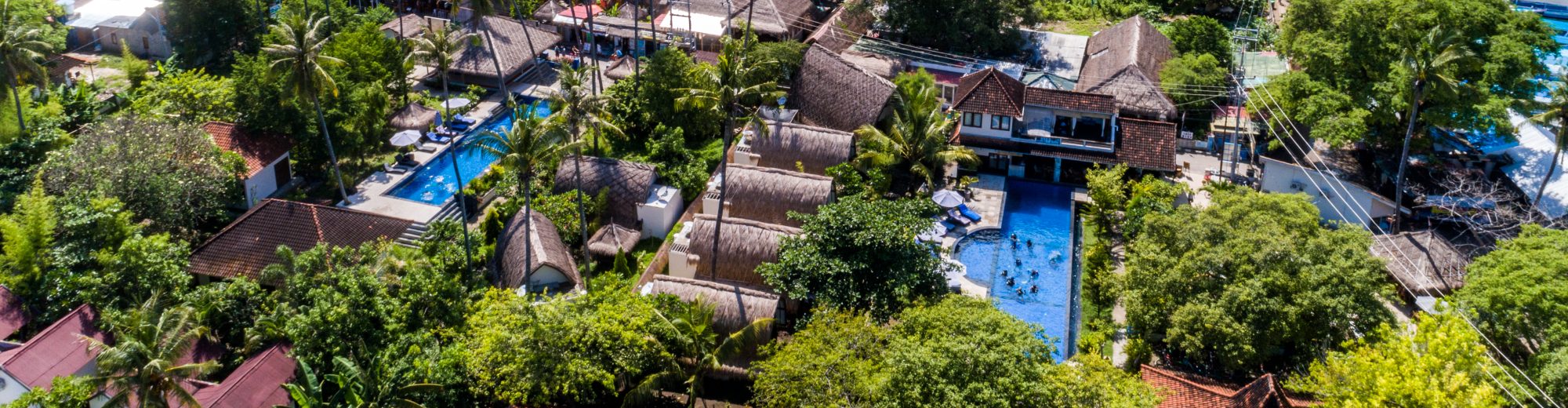

Diving Around the Gili Islands
Imagine floating effortlessly through warm tropical water while a green sea turtle glides silently beneath you. Schools of colourful reef fish surround vibrant coral gardens, a juvenile white-tip reef shark rests peacefully beneath a coral overhang, and the current gently carries you across one of Indonesia’s healthiest reef systems. This is not a once-in-a-lifetime experience—it is an ordinary day of scuba diving around the Gili Islands [3][4].
Located just off the northwest coast of Lombok, Gili Air, Gili Meno, and Gili Trawangan have earned an international reputation as one of Southeast Asia’s premier diving destinations. Every year thousands of divers travel here because the islands offer something that few places can: spectacular marine life combined with conditions suitable for every level of diver, from complete beginners to experienced professionals [1][4].
Whether you want to learn scuba diving, complete your SSI Open Water certification, photograph turtles, experience exciting drift dives or simply enjoy warm crystal-clear water, the Gili Islands deliver unforgettable underwater experiences.
Why Are the Gili Islands So Famous for Diving?
Many dive destinations are known for either exceptional marine life or easy diving conditions. The Gili Islands are famous because they combine both [4][6].
The islands sit inside the Gili Matra Marine Recreation Reserve, a protected marine park established to conserve coral reefs, endangered marine species and the surrounding ecosystem [3][4]. Protection has helped create healthy reef habitats that support hundreds of species of fish, turtles and invertebrates.
Unlike many destinations where long boat journeys are necessary, almost every dive site is only a few minutes from shore. This means divers spend less time travelling and more time underwater exploring the reefs.
The result is simple:
More diving.
More marine life.
More unforgettable moments.
Warm Tropical Water All Year Round
One of the greatest attractions of diving around the Gili Islands is the consistently pleasant conditions.
Water temperatures generally range between 27°C and 30°C throughout the year [4][6]. Most divers are perfectly comfortable wearing only a 3 mm wetsuit, while some experienced divers prefer even thinner exposure protection.
Visibility during the dry season regularly exceeds 25–30 metres, allowing divers to fully appreciate the colourful coral reefs stretching into the distance [6].
These conditions make the islands particularly attractive for new divers who may feel nervous about learning in cold or rough water.
Warm water helps people relax.
Relaxed divers learn faster.
That is one of the reasons why the Gili Islands have become one of Indonesia’s most popular destinations to learn scuba diving [1].
The Turtle Capital of the World
If the Gili Islands are famous for one thing underwater, it is turtles.
Green sea turtles (Chelonia mydas) and hawksbill turtles (Eretmochelys imbricata) are seen on almost every dive around the islands. In many other parts of the world divers celebrate seeing a single turtle. Around the Gili Islands, it is unusual not to see one [5].
Watching a turtle peacefully grazing on seagrass or swimming effortlessly across the reef is an experience that never loses its magic.
Many local turtles have become accustomed to respectful divers and often continue feeding while divers observe them from an appropriate distance.
Both species are listed by the IUCN Red List, making responsible diving practices essential [5].
Good divers never:
- Touch turtles.
- Chase turtles.
- Block their path.
- Ride or hold turtles for photographs.
These recommendations are supported by Green Fins, an internationally recognised environmental initiative promoting sustainable diving practices [2].
Healthy Coral Reefs Create Incredible Diving
Coral reefs are often called the rainforests of the ocean because they support extraordinary biodiversity [6].
The reefs around the Gili Islands provide food and shelter for hundreds of marine species, including:
- Butterflyfish
- Angelfish
- Sweetlips
- Batfish
- Triggerfish
- Parrotfish
- Clownfish
- Moray eels
- Blue-spotted stingrays
- Giant trevallies
- Barracuda
- Octopus
- Cuttlefish
- Frogfish
- Pipefish
- Nudibranchs
For underwater photographers this diversity means every dive offers new opportunities.
Wide-angle photographers capture turtles swimming over colourful reefs.
Macro photographers search patiently for tiny nudibranchs, shrimp and frogfish hidden among the coral.
No matter your experience level, every dive feels different.
Exciting Drift Diving
One of the highlights of diving around the Gili Islands is drift diving.
Many people hear the word “current” and immediately become nervous.
In reality, currents often make diving easier.
Instead of swimming long distances, divers allow the current to gently transport them across the reef while they simply relax and enjoy the scenery.
Imagine flying underwater.
That is exactly what drift diving feels like.
Professional dive centres carefully monitor tidal movements and current strength before selecting dive sites suitable for each group’s experience level [1].
For experienced divers, drift diving is often one of the most memorable parts of visiting the islands.
Every Dive Site Offers Something Different
One reason divers keep returning to the Gili Islands is the incredible variety of dive sites.
Some of the most famous include:
Shark Point
Known for juvenile white-tip reef sharks, turtles and large schools of reef fish.
Halik
Beautiful hard coral gardens with excellent visibility and frequent turtle encounters.
Deep Turbo
An exciting deeper dive where larger pelagic fish occasionally appear.
Sunset Reef
A colourful drift dive covered in healthy coral and reef fish.
Meno Slope
One of the island’s most popular turtle dive sites with gentle sandy slopes perfect for newer divers.
Bounty Wreck
A shallow artificial reef that has become home to countless reef species.
Every tide changes the dive.
Every season changes the reef.
No two dives are ever exactly the same.
Juvenile Reef Sharks—A Favourite Encounter
Many divers dream about seeing sharks.
Around the Gili Islands they often get that opportunity.
Juvenile white-tip reef sharks regularly rest beneath coral ledges at sites such as Shark Point and Halik.
Despite their impressive appearance, white-tip reef sharks are shy animals that rarely show aggression towards divers [6].
The best encounter is always one where the shark chooses to remain relaxed while divers quietly observe from a respectful distance.
Responsible wildlife interactions create better experiences for both sharks and divers.
One of Indonesia’s Best Places to Learn Scuba Diving
The Gili Islands have become internationally recognised as one of Indonesia’s best destinations for beginner divers.
There are several reasons.
Boat rides are short.
The water is warm.
Visibility is excellent.
Many dive sites have gentle sandy slopes.
Marine life is abundant.
These factors help students focus on learning rather than battling difficult conditions.
At Oceans 5 Gili Air, we offer SSI Try Scuba experiences and SSI Open Water Diver Courses every day.
Our courses follow internationally recognised SSI training standards [1].
Students first develop confidence in our large training pools before progressing into the ocean.
Because we teach in small groups of no more than four students per instructor, every diver receives personal attention throughout the course.
For many students, their first ocean dive already includes turtles.
That first underwater breath often becomes the beginning of a lifelong passion.
Experienced Divers Will Never Be Bored
The Gili Islands are not only for beginners.
Experienced divers appreciate:
- Drift dives.
- Nitrox diving.
- Night dives.
- Underwater photography.
- Macro life.
- Reef shark encounters.
- Turtle cleaning stations.
- Excellent buoyancy diving.
Many professional dive instructors living on the islands still dive these sites several times every week despite having logged thousands of dives worldwide.
That says everything about the quality of diving available.
Diving Responsibly Protects the Future
Healthy reefs require responsible divers.
International programmes such as Green Fins encourage environmentally friendly diving by promoting excellent buoyancy, avoiding contact with coral, reducing marine pollution and respecting marine wildlife [2].
At Oceans 5 Gili Air we believe conservation begins with education.
Every dive briefing includes reminders about protecting coral reefs and respecting marine life.
Small actions from every diver make a significant difference over time.
Why Choose Oceans 5 Gili Air?
There are many dive centres around the Gili Islands.
At Oceans 5 Gili Air we have built our reputation on quality rather than quantity.
As an SSI Instructor Training Centre, we focus on:
- Small diving groups.
- Experienced instructors.
- Modern facilities.
- Two large training pools.
- High safety standards.
- Environmental responsibility.
- Personal attention.
Whether you are joining your very first Try Scuba programme, completing your Open Water certification or training to become a professional dive instructor, our goal remains the same:
To make every dive enjoyable, safe and unforgettable.
Frequently Asked Questions
Is the Gili Islands suitable for beginner divers?
Yes. Warm water, excellent visibility, gentle dive sites and abundant marine life make the Gili Islands one of the easiest and most enjoyable places in Indonesia to learn scuba diving [1].
What marine life will I see?
Most divers encounter green sea turtles, hawksbill turtles, reef fish, moray eels, octopus, cuttlefish, rays and often juvenile white-tip reef sharks.
When is the best time to dive?
The Gili Islands offer year-round diving. The dry season generally provides the best visibility, while marine life remains excellent throughout the year.
Can I learn scuba diving if I cannot swim very well?
To become certified, SSI requires students to complete a swimming assessment. However, people who are not yet ready for certification can still experience breathing underwater by joining an SSI Try Scuba programme under the direct supervision of an instructor [1].
Are reef sharks dangerous?
No. White-tip reef sharks are naturally shy animals and are generally more interested in resting or hunting small fish than interacting with divers [6].
Why should I choose Oceans 5 Gili Air?
Oceans 5 combines experienced SSI instructors, small teaching groups, excellent facilities, two spacious training pools, high safety standards and a strong commitment to marine conservation.
References
[1] SSI (Scuba Schools International). Open Water Diver Standards and Recreational Diving Program Information.https://www.divessi.com
[2] Green Fins. Environmental Best Practices for Dive Operators. https://www.greenfins.net
[3] Balai Kawasan Konservasi Perairan Nasional (BKKPN) Kupang. Gili Matra Marine Recreation Reserve.
[4] Indonesian Ministry of Marine Affairs and Fisheries (KKP). Marine Conservation Areas in Indonesia.https://kkp.go.id
[5] International Union for Conservation of Nature (IUCN). The IUCN Red List of Threatened Species: Chelonia mydasand Eretmochelys imbricata. https://www.iucnredlist.org
[6] NOAA Ocean Service. Coral Reef Ecosystems and Marine Biodiversity. https://oceanservice.noaa.gov