Category Archives: scuba diving

Why Diving Around the Gili Islands Is One of the World’s Most Exciting Underwater Adventures

Gili Air Turtle | Diving in the Gili Islands | SSI ITC Dive Resort Oceans 5 Gili Air

Diving Around the Gili Islands

Imagine floating effortlessly through warm tropical water while a green sea turtle glides silently beneath you. Schools of colourful reef fish surround vibrant coral gardens, a juvenile white-tip reef shark rests peacefully beneath a coral overhang, and the current gently carries you across one of Indonesia’s healthiest reef systems. This is not a once-in-a-lifetime experience—it is an ordinary day of scuba diving around the Gili Islands [3][4].

Located just off the northwest coast of Lombok, Gili Air, Gili Meno, and Gili Trawangan have earned an international reputation as one of Southeast Asia’s premier diving destinations. Every year thousands of divers travel here because the islands offer something that few places can: spectacular marine life combined with conditions suitable for every level of diver, from complete beginners to experienced professionals [1][4].

Whether you want to learn scuba diving, complete your SSI Open Water certification, photograph turtles, experience exciting drift dives or simply enjoy warm crystal-clear water, the Gili Islands deliver unforgettable underwater experiences.


Why Are the Gili Islands So Famous for Diving?

Many dive destinations are known for either exceptional marine life or easy diving conditions. The Gili Islands are famous because they combine both [4][6].

The islands sit inside the Gili Matra Marine Recreation Reserve, a protected marine park established to conserve coral reefs, endangered marine species and the surrounding ecosystem [3][4]. Protection has helped create healthy reef habitats that support hundreds of species of fish, turtles and invertebrates.

Unlike many destinations where long boat journeys are necessary, almost every dive site is only a few minutes from shore. This means divers spend less time travelling and more time underwater exploring the reefs.

The result is simple:

More diving.

More marine life.

More unforgettable moments.


Warm Tropical Water All Year Round

One of the greatest attractions of diving around the Gili Islands is the consistently pleasant conditions.

Water temperatures generally range between 27°C and 30°C throughout the year [4][6]. Most divers are perfectly comfortable wearing only a 3 mm wetsuit, while some experienced divers prefer even thinner exposure protection.

Visibility during the dry season regularly exceeds 25–30 metres, allowing divers to fully appreciate the colourful coral reefs stretching into the distance [6].

These conditions make the islands particularly attractive for new divers who may feel nervous about learning in cold or rough water.

Warm water helps people relax.

Relaxed divers learn faster.

That is one of the reasons why the Gili Islands have become one of Indonesia’s most popular destinations to learn scuba diving [1].


The Turtle Capital of the World

If the Gili Islands are famous for one thing underwater, it is turtles.

Green sea turtles (Chelonia mydas) and hawksbill turtles (Eretmochelys imbricata) are seen on almost every dive around the islands. In many other parts of the world divers celebrate seeing a single turtle. Around the Gili Islands, it is unusual not to see one [5].

Watching a turtle peacefully grazing on seagrass or swimming effortlessly across the reef is an experience that never loses its magic.

Many local turtles have become accustomed to respectful divers and often continue feeding while divers observe them from an appropriate distance.

Both species are listed by the IUCN Red List, making responsible diving practices essential [5].

Good divers never:

  • Touch turtles.
  • Chase turtles.
  • Block their path.
  • Ride or hold turtles for photographs.

These recommendations are supported by Green Fins, an internationally recognised environmental initiative promoting sustainable diving practices [2].


Healthy Coral Reefs Create Incredible Diving

Coral reefs are often called the rainforests of the ocean because they support extraordinary biodiversity [6].

The reefs around the Gili Islands provide food and shelter for hundreds of marine species, including:

  • Butterflyfish
  • Angelfish
  • Sweetlips
  • Batfish
  • Triggerfish
  • Parrotfish
  • Clownfish
  • Moray eels
  • Blue-spotted stingrays
  • Giant trevallies
  • Barracuda
  • Octopus
  • Cuttlefish
  • Frogfish
  • Pipefish
  • Nudibranchs

For underwater photographers this diversity means every dive offers new opportunities.

Wide-angle photographers capture turtles swimming over colourful reefs.

Macro photographers search patiently for tiny nudibranchs, shrimp and frogfish hidden among the coral.

No matter your experience level, every dive feels different.


Exciting Drift Diving

One of the highlights of diving around the Gili Islands is drift diving.

Many people hear the word “current” and immediately become nervous.

In reality, currents often make diving easier.

Instead of swimming long distances, divers allow the current to gently transport them across the reef while they simply relax and enjoy the scenery.

Imagine flying underwater.

That is exactly what drift diving feels like.

Professional dive centres carefully monitor tidal movements and current strength before selecting dive sites suitable for each group’s experience level [1].

For experienced divers, drift diving is often one of the most memorable parts of visiting the islands.


Every Dive Site Offers Something Different

One reason divers keep returning to the Gili Islands is the incredible variety of dive sites.

Some of the most famous include:

Shark Point

Known for juvenile white-tip reef sharks, turtles and large schools of reef fish.

Halik

Beautiful hard coral gardens with excellent visibility and frequent turtle encounters.

Deep Turbo

An exciting deeper dive where larger pelagic fish occasionally appear.

Sunset Reef

A colourful drift dive covered in healthy coral and reef fish.

Meno Slope

One of the island’s most popular turtle dive sites with gentle sandy slopes perfect for newer divers.

Bounty Wreck

A shallow artificial reef that has become home to countless reef species.

Every tide changes the dive.

Every season changes the reef.

No two dives are ever exactly the same.


Juvenile Reef Sharks—A Favourite Encounter

Many divers dream about seeing sharks.

Around the Gili Islands they often get that opportunity.

Juvenile white-tip reef sharks regularly rest beneath coral ledges at sites such as Shark Point and Halik.

Despite their impressive appearance, white-tip reef sharks are shy animals that rarely show aggression towards divers [6].

The best encounter is always one where the shark chooses to remain relaxed while divers quietly observe from a respectful distance.

Responsible wildlife interactions create better experiences for both sharks and divers.


One of Indonesia’s Best Places to Learn Scuba Diving

The Gili Islands have become internationally recognised as one of Indonesia’s best destinations for beginner divers.

There are several reasons.

Boat rides are short.

The water is warm.

Visibility is excellent.

Many dive sites have gentle sandy slopes.

Marine life is abundant.

These factors help students focus on learning rather than battling difficult conditions.

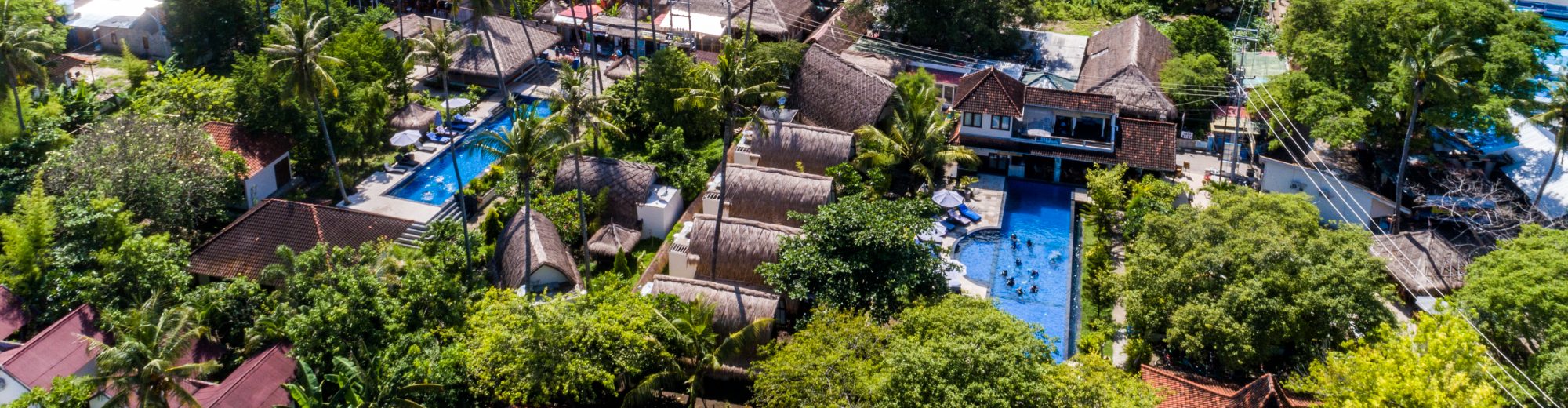
At Oceans 5 Gili Air, we offer SSI Try Scuba experiences and SSI Open Water Diver Courses every day.

Our courses follow internationally recognised SSI training standards [1].

Students first develop confidence in our large training pools before progressing into the ocean.

Because we teach in small groups of no more than four students per instructor, every diver receives personal attention throughout the course.

For many students, their first ocean dive already includes turtles.

That first underwater breath often becomes the beginning of a lifelong passion.


Experienced Divers Will Never Be Bored

The Gili Islands are not only for beginners.

Experienced divers appreciate:

  • Drift dives.
  • Nitrox diving.
  • Night dives.
  • Underwater photography.
  • Macro life.
  • Reef shark encounters.
  • Turtle cleaning stations.
  • Excellent buoyancy diving.

Many professional dive instructors living on the islands still dive these sites several times every week despite having logged thousands of dives worldwide.

That says everything about the quality of diving available.


Diving Responsibly Protects the Future

Healthy reefs require responsible divers.

International programmes such as Green Fins encourage environmentally friendly diving by promoting excellent buoyancy, avoiding contact with coral, reducing marine pollution and respecting marine wildlife [2].

At Oceans 5 Gili Air we believe conservation begins with education.

Every dive briefing includes reminders about protecting coral reefs and respecting marine life.

Small actions from every diver make a significant difference over time.


Why Choose Oceans 5 Gili Air?

There are many dive centres around the Gili Islands.

At Oceans 5 Gili Air we have built our reputation on quality rather than quantity.

As an SSI Instructor Training Centre, we focus on:

  • Small diving groups.
  • Experienced instructors.
  • Modern facilities.
  • Two large training pools.
  • High safety standards.
  • Environmental responsibility.
  • Personal attention.

Whether you are joining your very first Try Scuba programme, completing your Open Water certification or training to become a professional dive instructor, our goal remains the same:

To make every dive enjoyable, safe and unforgettable.


Frequently Asked Questions

Is the Gili Islands suitable for beginner divers?

Yes. Warm water, excellent visibility, gentle dive sites and abundant marine life make the Gili Islands one of the easiest and most enjoyable places in Indonesia to learn scuba diving [1].

What marine life will I see?

Most divers encounter green sea turtles, hawksbill turtles, reef fish, moray eels, octopus, cuttlefish, rays and often juvenile white-tip reef sharks.

When is the best time to dive?

The Gili Islands offer year-round diving. The dry season generally provides the best visibility, while marine life remains excellent throughout the year.

Can I learn scuba diving if I cannot swim very well?

To become certified, SSI requires students to complete a swimming assessment. However, people who are not yet ready for certification can still experience breathing underwater by joining an SSI Try Scuba programme under the direct supervision of an instructor [1].

Are reef sharks dangerous?

No. White-tip reef sharks are naturally shy animals and are generally more interested in resting or hunting small fish than interacting with divers [6].

Why should I choose Oceans 5 Gili Air?

Oceans 5 combines experienced SSI instructors, small teaching groups, excellent facilities, two spacious training pools, high safety standards and a strong commitment to marine conservation.


References

[1] SSI (Scuba Schools International). Open Water Diver Standards and Recreational Diving Program Information.https://www.divessi.com

[2] Green Fins. Environmental Best Practices for Dive Operators. https://www.greenfins.net

[3] Balai Kawasan Konservasi Perairan Nasional (BKKPN) Kupang. Gili Matra Marine Recreation Reserve.

[4] Indonesian Ministry of Marine Affairs and Fisheries (KKP). Marine Conservation Areas in Indonesia.https://kkp.go.id

[5] International Union for Conservation of Nature (IUCN). The IUCN Red List of Threatened Species: Chelonia mydasand Eretmochelys imbricata. https://www.iucnredlist.org

[6] NOAA Ocean Service. Coral Reef Ecosystems and Marine Biodiversity. https://oceanservice.noaa.gov

Discover a Whole New World Beneath the Surface with Oceans 5 Gili Air

A World That Most People Never See

SSI Open Water | Best dive shop Gili Air | Dive resort Oceans 5

Have you ever wondered what it feels like to breathe underwater? To float effortlessly over colorful coral reefs while sea turtles glide peacefully beside you?

Scuba diving opens the door to a completely different world—one that very few people ever get to experience. Although more than 70% of our planet is covered by oceans, only a small percentage of people have explored what lies beneath the surface. It is a quiet, fascinating environment filled with incredible marine life, vibrant coral reefs, and unforgettable moments.

The underwater world is waiting for you, and your adventure can begin today.

Start Your Diving Journey at Oceans 5 Gili Air

At Oceans 5 Gili Air, we make learning to dive safe, enjoyable, and personal. Whether you have never worn a mask before or you’re ready to become a certified diver, our experienced team is here to guide you every step of the way.

Every day we offer:

No previous experience is needed—just a sense of adventure.

Small Groups Make a Big Difference

Learning to dive should never feel rushed.

That’s why we keep our courses personal, with a maximum of four students per instructor. Small groups mean more individual attention, more time to practice, and a relaxed learning environment where you can build confidence at your own pace.

Our instructors are highly experienced and passionate about introducing new divers to the underwater world. Their goal is not only to help you earn a certification but to make your very first diving experience something you’ll remember for the rest of your life.

Meet the Turtles of the Gili Islands

One of the highlights of diving around Gili Air is the incredible chance of seeing sea turtles.

In fact, many students spot turtles during their very first open water dive. Watching a green or hawksbill turtle swim gracefully through the reef is an experience that never gets old, no matter how many dives you have completed.

Because of the healthy turtle population and the frequent encounters underwater, we proudly call the Gili Islands the Turtle Capital of the World. It’s one of the reasons divers from around the globe choose Gili Air as the perfect place to learn to dive.

Your Adventure Starts Today

There is an entire world beneath the waves that most people will never experience.

You can be one of the few who discover it.

Join one of our daily SSI Basic Diving experiences or take the first step toward becoming a certified diver with our SSI Open Water Diver Course. At Oceans 5 Gili Air, you’ll learn in small groups, dive with experienced instructors, and quite possibly meet your first sea turtle on your very first dive.

The underwater world is closer than you think.

Come and discover it with Oceans 5 Gili Air.

Continue Your Dive Education with SSI at Oceans 5 Gili Air

SSI Open Water Course Gili Islands | SSI Instructor Training Center Oceans 5 Gili Air

Continue Your Dive Education with SSI at Oceans 5 Gili Air – No Need to Start Over

One of the most common questions we receive at Oceans 5 Gili Air is:

“I have my scuba diving certification from another organization. Can I continue my dive education with SSI, or do I have to start all over again?”

The answer is simple:

No, you do not have to restart your dive education.

Whether you are certified as an Open Water Diver, Advanced Diver, Rescue Diver, or Divemaster through another internationally recognized scuba diving organization, you can continue your training with SSI at Oceans 5 Gili Air. Simply show us proof of your certification, and we’ll help you enroll in the appropriate SSI course.

Already an Open Water Diver? Continue with the SSI Advanced Open Water Course

If you have completed your Open Water Diver certification with another internationally recognized training agency, you can enroll directly in the SSI Advanced Open Water Course at Oceans 5 Gili Air.

There is no need to repeat your Open Water course. Your previous training is recognized, allowing you to continue developing your diving skills while experiencing SSI’s modern training system.

During the SSI Advanced Open Water Course, you’ll expand your diving experience through five adventure dives. Two dives are mandatory—Deep Diving and Navigation—while the remaining three can be selected based on your interests. Popular choices around the Gili Islands include Perfect Buoyancy, Night Diving, Wreck Diving, Drift Diving, Fish Identification, and many more.

Can I Continue Beyond the Advanced Open Water Course?

Absolutely.

Many divers think that only Open Water certifications are recognized between diving organizations. Fortunately, that’s not the case.

If you already hold certifications such as:

  • Advanced Diver
  • Rescue Diver
  • Divemaster

from another internationally recognized diving organization, you can continue your SSI education without repeating the courses you have already completed.

Simply present your certification card or digital certification, and our instructors will guide you into the next SSI program that matches your experience.

Choose from a Wide Range of SSI Specialty Courses

After your certification has been verified, you can enroll in any SSI Specialty Course for which you meet the prerequisites.

At Oceans 5 Gili Air, we are proud to offer one of the largest selections of SSI Specialty Courses in Indonesia.

Popular specialties include:

  • Deep Diving
  • Enriched Air Nitrox
  • Drift Diving
  • Perfect Buoyancy
  • Wreck Diving
  • Night & Limited Visibility
  • Navigation
  • Search & Recovery
  • Boat Diving
  • Computer Diving
  • Recreational Sidemount
  • Independent Diving

We also offer an extensive range of SSI Ecology Specialties, including:

  • Marine Ecology
  • Coral Identification
  • Fish Identification
  • Sea Turtle Ecology
  • Shark Ecology
  • Nudibranch Ecology
  • Marine Mammal Ecology
  • Invertebrate Ecology
  • Manta & Ray Ecology

One of the things that makes Oceans 5 Gili Air unique is our instructor team. Our instructors hold a wide variety of SSI Specialty Instructor ratings, giving you the opportunity to continue learning in many different directions. Whether your goal is improving your buoyancy, learning to dive deeper, exploring wrecks, or expanding your marine life knowledge, we have experienced instructors ready to teach you.

Already a Rescue Diver or Divemaster?

If you are already a Rescue Diver or Divemaster with another recognized diving organization, you do not need to repeat those certifications either.

You can simply continue with the next appropriate SSI course.

Many professional divers choose Oceans 5 Gili Air to continue their education because we offer the complete range of SSI professional training, from Divemaster through to Instructor Training Courses.

Our experienced Instructor Trainers, small class sizes, and personal coaching ensure you receive the highest quality education throughout your professional journey.

Why Continue Your Diving Education with SSI?

SSI has become one of the world’s leading scuba diving training organizations. Its digital learning system, flexible educational approach, and extensive range of specialty courses allow divers to continue learning throughout their diving careers.

At Oceans 5 Gili Air, we combine the SSI educational philosophy with:

  • Small groups for personalized instruction
  • Highly experienced instructors
  • One of Indonesia’s largest selections of SSI Specialty Courses
  • Daily diving around the beautiful Gili Islands
  • Training that focuses on safety, confidence, buoyancy, and becoming a better diver

Whether you simply want to become a more confident recreational diver or are planning a professional diving career, our team is ready to help you take the next step.

Switching to SSI Is Easy

The process couldn’t be simpler.

Bring your certification card or digital certification from your current training organization, and we’ll verify your certification.

After that, you can continue your diving education with SSI—without repeating the courses you’ve already completed.

Your previous experience counts.

So whether you’re an Open Water Diver ready for your SSI Advanced Open Water Course, an Advanced Diver looking for specialty training, a Rescue Diver expanding your skills, or a Divemaster working toward becoming an SSI Instructor, Oceans 5 Gili Air makes the transition smooth and straightforward.

Don’t start over. Continue your diving journey with SSI and discover why so many divers choose Oceans 5 Gili Air to take the next step in their underwater adventure.

Gili Island Etiquette

Gili Island Etiquette


No bikinis on the streets

No bikinis on the streets


Why do you want to travel to the Gili Islands in Indonesia? Just like a lot of people you are probably want to discover tropical places and different cultures, open your mind, your heart and have fun. When travelling, it is important to blend in and respect the local populations we are visiting so that we don’t offend anyone and fully live the experience of travelling abroad.

So if you are coming to visit the tropical paradise of the Gili Islands, please note a few local dos and donts to help you have a happy stay:

Behaviour:

– In the local culture, it is very rude to point with the feet, so if you need to show something, use your hands

– When giving or receiving something, when eating or touching use your right hand. The left hand is used for other businesses…

– Remove your shoes when entering a building and wait to be invited to sit if you are a guest.

– Smiling and having fun happen naturally when on holiday. Some situations can sometimes be a little frustrating or tiring. Try and deal with these keeping a smile on, the issue will be resulted much easier. Shouting and screaming are very counterproductive and rarely brings a solution. Just keep smiling!

Dress Codes:

As most of the population on the Gili Islands and being located in Asia and mostly muslim, the dress codes here are very different than in the western world. People are modest and cover their body and sometimes their head. Of course as tourists, we are not expected to dress the same way, but we are expected to be respectful! There are signs around the islands, which keep on being ignored. So please be aware!!

– When walking around the island and in villages, tourists need to wear clothes, shorts and t-shirts are good, bikinis are not. When in doubt, put it on!

– On the beach or on a dive boat, bikini and swimwear are accepted, please do note that being topless or wearing very small and revealing bikinis or G-strings are not. So please cover your bits!

We hope that this blog with help you enjoy your holiday and the tropical paradise to the fullest. Please do get in touch on info@oceans5dive.com for any further information on etiquette or scuba diving at all levels. Happy Holiday!!

Diving during rainy season

Dive resort Oceans 5 Gili Air and the island during rainy season
Oceans 5 caters fundivers and organises courses, including IDC’s (Instructor Development Courses), the whole year round.

image.jpg
Wet season arrives roughly somewhere in November and ends start of May, with the occasional rain showers in the month after. Because of their geographic location, the Gili Islands enjoy a very comfortable micro climate. The rainclouds tend to pass over as they get drawn towards the big volcanoes on Lombok, which results in a maximum of 2h of rain on average a day.
During this time the islands turns into a lush, green place where wildlife flourishes. You hear the mating calls from our resident Tokeh Tokeh’s (big gecko’s) around sunset, baby monitor lizards playing around in swimming pools, butterflies dancing and our tropical birds feeding their newborns.

The water temperature in the ocean stays fairly constant (27-30), with a slight drop of visibility due to all the nutrients coming in when our currents shift occassionally. This brings a big behavioural change in our marine eco system. Plenty of food to go by for all the species we have around the Gili’s. You can see fry and fingerlings feeding in great numbers, which provides food for some bigger fish and the ball starts rolling. The result is divers enjoying eventful dives with a lot of action.
Our macrolife also has its share of all the riches this time of the year, which makes the islands perfect for photographers during rainy season.
And last but not least we have whalesharks, manta rays and devil rays passing by on occasion to feed on all the goodies. While there is never any guarantee to see them, rainy season is where you have the best chance of spotting them.

This time of the year brings changes, and these changes are welcome every year! Its amazing how a bit of water can change both the look of the island, and everything and everyone that lives on and around the islands.
Come and experience a green lush paradise where diving will stun you. Sign up for a course if you’re not a diver yet, book fundives with our amazing local guides who will take you on a tour in their underwater backyard or sign up for your IDC if you would like to teach people how to dive in places like Gili Air.

For more information visit our websites:
http://www.oceans5dive.com
http://www.indonesia-idc.com


Potecting the reefs

Oceans 5 is protecting the reefs. Every week Oceans 5 dive resort organizes a free reef clean up in the harbor of
Gili Air, Indonesia. A lot of people are asking us, why is our dive shop doing this and why is it so important to make awareness about the coral?

IDC Center Oceans 5  Gili Islands cleans up the reefs

So why are coral reefs so important?

Coral reefs are some of the most diverse and valuable ecosystems on Earth. Coral reefs support more species per unit area than any other marine environment, including about 4,000 species of fish, 800 species of hard corals and hundreds of other species. Scientists estimate that there may be another 1 to 8 million undiscovered species of organisms living in and around reefs (Reaka-Kudla, 1997). This biodiversity is considered key to finding new medicines for the 21st century. Many drugs are now being developed from coral reef animals and plants as possible cures for cancer, arthritis, human bacterial infections, viruses, and other diseases.

Storehouses of immense biological wealth, reefs also provide economic and environmental services to millions of people. Coral reefs may provide goods and services worth $375 billion each year. This is an amazing figure for an environment that covers less than 1 percent of the Earth’s surface (Costanza et al., 1997).

Healthy reefs contribute to local economies through tourism. Diving tours, fishing trips, hotels, restaurants, and other businesses based near reef systems provide millions of jobs and contribute billions of dollars all over the world.

The commercial value of U.S. fisheries from coral reefs is over $100 million (NMFS/NOAA, 2001). In addition, the annual value of reef-dependent recreational fisheries probably exceeds $100 million per year. In developing countries, coral reefs contribute about one-quarter of the total fish catch, providing critical food resources for tens of millions of people (Jameson et al., 1995).

Coral reefs buffer adjacent shorelines from wave action and prevent erosion, property damage and loss of life. Reefs also protect the highly productive wetlands along the coast, as well as ports and harbors and the economies they support. Globally, half a billion people are estimated to live within 100 kilometers of a coral reef and benefit from its production and protection.
Human-caused, or anthropogenic activities are major threats to coral reefs. Pollution, overfishing, destructive fishing practices using dynamite or cyanide, collecting live corals for the aquarium market and mining coral for building materials are some of the many ways that people damage reefs all around the world every day. (Bryant et al., 1998)

One of the most significant threats to reefs is pollution. Land-based runoff and pollutant discharges can result from dredging, coastal development, agricultural and deforestation activities, and sewage treatment plant operations. This runoff may contain sediments, nutrients, chemicals, insecticides, oil, and debris (UVI, 2001).

When some pollutants enter the water, nutrient levels can increase, promoting the rapid growth of algae and other organisms that can smother corals (Jones & Endean, 1976).

Coral reefs also are affected by leaking fuels, anti-fouling paints and coatings, and other chemicals that enter the water (UVI, 2001). Petroleum spills do not always appear to affect corals directly because the oil usually stays near the surface of the water, and much of it evaporates into the atmosphere within days. However, if an oil spill occurs while corals are spawning, the eggs and sperm can be damaged as they float near the surface before they fertilize and settle. So, in addition to compromising water quality, oil pollution can disrupt the reproductive success of corals, making them vulnerable to other types of disturbances. (Bryant, et al, 1998).

In many areas, coral reefs are destroyed when coral heads and brightly-colored reef fishes are collected for the aquarium and jewelry trade. Careless or untrained divers can trample fragile corals, and many fishing techniques can be destructive. In blast fishing, dynamite or other heavy explosives are detonated to startle fish out of hiding places. This practice indiscriminately kills other species and can crack and stress corals so much so that they expel their zooxanthellae. As a result, large sections of reefs can be destroyed. Cyanide fishing, which involves spraying or dumping cyanide onto reefs to stun and capture live fish, also kills coral polyps and degrades the reef habitat (NMFS Office of Protected Resources, 2001). More than 40 countries are affected by blast fishing, and more than 15 countries have reported cyanide fishing activities (ICRI, 1995).

Certain types of fishing can severely damage reefs. Trawlers catch fish by dragging nets along the ocean bottom. Reefs in the net’s path get mowed down. Long wide patches of rubble and sand are all that is left in their wake.

Other damaging fishing techniques include deep water trawling, which involves dragging a fishing net along the sea bottom, and muro-ami netting, in which reefs are pounded with weighted bags to startle fish out of crevices. (Bryant, et al, 1998). Often, fishing nets left as debris can be problematic in areas of wave disturbance. In shallow water, live corals become entangled in these nets and are torn away from their bases (Coles, 1996). In addition anchors dropped from fishing vessels onto reefs can break and destroy coral colonies (Bryant, et al, 1998).

Around the Gili Islands there is are the same kind of problems. The Gili Islands were attacked by a bleaching event, sand erosion by coastal developments, dynamite fishing, compressor fishing, coastal developments on the beach, waste water problems, plastic problems and more. It is time to stand up, to do something about it. That’s why Oceans 5 organizes free Beach and Reef Clean Ups.

Oceans 5 supports actively the Ocean CleanUp program and Shark Guardian.

Oceans 5 is also organizing events, the next event will be the 25th of August: a presentation about Mola Molas, the Sun Fish.

For more information how in protecting the reefs write us an email: info@oceans5dive.com.

Top 10 Most Endangered Fish: Number 1

Bluefin Tuna

Perhaps the most iconic of endangered fish, the bluefin tuna occupies most of the northern Atlantic Ocean. One of the fastest fish in the sea, this species can grow to a length of 10 feet and weigh more than 1,400 pounds. This species’ reputation as a fighter has made it a popular catch among recreational fisherman. And at a going rate of up to $100,000 per fish, it’s highly prized by commercial fisherman as well. Bluefin tuna are heavily overfished, and most experts agree that without prompt intervention, the slow-growing, slow-maturing species will become extinct. International regulation is tricky, however, since the bluefin tuna is known to migrate thousands of miles across the ocean. And so far, efforts to control harvests have largely failed. Chosen by the WWF (formerly known as the World Wildlife Fund) as the sixth most threatened species in the world, sea or land, the bluefin tuna is by all measures critically endangered.

Top 10 Most Endangered Fish: Number 3

Goliath Grouper

All species of grouper are endangered to some extent, but the Goliath Grouper is particularly threatened. Also known as the jewfish, it lives in the subtropical areas of the eastern Pacific (from Baja California to Peru) and the Atlantic (from North Carolina to Brazil). As the name suggests, it’s a very large fish, growing to 7 feet in length in its 40-year life span. Overfishing of the Goliath grouper is a result of two main issues. First, it reproduces for only a short period of time, resulting in relatively few offspring compared to other species. Second, juveniles often become accidental bycatch in other fishing operations. What fish remain are targeted during spawning by hook-and-line fishing boats. Out of concern for the Goliath grouper’s survival, the United States banned harvest of the species, and the IUCN rated them as critically endangered.

Top 10 Most Endangered Fish: Number 5

Bocaccio Rockfish

Of the more than 70 species of rockfish living off the United States’ west coast, the bocaccio rockfish is one of the most endangered. While this 3-foot fish reaches reproductive age sooner than many overfished species — as early as four to five years — its larvae have a very low survival rate. Changes in ocean currents and temperature since the 1970s mean that large numbers of bocaccio larvae live to become juveniles only once every 20 years. In response to their dwindling numbers, the United States closed several fisheries along the West Coast in 2002. But even without trawling in these areas, scientists believe it could take 100 years for bocaccio populations to recover. With such significant challenges to recovery, the IUCN has listed the species as critically endangered.

Certificate of Excellence of Tripadvisor

Thank you all Guests, staff, management, friends, family and all we forgot….

TripAdvisor is delighted to recognize Oceans 5 Dive Resort with a 2013 Certificate of Excellence!!!