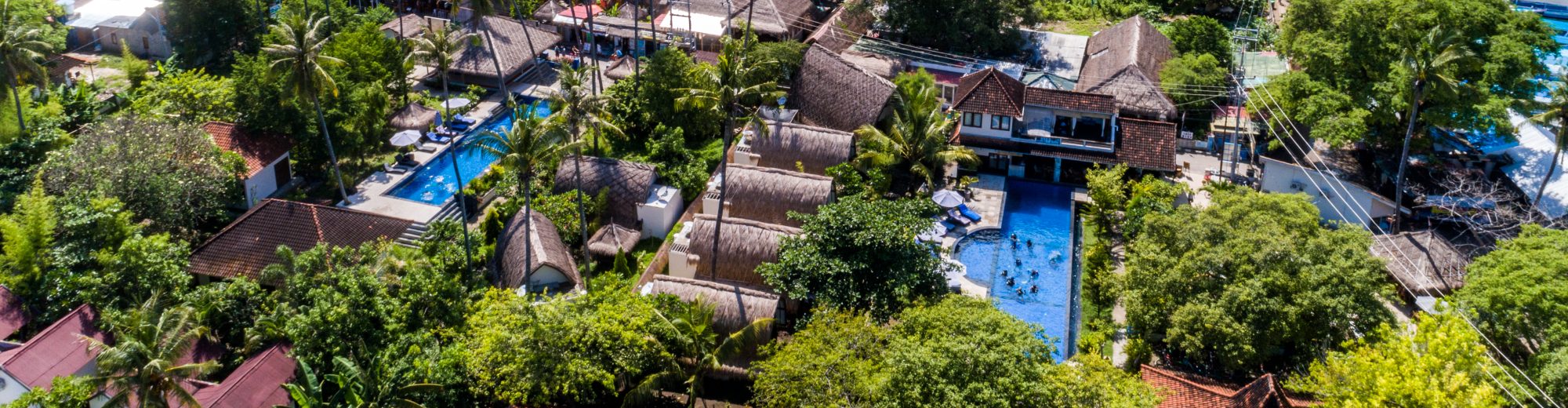
Oceans 5 is protecting the reefs. Every week Oceans 5 dive resort organizes a free reef clean up in the harbor of
Gili Air, Indonesia. A lot of people are asking us, why is our dive shop doing this and why is it so important to make awareness about the coral?

So why are coral reefs so important?
Coral reefs are some of the most diverse and valuable ecosystems on Earth. Coral reefs support more species per unit area than any other marine environment, including about 4,000 species of fish, 800 species of hard corals and hundreds of other species. Scientists estimate that there may be another 1 to 8 million undiscovered species of organisms living in and around reefs (Reaka-Kudla, 1997). This biodiversity is considered key to finding new medicines for the 21st century. Many drugs are now being developed from coral reef animals and plants as possible cures for cancer, arthritis, human bacterial infections, viruses, and other diseases.
Storehouses of immense biological wealth, reefs also provide economic and environmental services to millions of people. Coral reefs may provide goods and services worth $375 billion each year. This is an amazing figure for an environment that covers less than 1 percent of the Earth’s surface (Costanza et al., 1997).
Healthy reefs contribute to local economies through tourism. Diving tours, fishing trips, hotels, restaurants, and other businesses based near reef systems provide millions of jobs and contribute billions of dollars all over the world.
The commercial value of U.S. fisheries from coral reefs is over $100 million (NMFS/NOAA, 2001). In addition, the annual value of reef-dependent recreational fisheries probably exceeds $100 million per year. In developing countries, coral reefs contribute about one-quarter of the total fish catch, providing critical food resources for tens of millions of people (Jameson et al., 1995).
Coral reefs buffer adjacent shorelines from wave action and prevent erosion, property damage and loss of life. Reefs also protect the highly productive wetlands along the coast, as well as ports and harbors and the economies they support. Globally, half a billion people are estimated to live within 100 kilometers of a coral reef and benefit from its production and protection.
Human-caused, or anthropogenic activities are major threats to coral reefs. Pollution, overfishing, destructive fishing practices using dynamite or cyanide, collecting live corals for the aquarium market and mining coral for building materials are some of the many ways that people damage reefs all around the world every day. (Bryant et al., 1998)
One of the most significant threats to reefs is pollution. Land-based runoff and pollutant discharges can result from dredging, coastal development, agricultural and deforestation activities, and sewage treatment plant operations. This runoff may contain sediments, nutrients, chemicals, insecticides, oil, and debris (UVI, 2001).
When some pollutants enter the water, nutrient levels can increase, promoting the rapid growth of algae and other organisms that can smother corals (Jones & Endean, 1976).
Coral reefs also are affected by leaking fuels, anti-fouling paints and coatings, and other chemicals that enter the water (UVI, 2001). Petroleum spills do not always appear to affect corals directly because the oil usually stays near the surface of the water, and much of it evaporates into the atmosphere within days. However, if an oil spill occurs while corals are spawning, the eggs and sperm can be damaged as they float near the surface before they fertilize and settle. So, in addition to compromising water quality, oil pollution can disrupt the reproductive success of corals, making them vulnerable to other types of disturbances. (Bryant, et al, 1998).
In many areas, coral reefs are destroyed when coral heads and brightly-colored reef fishes are collected for the aquarium and jewelry trade. Careless or untrained divers can trample fragile corals, and many fishing techniques can be destructive. In blast fishing, dynamite or other heavy explosives are detonated to startle fish out of hiding places. This practice indiscriminately kills other species and can crack and stress corals so much so that they expel their zooxanthellae. As a result, large sections of reefs can be destroyed. Cyanide fishing, which involves spraying or dumping cyanide onto reefs to stun and capture live fish, also kills coral polyps and degrades the reef habitat (NMFS Office of Protected Resources, 2001). More than 40 countries are affected by blast fishing, and more than 15 countries have reported cyanide fishing activities (ICRI, 1995).
Certain types of fishing can severely damage reefs. Trawlers catch fish by dragging nets along the ocean bottom. Reefs in the net’s path get mowed down. Long wide patches of rubble and sand are all that is left in their wake.
Other damaging fishing techniques include deep water trawling, which involves dragging a fishing net along the sea bottom, and muro-ami netting, in which reefs are pounded with weighted bags to startle fish out of crevices. (Bryant, et al, 1998). Often, fishing nets left as debris can be problematic in areas of wave disturbance. In shallow water, live corals become entangled in these nets and are torn away from their bases (Coles, 1996). In addition anchors dropped from fishing vessels onto reefs can break and destroy coral colonies (Bryant, et al, 1998).
Around the Gili Islands there is are the same kind of problems. The Gili Islands were attacked by a bleaching event, sand erosion by coastal developments, dynamite fishing, compressor fishing, coastal developments on the beach, waste water problems, plastic problems and more. It is time to stand up, to do something about it. That’s why Oceans 5 organizes free Beach and Reef Clean Ups.
Oceans 5 supports actively the Ocean CleanUp program and Shark Guardian.
Oceans 5 is also organizing events, the next event will be the 25th of August: a presentation about Mola Molas, the Sun Fish.
For more information how in protecting the reefs write us an email: info@oceans5dive.com.


