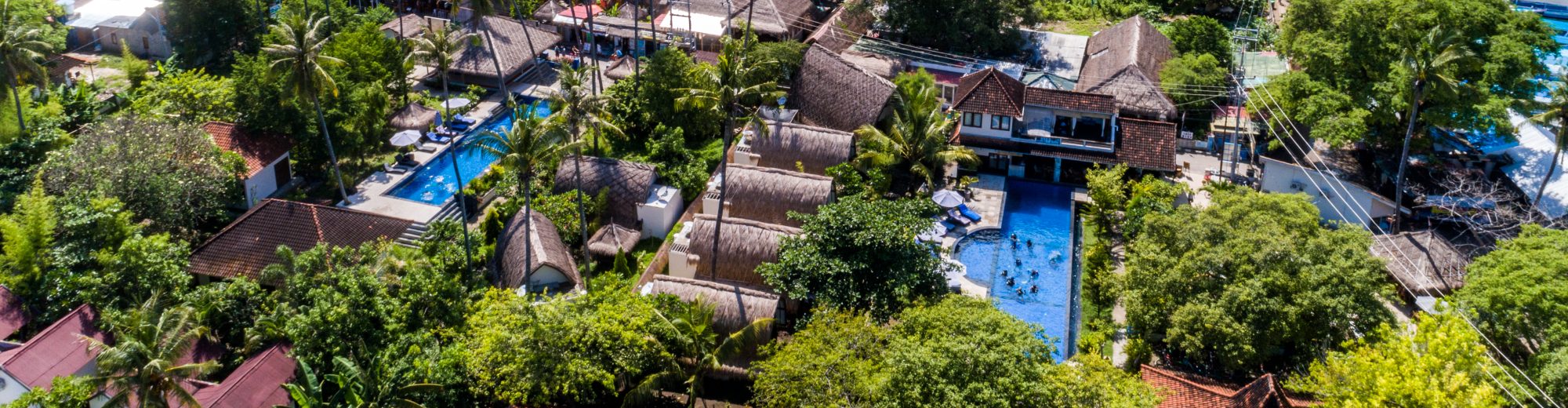
The harbor of Gili Air is a really exciting dive spot. It one of the best muck diving spots around the Gili Islands. One of the main attractions are the 4 different kind of seahorses. You will find them straight in the front of Oceans 5 dive resort.
Seahorses are truly unique, and not just because of their unusual equine shape. Unlike most other fish, they are monogamous and mate for life. Rarer still, they are among the only animal species on Earth in which the male bears the unborn young.
Found in shallow tropical and temperate waters throughout the world, these upright-swimming relatives of the pipefish can range in size from 0.6 inches (1.5 centimeters) to 14 inches (35 centimeters) long.
Male seahorses are equipped with a brood pouch on their ventral, or front-facing, side. When mating, the female deposits her eggs into his pouch, and the male fertilizes them internally. He carries the eggs in his pouch until they hatch, then releases fully formed, miniature seahorses into the water.
Because of their body shape, seahorses are rather inept swimmers and can easily die of exhaustion when caught in storm-roiled seas. They propel themselves by using a small fin on their back that flutters up to 35 times per second. Even smaller pectoral fins located near the back of the head are used for steering.
They anchor themselves with their prehensile tails to sea grasses and corals, using their elongated snouts to suck in plankton and small crustaceans that drift by. Voracious eaters, they graze continually and can consume 3,000 or more brine shrimp per day.
Population data for most of the world’s 35 seahorse species is sparse. However, worldwide coastal habitat depletion, pollution, and rampant harvesting, mainly for use in Asian traditional medicine, have made several species vulnerable to extinction.