Category Archives: oceans

Potecting the reefs

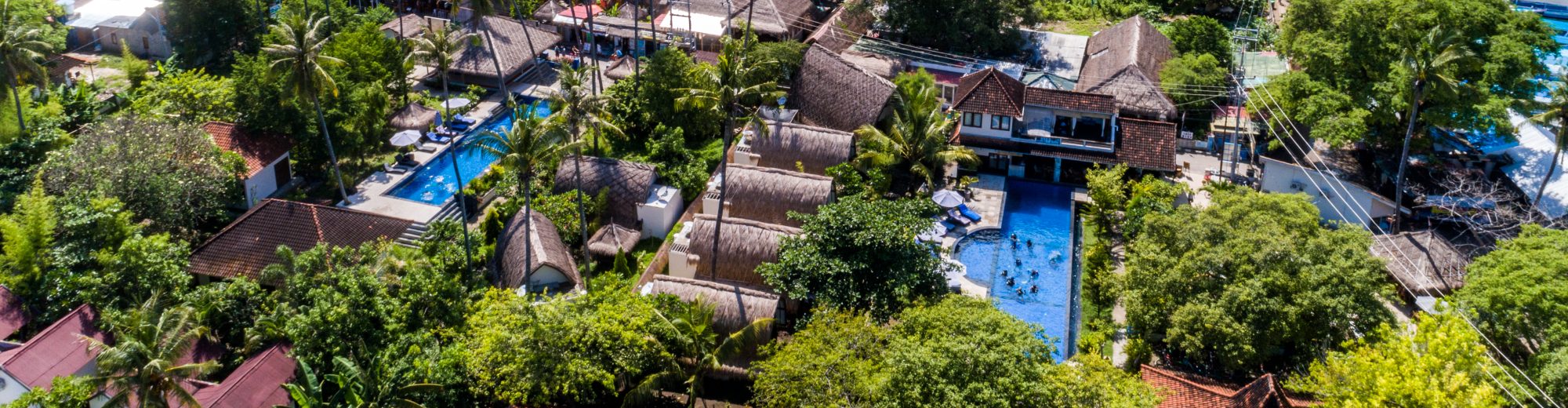
Oceans 5 is protecting the reefs. Every week Oceans 5 dive resort organizes a free reef clean up in the harbor of
Gili Air, Indonesia. A lot of people are asking us, why is our dive shop doing this and why is it so important to make awareness about the coral?

IDC Center Oceans 5  Gili Islands cleans up the reefs

So why are coral reefs so important?

Coral reefs are some of the most diverse and valuable ecosystems on Earth. Coral reefs support more species per unit area than any other marine environment, including about 4,000 species of fish, 800 species of hard corals and hundreds of other species. Scientists estimate that there may be another 1 to 8 million undiscovered species of organisms living in and around reefs (Reaka-Kudla, 1997). This biodiversity is considered key to finding new medicines for the 21st century. Many drugs are now being developed from coral reef animals and plants as possible cures for cancer, arthritis, human bacterial infections, viruses, and other diseases.

Storehouses of immense biological wealth, reefs also provide economic and environmental services to millions of people. Coral reefs may provide goods and services worth $375 billion each year. This is an amazing figure for an environment that covers less than 1 percent of the Earth’s surface (Costanza et al., 1997).

Healthy reefs contribute to local economies through tourism. Diving tours, fishing trips, hotels, restaurants, and other businesses based near reef systems provide millions of jobs and contribute billions of dollars all over the world.

The commercial value of U.S. fisheries from coral reefs is over $100 million (NMFS/NOAA, 2001). In addition, the annual value of reef-dependent recreational fisheries probably exceeds $100 million per year. In developing countries, coral reefs contribute about one-quarter of the total fish catch, providing critical food resources for tens of millions of people (Jameson et al., 1995).

Coral reefs buffer adjacent shorelines from wave action and prevent erosion, property damage and loss of life. Reefs also protect the highly productive wetlands along the coast, as well as ports and harbors and the economies they support. Globally, half a billion people are estimated to live within 100 kilometers of a coral reef and benefit from its production and protection.
Human-caused, or anthropogenic activities are major threats to coral reefs. Pollution, overfishing, destructive fishing practices using dynamite or cyanide, collecting live corals for the aquarium market and mining coral for building materials are some of the many ways that people damage reefs all around the world every day. (Bryant et al., 1998)

One of the most significant threats to reefs is pollution. Land-based runoff and pollutant discharges can result from dredging, coastal development, agricultural and deforestation activities, and sewage treatment plant operations. This runoff may contain sediments, nutrients, chemicals, insecticides, oil, and debris (UVI, 2001).

When some pollutants enter the water, nutrient levels can increase, promoting the rapid growth of algae and other organisms that can smother corals (Jones & Endean, 1976).

Coral reefs also are affected by leaking fuels, anti-fouling paints and coatings, and other chemicals that enter the water (UVI, 2001). Petroleum spills do not always appear to affect corals directly because the oil usually stays near the surface of the water, and much of it evaporates into the atmosphere within days. However, if an oil spill occurs while corals are spawning, the eggs and sperm can be damaged as they float near the surface before they fertilize and settle. So, in addition to compromising water quality, oil pollution can disrupt the reproductive success of corals, making them vulnerable to other types of disturbances. (Bryant, et al, 1998).

In many areas, coral reefs are destroyed when coral heads and brightly-colored reef fishes are collected for the aquarium and jewelry trade. Careless or untrained divers can trample fragile corals, and many fishing techniques can be destructive. In blast fishing, dynamite or other heavy explosives are detonated to startle fish out of hiding places. This practice indiscriminately kills other species and can crack and stress corals so much so that they expel their zooxanthellae. As a result, large sections of reefs can be destroyed. Cyanide fishing, which involves spraying or dumping cyanide onto reefs to stun and capture live fish, also kills coral polyps and degrades the reef habitat (NMFS Office of Protected Resources, 2001). More than 40 countries are affected by blast fishing, and more than 15 countries have reported cyanide fishing activities (ICRI, 1995).

Certain types of fishing can severely damage reefs. Trawlers catch fish by dragging nets along the ocean bottom. Reefs in the net’s path get mowed down. Long wide patches of rubble and sand are all that is left in their wake.

Other damaging fishing techniques include deep water trawling, which involves dragging a fishing net along the sea bottom, and muro-ami netting, in which reefs are pounded with weighted bags to startle fish out of crevices. (Bryant, et al, 1998). Often, fishing nets left as debris can be problematic in areas of wave disturbance. In shallow water, live corals become entangled in these nets and are torn away from their bases (Coles, 1996). In addition anchors dropped from fishing vessels onto reefs can break and destroy coral colonies (Bryant, et al, 1998).

Around the Gili Islands there is are the same kind of problems. The Gili Islands were attacked by a bleaching event, sand erosion by coastal developments, dynamite fishing, compressor fishing, coastal developments on the beach, waste water problems, plastic problems and more. It is time to stand up, to do something about it. That’s why Oceans 5 organizes free Beach and Reef Clean Ups.

Oceans 5 supports actively the Ocean CleanUp program and Shark Guardian.

Oceans 5 is also organizing events, the next event will be the 25th of August: a presentation about Mola Molas, the Sun Fish.

For more information how in protecting the reefs write us an email: info@oceans5dive.com.

Can you tell us the age of a fish?

One way to tell the age of a fish is by looking at its scales. They have growth rings just like trees. These are called circuli. Clusters of them are called annuli. Each annuli show one year.

Like the picture shows you, this fish is 10 years old.

circuli

Top 10 Most Endangered Fish: Number 1

Bluefin Tuna

Perhaps the most iconic of endangered fish, the bluefin tuna occupies most of the northern Atlantic Ocean. One of the fastest fish in the sea, this species can grow to a length of 10 feet and weigh more than 1,400 pounds. This species’ reputation as a fighter has made it a popular catch among recreational fisherman. And at a going rate of up to $100,000 per fish, it’s highly prized by commercial fisherman as well. Bluefin tuna are heavily overfished, and most experts agree that without prompt intervention, the slow-growing, slow-maturing species will become extinct. International regulation is tricky, however, since the bluefin tuna is known to migrate thousands of miles across the ocean. And so far, efforts to control harvests have largely failed. Chosen by the WWF (formerly known as the World Wildlife Fund) as the sixth most threatened species in the world, sea or land, the bluefin tuna is by all measures critically endangered.

Top 10 Most Endangered Fish: Number 2

Maltese Ray

Historically, the Maltese ray populated the Mediterranean Sea in the coastal waters of Italy, Algeria, Malta and Tunisia. Today, its range is limited to the heavily-fished Strait of Sicily, a 90-mile-wide channel between Italy and Tunisia. Though little is known about this particular species, it likely displays characteristics similar to other rays: It grows slowly, matures late and produces few offspring. Commercial fishing vessels rarely target the Maltese ray. Rather, it is taken as bycatch in boats harvesting other species. Once they’re caught, these unwanted fish are thrown back into the water, dead or dying. The decreasing population of this species and the slow response by regional governments to save it earned the Maltese ray a critically endangered rating from the IUCN.

Top 10 Most Endangered Fish: Number 3

Goliath Grouper

All species of grouper are endangered to some extent, but the Goliath Grouper is particularly threatened. Also known as the jewfish, it lives in the subtropical areas of the eastern Pacific (from Baja California to Peru) and the Atlantic (from North Carolina to Brazil). As the name suggests, it’s a very large fish, growing to 7 feet in length in its 40-year life span. Overfishing of the Goliath grouper is a result of two main issues. First, it reproduces for only a short period of time, resulting in relatively few offspring compared to other species. Second, juveniles often become accidental bycatch in other fishing operations. What fish remain are targeted during spawning by hook-and-line fishing boats. Out of concern for the Goliath grouper’s survival, the United States banned harvest of the species, and the IUCN rated them as critically endangered.

Top 10 Most Endangered Fish: Number 4

European Eel

Found primarily in the North Atlantic and the Baltic and Mediterranean Seas, European eel face a unique set of survival challenges. They have a fascinating development cycle, which begins with their birth out at sea and continues in freshwater streams thousands of miles inland, where they can grow to a length of 4.5. When they reach sexual maturity, at anywhere from 6 to 30 years of age, they return to the sea to spawn. If their route to the sea is blocked, they return to freshwater and can live for 50 years. But if they make it back to salt water and reproduce, they die. Because of this unusual life cycle, any eel that is caught at sea is a juvenile that has not yet had a chance to spawn. This has resulted in catastrophic overfishing of the European eel, and a critically endangered rating from IUCN.

Top 10 Most Endangered Fish: Number 5

Bocaccio Rockfish

Of the more than 70 species of rockfish living off the United States’ west coast, the bocaccio rockfish is one of the most endangered. While this 3-foot fish reaches reproductive age sooner than many overfished species — as early as four to five years — its larvae have a very low survival rate. Changes in ocean currents and temperature since the 1970s mean that large numbers of bocaccio larvae live to become juveniles only once every 20 years. In response to their dwindling numbers, the United States closed several fisheries along the West Coast in 2002. But even without trawling in these areas, scientists believe it could take 100 years for bocaccio populations to recover. With such significant challenges to recovery, the IUCN has listed the species as critically endangered.

Top 10 Most Endangered Fish: Number 6

Winter Skate

The winter skate is a fascinating species known to deter predators and stun prey with a quick jolt of electricity. Most are found in the northwest Atlantic Ocean, from the Gulf of St. Lawrence in Canada to North Carolina in the United States. Once thought to be a “trash fish,” the winter skate is now harvested and processed into fishmeal and lobster bait, and is even marketed for human consumption. Increased trawling for the species has resulted in the accidental capture of juveniles, which are easily mistaken for smaller, more abundant species. This has led to a staggering population decline among winter skate, which are slow to reach sexual maturity and have few offspring. Experts blame these factors for a 90 percent reduction in mature individuals since the 1970s. This devastating decline has earned the winter skate a critically endangered rating from the IUCN.

Top 10 Most Endangered Fish: Number 7

Orange Roughy

Also known as the “slimehead,” the orange roughy has a wide-ranging habitat that includes the coasts of New Zealand, Australia, Namibia and the northeast Atlantic Ocean. Its life expectancy is up to 149 years, and it reaches sexual maturation age between 20 and 32 years, making it the epitome of a species inherently vulnerable to overfishing. The pressure of overfishing is amplified by fishermen’s tendency to trawl for orange roughy when the fish congregate to feed and breed. The resulting catches wipe out generations. Though the IUCN hasn’t reviewed this species to determine if it is endangered, a number of other organizations have recognized the significant decline in its numbers after only 25 years of commercial harvesting.

Bycatch

Bycatch are sea creatures caught unintentionally. This can either be ocean dwellers other than the desired species or juveniles of the desired species.

Top 10 MOst Endangered Fish: Number 8

Acadian Redfish

This species of North Atlantic fish grows to about 20 inches in length and can live as long as 50 years. Like other overfished species, the Acadian redfish is slow-growing and reaches reproductive age late — at about eight or nine years old. Intensive trawling over the last 10 years has led to the smallest yields since commercial fishing of the species commenced in the 1930s. Worse, the Acadian redfish has been subject to pirate fishing, or fishing done in violation of environmental law. For these reasons, the IUCN lists the species as endangered.

Trawling

Trawling is a fishing technique where a large, deep net is pulled behind a boat. Often this net drags on the ocean floor, stirring up sediment and altering seafloor habitat. The effects of trawling can actually be seen on satellite images taken from space.