Category Archives: SSI ITC Dive Resort Gilis

An SSI ITC Dive Resort is a professional dive center that offers the SSI Instructor Training Course (ITC) in a full resort environment. This means that instructor candidates can complete their training while staying, diving, and learning at the same location. The SSI ITC is designed to prepare Divemasters to become professional dive instructors by developing teaching skills, leadership abilities, and a strong understanding of SSI training standards.
At an SSI ITC Dive Resort, candidates train in classrooms, confined water facilities, and open-water dive sites while being coached by an experienced SSI Instructor Trainer. The program combines theory sessions, in-water teaching practice, and workshops that prepare candidates for the final Instructor Evaluation, where they demonstrate their ability to teach diving safely and professionally.
Training at a dive resort also allows candidates to experience the daily life of a professional dive center, making it the ideal environment to start a career as an SSI Open Water Instructor.

Why So Many Divers Recommend Oceans 5 Gili Air | Best Dive Shop Indonesia

Why So Many Divers Recommend Oceans 5 Gili Air | Best Dive Shop Indonesia

Oceans 5 Gili Air

When divers search for the best dive shop in Indonesia, they are usually looking for more than just a place to rent equipment. They want experienced instructors, small groups, high safety standards, well-maintained equipment, comfortable facilities, and unforgettable underwater experiences. These are just some of the reasons why so many divers recommend Oceans 5 Gili Air.

Located on the beautiful island of Gili Air, between Bali and Lombok, Oceans 5 has built its reputation by focusing on one simple philosophy: quality always comes before quantity.

A Dive Shop Built on Quality

Since opening its doors in 2010, Oceans 5 Gili Air has welcomed thousands of divers from around the world. From complete beginners taking their very first breaths underwater to experienced technical divers and future dive professionals, every diver receives the same attention to detail.

Rather than taking large groups underwater, Oceans 5 keeps dive groups small. This allows instructors and divemasters to provide a safer, more personal experience while helping divers improve their confidence and underwater skills.

This commitment to quality has resulted in countless returning guests and recommendations from divers who appreciate professional service over mass tourism.

Professional SSI Dive Center

Oceans 5 is an SSI Instructor Training Center, offering the complete range of SSI recreational and professional scuba diving courses.

Whether you want to try scuba diving for the first time or continue your professional career, you’ll find experienced instructors ready to help you reach your goals.

Courses include:

  • SSI Open Water Diver
  • Advanced Adventurer
  • Enriched Air Nitrox
  • Deep Diving
  • Wreck Diving
  • Perfect Buoyancy
  • Rescue Diver
  • Divemaster
  • Assistant Instructor
  • Instructor Training Course (ITC)
  • Numerous Marine Ecology Specialties

Every course focuses not only on meeting certification requirements but also on building real diving skills that last long after certification.

Exceptional Dive Facilities

One of the reasons Oceans 5 is often mentioned as one of the best dive shops in Indonesia is its facilities.

The dive center features:

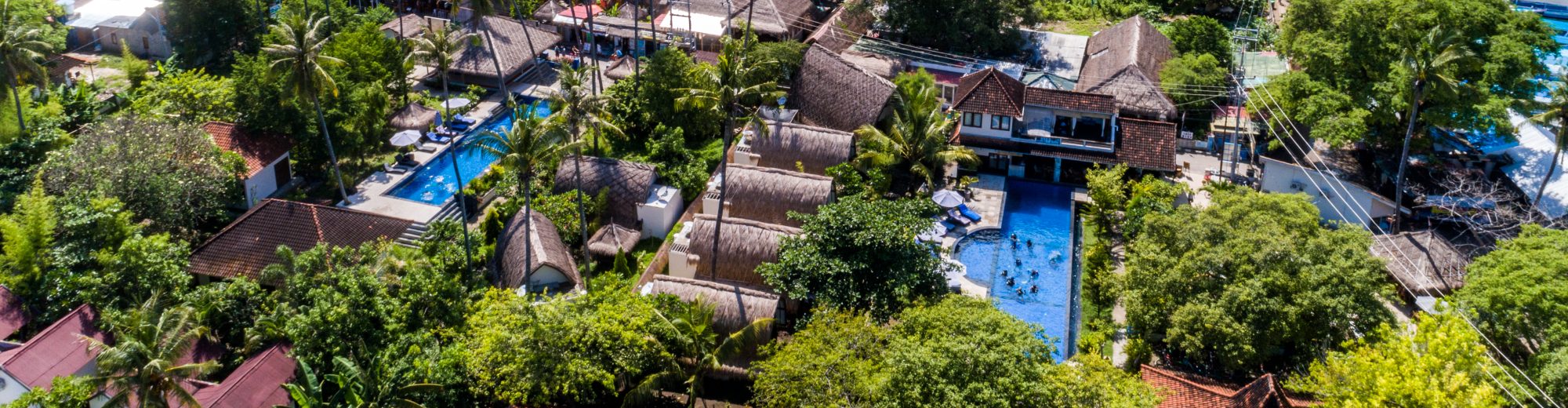
  • Two large swimming pools dedicated to diver training
  • Three custom-built dive boats
  • Modern classrooms
  • Well-maintained rental equipment
  • Equipment rinsing and drying areas
  • Spacious gear storage
  • Comfortable accommodation
  • On-site restaurant
  • Modern fitness gym

Having two training pools means courses can continue comfortably even during busy periods, giving instructors more flexibility and students more space to learn.

Diving Around the Gili Islands

The waters surrounding Gili Air, Gili Meno, and Gili Trawangan offer some of Indonesia’s most enjoyable diving.

Divers regularly encounter:

  • Green Sea Turtles
  • Hawksbill Turtles
  • Blacktip Reef Sharks
  • Whitetip Reef Sharks
  • Clownfish
  • Moray Eels
  • Blue-spotted Stingrays
  • Frogfish
  • Octopus
  • Nudibranchs
  • Seahorses
  • Large schools of reef fish

With warm tropical water throughout the year, excellent visibility, and dive sites suitable for every certification level, the Gili Islands remain one of Indonesia’s top scuba diving destinations.

Safety Is Always the Priority

At Oceans 5, safety is never compromised.

All instructors and divemasters receive regular emergency response refreshers, equipment is maintained to a high standard, and every dive begins with a detailed briefing covering:

  • Dive site information
  • Entry and exit procedures
  • Maximum depth
  • Maximum dive time
  • Current conditions
  • Emergency procedures
  • Buddy teams

This professional approach creates a relaxed atmosphere where divers can simply enjoy the underwater world.

Small Groups Make a Big Difference

One of the biggest compliments Oceans 5 receives is the personal attention every diver receives.

Certified divers are guided in small groups, allowing guides to adapt the dive to the experience level of everyone involved.

Students also benefit from small instructor-to-student ratios, ensuring plenty of individual coaching during every course.

Instead of feeling like part of a crowd, divers enjoy a much more relaxed and enjoyable experience.

More Than Just Diving

Oceans 5 is more than a dive center.

Located directly in Gili Air’s harbour area, guests can easily explore the island after diving. Restaurants, cafés, sunset viewpoints, local markets, and beaches are all within walking distance.

For non-divers, the resort offers comfortable accommodation, swimming pools, a peaceful atmosphere, and easy access to everything Gili Air has to offer.

Families, couples, solo travelers, and groups all find Oceans 5 an ideal base for their holiday.

Dedicated to Marine Conservation

Protecting the ocean is part of daily life at Oceans 5.

The dive center regularly organizes beach clean-ups, supports marine research projects with Indonesian universities, promotes responsible diving practices, and offers several SSI Marine Ecology Specialty courses.

Teaching divers how to enjoy the underwater world responsibly helps preserve the reefs for future generations.

Why Divers Keep Coming Back

Many guests return to Oceans 5 year after year.

They appreciate:

  • Friendly international team
  • Experienced instructors
  • High safety standards
  • Excellent dive sites
  • Small dive groups
  • Professional equipment
  • Relaxed atmosphere
  • Comfortable accommodation
  • Environmental commitment

These returning guests have helped build Oceans 5’s reputation as one of the best dive shops in Indonesia.

Experience the Oceans 5 Difference

Finding the right dive center can make all the difference to your scuba diving holiday.

Whether you’re taking your very first Open Water course, exploring Indonesia’s spectacular reefs, continuing your professional diving career, or simply enjoying fun dives with friends, Oceans 5 Gili Air offers the experience, facilities, and professionalism that divers value.

It’s easy to understand why so many guests recommend Oceans 5 to friends and family. At Oceans 5 Gili Air, every dive is built on safety, quality, and a genuine passion for the underwater world.

SSI Kids Program | Dive Resort Oceans 5 Gili Air| Holiday Destination Indonesia | Dive Trip Gili Islands

Adapting Teaching Styles as a Dive Instructor

Adapting Teaching Styles as a Dive Instructor: A Path to Success

Adapting Teaching Styles | Scuba Diving Indonesia
Adaptive Teaching Styles as a Dive Instructor

Becoming a successful dive instructor requires more than just technical knowledge and expertise in diving. It demands an understanding of how different individuals learn and the ability to adapt teaching styles to meet those needs. Every person absorbs information in their unique way—some by reading about it, others by doing it, and others by seeing it. Recognizing these differences and adjusting your teaching methods accordingly can significantly enhance the learning experience and success of your students.

Understanding Learning Styles

People generally learn through three primary modalities: visual, auditory, and kinesthetic. Visual learners grasp information better when they see it. They benefit from diagrams, videos, and written instructions. Auditory learners prefer listening. They retain information more effectively through verbal explanations, discussions, and auditory materials. Kinesthetic learners, on the other hand, learn best by doing. Hands-on activities, demonstrations, and physical involvement are crucial for their understanding.

As a dive instructor, it’s essential to identify the learning styles of your students early in the course. This identification allows you to tailor your instruction to suit each learner, ensuring that all students have the best possible chance to succeed.

Adapting to Different Age Groups

The age of your students also plays a significant role in how you should approach teaching. Children and adults have different learning capacities, attention spans, and ways of engaging with new information.

Teaching Children

When teaching children, the approach needs to be dynamic and engaging. Children have shorter attention spans and often require more interactive and entertaining methods to stay focused. Incorporating games into the learning process can make diving fun and memorable for them. For instance, underwater treasure hunts can teach navigation and buoyancy control in an enjoyable way. Additionally, theory sessions for children should be concise and to the point, avoiding long and complex explanations that can lead to disinterest or confusion. Smaller group sizes are also beneficial, providing more personalized attention and ensuring that each child receives the support they need.

Teaching Adults

Conversely, teaching adults, especially those around 25 years old, necessitates a different strategy. Adults typically have longer attention spans and can handle more extended theoretical sessions. However, they might need more time to process and apply what they’ve learned, particularly if they are new to diving or have reservations about the activity. For these students, longer time should be allocated to discussions, addressing their questions and concerns thoroughly. Pool sessions can be shorter but more intensive, focusing on mastering techniques before moving on to the next skill.

Developing Multiple Teaching Styles

As a beginner instructor, developing a repertoire of teaching styles is crucial. This flexibility not only helps in addressing the diverse learning needs of your students but also makes you a more effective and adaptable instructor. Here are a few strategies to consider:

1. Combine Visuals and Demonstrations: Use videos, diagrams, and live demonstrations to cater to visual and kinesthetic learners. Showing rather than just telling can make a significant difference in comprehension.

2. Interactive Discussions: Engage students in discussions and verbal explanations to support auditory learners. Encourage questions and foster a dialogue to ensure they are following along.

3. Hands-On Practice: Ensure that every lesson includes practical, hands-on activities. Whether it’s assembling diving gear or practicing underwater navigation, kinesthetic learners will benefit from doing rather than just observing or listening.

4. Adapt Based on Feedback: Regularly solicit feedback from your students to understand what is working and what isn’t. Be willing to modify your approach based on their input.

5. Maintain Flexibility: Be prepared to switch up your methods if you notice that a particular student or group is struggling. Flexibility is key to addressing the varying needs of learners.

Conclusion

In conclusion, the ability to adapt your teaching style to meet the diverse learning needs of your students is an essential skill for any dive instructor. By recognizing different learning styles and adjusting your approach accordingly, you can create a more inclusive, effective, and enjoyable learning experience. Whether teaching children with interactive games and short sessions or engaging adults with in-depth discussions and practical exercises, the key to success lies in your adaptability and dedication to meeting each student’s unique needs.

Gili Island Etiquette

Gili Island Etiquette


No bikinis on the streets

No bikinis on the streets


Why do you want to travel to the Gili Islands in Indonesia? Just like a lot of people you are probably want to discover tropical places and different cultures, open your mind, your heart and have fun. When travelling, it is important to blend in and respect the local populations we are visiting so that we don’t offend anyone and fully live the experience of travelling abroad.

So if you are coming to visit the tropical paradise of the Gili Islands, please note a few local dos and donts to help you have a happy stay:

Behaviour:

– In the local culture, it is very rude to point with the feet, so if you need to show something, use your hands

– When giving or receiving something, when eating or touching use your right hand. The left hand is used for other businesses…

– Remove your shoes when entering a building and wait to be invited to sit if you are a guest.

– Smiling and having fun happen naturally when on holiday. Some situations can sometimes be a little frustrating or tiring. Try and deal with these keeping a smile on, the issue will be resulted much easier. Shouting and screaming are very counterproductive and rarely brings a solution. Just keep smiling!

Dress Codes:

As most of the population on the Gili Islands and being located in Asia and mostly muslim, the dress codes here are very different than in the western world. People are modest and cover their body and sometimes their head. Of course as tourists, we are not expected to dress the same way, but we are expected to be respectful! There are signs around the islands, which keep on being ignored. So please be aware!!

– When walking around the island and in villages, tourists need to wear clothes, shorts and t-shirts are good, bikinis are not. When in doubt, put it on!

– On the beach or on a dive boat, bikini and swimwear are accepted, please do note that being topless or wearing very small and revealing bikinis or G-strings are not. So please cover your bits!

We hope that this blog with help you enjoy your holiday and the tropical paradise to the fullest. Please do get in touch on info@oceans5dive.com for any further information on etiquette or scuba diving at all levels. Happy Holiday!!