Category Archives: SSI ITC dive resort Indonesia

An SSI ITC Dive Resort in Indonesia is a professional dive resort that offers the SSI Instructor Training Course (ITC) in a complete training environment where candidates can stay, dive, and learn at the same location. The SSI ITC is designed for Divemasters who want to become professional scuba diving instructors and develop the teaching, leadership, and safety skills required to train new divers.
At an SSI ITC Dive Resort in Indonesia, instructor candidates train in classrooms, confined-water facilities such as pools, and tropical open-water dive sites. Under the guidance of experienced SSI Instructor Trainers, they practice teaching theory, conducting dive skills in the water, and organizing complete SSI training programs.
Indonesia’s warm waters, rich marine life, and relaxed island atmosphere make it one of the most popular places in the world to complete the SSI Instructor Training Course and start a professional diving career.

Oceans 5 Gili Air: More Than a Dive Resort

Your Island Escape in Paradise

Oceans 5 Gili Air | Best Dive Shop Gili Air | Dive Resort Indonesia

When people hear the name Oceans 5 Gili Air, they often think of scuba diving. As one of the leading dive resorts on Gili Air, we are proud to welcome divers from around the world. But there is something many visitors don’t realize until they arrive.

Oceans 5 is not just for divers. It’s a place where everyone is welcome.

Whether you’re planning to explore the underwater world, relax by the pool, discover the island, or simply escape from the busy pace of everyday life, Oceans 5 offers the perfect base for your stay on Gili Air.

A Prime Location in the Harbor

Location makes all the difference, and Oceans 5 enjoys one of the most convenient spots on Gili Air.

Situated directly at the harbor, you can walk from the boat to your room within minutes. No horse carts, no long walks with heavy luggage—your holiday starts the moment you arrive.

Despite being in the heart of the island, everything you need is within easy walking distance:

  • Sunset Point is only a 5-minute walk away, where you can enjoy spectacular sunsets over Bali and Mount Agung.
  • Sunrise Beach can be reached in around 10 minutes, perfect for an early morning swim or peaceful walk.
  • The island’s main street, filled with local boutiques, restaurants, cafés, ATMs, and bars, is just around the corner.
  • Every evening, the famous fish BBQ market is only a five-minute stroll from the resort, offering freshly grilled seafood and authentic Indonesian flavors.

The harbor itself has its own unique charm.

Around 11:00 and 13:00, when the public boats arrive and depart, the area becomes lively with travelers, luggage, and local transport. But once the boats have left, a completely different atmosphere takes over.

The harbor transforms into one of the island’s most relaxing gathering places.

Local families meet here to chat, children play safely in the shallow water, fishermen prepare their boats, and small traditional warungs serve freshly prepared Indonesian food and cold drinks. As the afternoon progresses, more locals gather to enjoy the sea breeze, creating an authentic atmosphere that many visitors never experience elsewhere on the island.

From around 17:00 onwards, the harbor becomes a social meeting place where island life unfolds at its own relaxed pace.

Two Large Swimming Pools

One of the unique features of Oceans 5 is the amount of space available for guests.

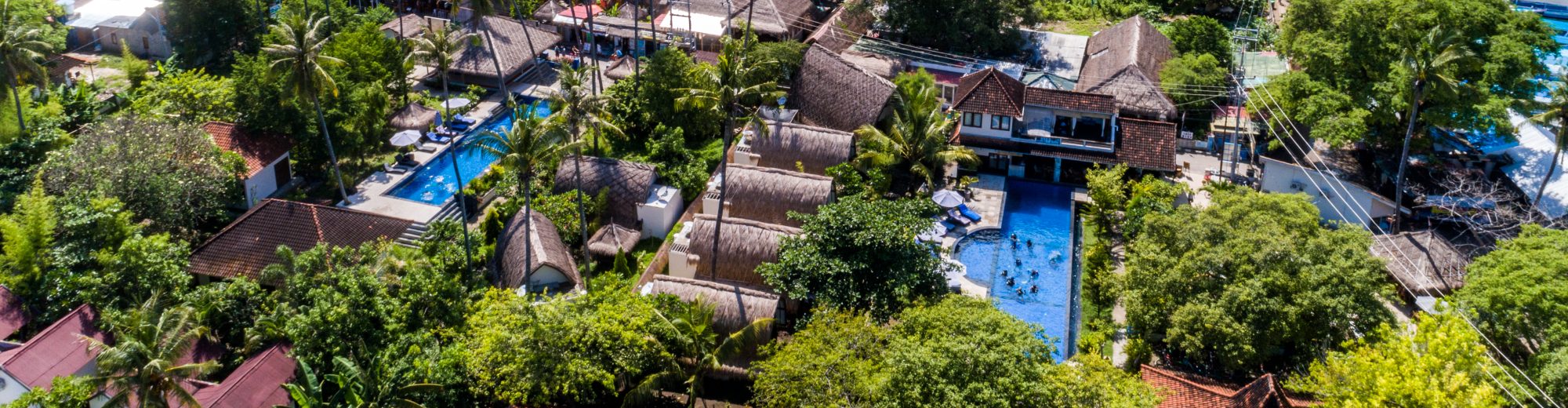
The resort features two large swimming pools.

The front pool is the lively heart of the resort, where divers prepare for their courses and guests enjoy cooling off after a day exploring the island.

Looking for something quieter?

Behind the resort you’ll discover our second pool, hidden away from the harbor. This peaceful oasis is often wonderfully quiet, making it the perfect place to read a book, swim a few laps, or simply enjoy the tropical surroundings in complete relaxation.

Many guests are pleasantly surprised to discover this hidden corner of Oceans 5.

Everything You Need in One Place

Oceans 5 offers much more than comfortable accommodation.

Right next to the main entrance you’ll find Allegria, a welcoming restaurant serving breakfast, lunch, dinner, fresh coffee, tropical juices, and a variety of international and Indonesian dishes. Whether you’re starting your day with breakfast before diving or enjoying dinner after watching the sunset, Allegria is always close by.

For guests who enjoy staying active, a modern gym is located behind the second swimming pool. Whether you’re maintaining your fitness routine or preparing for your next adventure, everything you need is only a short walk from your room.

A Resort for Divers and Non-Divers

While Oceans 5 is internationally known as an SSI Instructor Training Center and dive resort, many of our guests never put on a scuba tank.

Couples often visit where one partner dives while the other enjoys the pools, island cafés, beaches, or simply relaxes with a good book. Families appreciate the central location, making it easy to explore every corner of Gili Air without needing bicycles or horse carts. Digital nomads enjoy the peaceful environment between work sessions, while travelers looking for a few days of rest quickly discover how easy it is to slow down here.

You don’t need to be a diver to enjoy everything Oceans 5 has to offer.

Recharge Your Batteries

Life moves quickly.

Emails, meetings, deadlines, traffic, and constant notifications often leave little room to truly relax.

Gili Air is different.

The island has no cars or motorbikes. Instead, you’ll hear birds, the sound of the waves, bicycles passing by, and children laughing as they play on the beach. Time seems to slow down naturally.

At Oceans 5, we believe a holiday should do more than simply fill your calendar with activities.

It should give you the opportunity to recharge.

Whether that means spending your days diving among sea turtles, relaxing beside the hidden pool, watching the sunset with a fresh coconut, enjoying a seafood barbecue, or simply doing absolutely nothing, you’ll leave feeling refreshed both physically and mentally.

Because Oceans 5 Gili Air isn’t just a dive resort.

It’s a place where divers and non-divers alike can disconnect from everyday life, embrace the laid-back rhythm of island living, and return home with fully recharged batteries.

SSI Kids Program | Dive Resort Oceans 5 Gili Air| Holiday Destination Indonesia | Dive Trip Gili Islands

Adapting Teaching Styles as a Dive Instructor

Adapting Teaching Styles as a Dive Instructor: A Path to Success

Adapting Teaching Styles | Scuba Diving Indonesia
Adaptive Teaching Styles as a Dive Instructor

Becoming a successful dive instructor requires more than just technical knowledge and expertise in diving. It demands an understanding of how different individuals learn and the ability to adapt teaching styles to meet those needs. Every person absorbs information in their unique way—some by reading about it, others by doing it, and others by seeing it. Recognizing these differences and adjusting your teaching methods accordingly can significantly enhance the learning experience and success of your students.

Understanding Learning Styles

People generally learn through three primary modalities: visual, auditory, and kinesthetic. Visual learners grasp information better when they see it. They benefit from diagrams, videos, and written instructions. Auditory learners prefer listening. They retain information more effectively through verbal explanations, discussions, and auditory materials. Kinesthetic learners, on the other hand, learn best by doing. Hands-on activities, demonstrations, and physical involvement are crucial for their understanding.

As a dive instructor, it’s essential to identify the learning styles of your students early in the course. This identification allows you to tailor your instruction to suit each learner, ensuring that all students have the best possible chance to succeed.

Adapting to Different Age Groups

The age of your students also plays a significant role in how you should approach teaching. Children and adults have different learning capacities, attention spans, and ways of engaging with new information.

Teaching Children

When teaching children, the approach needs to be dynamic and engaging. Children have shorter attention spans and often require more interactive and entertaining methods to stay focused. Incorporating games into the learning process can make diving fun and memorable for them. For instance, underwater treasure hunts can teach navigation and buoyancy control in an enjoyable way. Additionally, theory sessions for children should be concise and to the point, avoiding long and complex explanations that can lead to disinterest or confusion. Smaller group sizes are also beneficial, providing more personalized attention and ensuring that each child receives the support they need.

Teaching Adults

Conversely, teaching adults, especially those around 25 years old, necessitates a different strategy. Adults typically have longer attention spans and can handle more extended theoretical sessions. However, they might need more time to process and apply what they’ve learned, particularly if they are new to diving or have reservations about the activity. For these students, longer time should be allocated to discussions, addressing their questions and concerns thoroughly. Pool sessions can be shorter but more intensive, focusing on mastering techniques before moving on to the next skill.

Developing Multiple Teaching Styles

As a beginner instructor, developing a repertoire of teaching styles is crucial. This flexibility not only helps in addressing the diverse learning needs of your students but also makes you a more effective and adaptable instructor. Here are a few strategies to consider:

1. Combine Visuals and Demonstrations: Use videos, diagrams, and live demonstrations to cater to visual and kinesthetic learners. Showing rather than just telling can make a significant difference in comprehension.

2. Interactive Discussions: Engage students in discussions and verbal explanations to support auditory learners. Encourage questions and foster a dialogue to ensure they are following along.

3. Hands-On Practice: Ensure that every lesson includes practical, hands-on activities. Whether it’s assembling diving gear or practicing underwater navigation, kinesthetic learners will benefit from doing rather than just observing or listening.

4. Adapt Based on Feedback: Regularly solicit feedback from your students to understand what is working and what isn’t. Be willing to modify your approach based on their input.

5. Maintain Flexibility: Be prepared to switch up your methods if you notice that a particular student or group is struggling. Flexibility is key to addressing the varying needs of learners.

Conclusion

In conclusion, the ability to adapt your teaching style to meet the diverse learning needs of your students is an essential skill for any dive instructor. By recognizing different learning styles and adjusting your approach accordingly, you can create a more inclusive, effective, and enjoyable learning experience. Whether teaching children with interactive games and short sessions or engaging adults with in-depth discussions and practical exercises, the key to success lies in your adaptability and dedication to meeting each student’s unique needs.