
Scuba Diving Costs
If you are planning a diving holiday to the Gili Islands, one of the first things you will probably search online is:
How much does scuba diving cost on Gili Air?
It is a perfectly reasonable question.
There are several dive centers on Gili Air, and when people compare them, price is often one of the first things they look at. One shop charges one amount, another shop is slightly cheaper, and another might be more expensive.
At Oceans 5 Gili Air, we are very open about something:
We are not trying to be the cheapest dive center on Gili Air.
And there are good reasons for that.
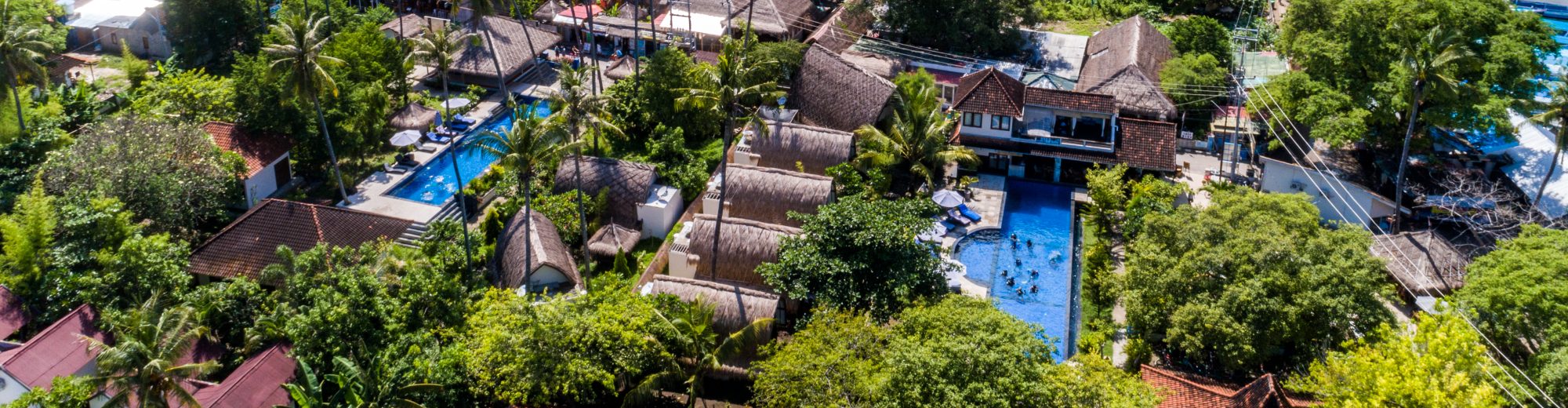
Oceans 5 is an SSI Instructor Training Center with purpose-built training facilities, two large training pools and three dive boats.[1][2] We are also strongly involved in marine conservation and work with organizations and institutions including BKKPN and the University of Mataram.[3][4]
For us, the price of a dive is not simply the cost of putting a tank on your back and taking you underwater.
Behind every dive are instructors, Divemasters, boats, compressors, equipment maintenance, swimming pools, training facilities, safety procedures, staff salaries and conservation activities.
So instead of only asking:
“How much does diving cost?”
We think divers should also ask:
“Where does my money go?”
Scuba Diving Prices at Oceans 5 Gili Air in 2026
Let’s start with the numbers.
Three of our main diving prices in 2026 are:
| Diving Activity | 2026 Price |
|---|---|
| Guided Fun Dive | IDR 700,000 per dive |
| Introduction Dive | IDR 1,500,000 |
| SSI Open Water Diver Course | IDR 7,000,000 |
Looking only at this table makes comparing dive centers easy.
But it doesn’t tell you the whole story.
What kind of facilities will you use?
How many people will be in your group?
Who will guide you?
How well is the equipment maintained?
Who fills your tank?
How are the employees treated?
Does the dive center invest in the local community?
Does some of your money go back into protecting the marine environment where you are diving?
Those questions are much more difficult to put into a price-comparison table.
Fun Diving on Gili Air – IDR 700,000 per Dive
A guided fun dive at Oceans 5 Gili Air costs IDR 700,000 per dive in 2026.
Of course, you can look around Gili Air and compare that price with other dive centers.
But what are you comparing?
A fun dive isn’t simply 50 minutes underwater.
You need a properly maintained BCD and regulator. You need a cylinder containing quality breathing gas. You need a qualified guide. You need a boat, captain and crew. You need safety equipment. You need people behind the scenes maintaining the equipment, filling cylinders and organizing the dive operation.
And importantly, you need a group size that allows your Divemaster to actually guide you.
At Oceans 5, we deliberately employ and train local SSI Divemasters so we can keep our diving groups small.
That costs more than putting a large number of customers behind one guide.
But that isn’t how we want to dive.
Introduction Dive – IDR 1,500,000
Never been scuba diving before?
Our Introduction Dive costs IDR 1,500,000.
For somebody breathing underwater for the first time, we believe the environment is incredibly important.
You shouldn’t feel rushed.
You shouldn’t feel like another number.
You shouldn’t have to squeeze into an overcrowded pool while several other groups are trying to conduct their training around you.
Oceans 5 has two large training pools, giving our instructors and students plenty of space.[2]
Why does that matter?
Because learning to scuba dive is largely about becoming comfortable.
Your first breaths underwater can feel strange. Your equipment feels different. You have to learn how to move, equalize your ears and communicate underwater.
A relaxed environment gives you time to adapt.
We don’t want to treat divers like cattle being moved through a production line.
We want to know your name.
SSI Open Water Diver Course – IDR 7,000,000
The SSI Open Water Diver Course at Oceans 5 Gili Air costs IDR 7,000,000 in 2026.
This is perhaps where price comparison becomes even more misleading.
An Open Water course can have the same certification at two different dive centers but provide two completely different learning experiences.
Ask yourself:
How many students will be in my group?
How much pool space will I have?
Will my instructor have time for me if I struggle with a skill?
Can we spend another 20 minutes practising if necessary?
Or does the instructor have to finish because another group needs the pool?
At Oceans 5, our goal isn’t simply to produce another certification card.
Our goal is to produce a comfortable, safe and confident diver.
Oceans 5 is an SSI Instructor Training Center, meaning we don’t only teach beginners—we also train the professionals who will teach future generations of divers.[1]
That creates a responsibility to practise the same standards we teach.
Why Does Oceans 5 Have Two Large Swimming Pools?
Space costs money.
Swimming pools cost money to build.
They cost money to maintain.
So why have two?
Because a spacious training environment makes a difference.
Our two large pools allow different courses to operate without everybody competing for the same small training area.[2]
A beginner can practise comfortably.
An Open Water student can repeat skills.
A Rescue course can work in another section.
Divemasters can develop their skills.
Instructor candidates can practise teaching.
Nobody benefits when a pool becomes an underwater traffic jam.
A calm environment helps students relax, and relaxed students generally learn better.
That is part of what you are paying for.
Three Dive Boats Give Us Flexibility
Oceans 5 operates three dive boats, another part of our purpose-built diving infrastructure.[2]
Again, operating several boats isn’t the cheapest way to run a dive center.
Boats require engines, fuel, maintenance, captains, crew and permits.
But several boats give us flexibility.
We can organize divers according to experience, courses and dive plans instead of simply asking:
“How many divers can we put on one boat?”
We prefer to ask:
“How can we organize today’s diving properly?”
There is a big difference between those two approaches.
Small Groups Need More Dive Professionals
Keeping groups small sounds great.
But small groups have a financial consequence.
You need more Divemasters.
If one Divemaster guides eight or ten customers, the cost per customer is lower than when groups are kept small.
Oceans 5 has deliberately trained and employed local SSI Divemasters so we don’t need to create oversized groups.
A Divemaster with a small group can pay attention to the divers.
They can monitor air consumption.
They can watch buoyancy.
They can see whether somebody is uncomfortable.
They can spend more time looking for turtles, sharks, nudibranchs and other marine life instead of constantly counting heads.
For us, that is what guiding should be.
Supporting Local Dive Professionals
There is another reason why we invest in Indonesian Divemasters.
Oceans 5 is part of Gili Air.
Tourism should create opportunities for the people living in the destination.
We don’t want our guiding operation to depend on foreign visitors effectively working in exchange for free dives.
We invest in local people.
We train them.
We employ them.
We pay them.
We help them develop careers in the Indonesian diving industry.
That costs more.
We think it is money well spent.
When you pay IDR 700,000 for a fun dive, part of that money is supporting professional local employment.
Good Instructors Need to Be Paid Properly
The same principle applies to our instructors.
Oceans 5 doesn’t believe the solution to busy periods is simply having a huge rotating collection of instructors.
We prefer a smaller professional team that knows our operation, understands our philosophy and stays with us.
Our employees are among the most important assets of Oceans 5.
And good employees should be paid properly.
Why does that matter to you as a customer?
Because there can be consequences when dive professionals are underpaid or forced to maximize the number of courses they teach.
Courses can become rushed.
Extra pool time becomes inconvenient.
Briefings become shorter.
Standards can come under pressure.
The student who needs additional practice becomes a problem because another course starts tomorrow.
We don’t want that environment.
As an SSI Instructor Training Center, Oceans 5 teaches future instructors that standards matter and that becoming an instructor involves far more than simply passing an evaluation.[1][5]
We therefore need to demonstrate that philosophy in our own daily operation.
Professional Equipment Maintenance Costs Money
Rental scuba equipment spends its life in a difficult environment.
Salt water is not friendly to equipment.
Regulators, BCD inflators, alternate air sources, gauges, hoses and valves all need inspection and maintenance.
At Oceans 5, equipment maintenance isn’t simply something somebody does when they have spare time.
We have a dedicated person responsible for our equipment who has received specialized training to maintain the Aqualung equipment we use.
Customers normally don’t see this work.
And ideally, you shouldn’t notice it.
You put on your equipment, conduct your safety check and go diving.
But behind that simple experience are many hours of inspection, cleaning, servicing and maintenance.
That is also part of your IDR 700,000 dive.
What About the Air Inside Your Tank?
This might be one of the least considered parts of choosing a dive center.
People look at boats.
They look at swimming pools.
They look at equipment.
But how many people ask:
“How is my tank filled?”
At Oceans 5, our compressor team operates a modern system including a membrane system for Nitrox production, a Nitrox filling station and a specialized cooling system.
Every tank is filled with attention.
Our team checks the air quality daily.
Producing good breathing gas requires investment in compressors, filters, cooling systems, maintenance, testing and trained staff.
You probably won’t see any of this when you arrive for your dive.
Your cylinder will simply be ready.
But it is another example of what sits behind the price you pay.
We Also Take Care of the People Taking Care of You
Our Divemasters and instructors dive a lot more than the average holiday diver.
You might make six or eight dives during your holiday.
A dive professional can be underwater almost every working day.
That repeated exposure matters.
At Oceans 5, we therefore pay attention to our staff’s dive profiles.
Our professionals aren’t allowed to make unnecessary reverse profiles simply because it makes the daily schedule easier—for example, doing a 12-meter dive in the morning and then planning a 30-meter dive in the afternoon.
Our regularly diving instructors and Divemasters are Nitrox certified and use Nitrox for their working dives according to our operational requirements.
That is an additional cost for Oceans 5.
But our staff aren’t machines.
If we expect them to take care of our customers every day, we should also take care of them.
Free Coffee, Tea and Water
Not everything has to be about complicated diving systems.
Sometimes little things matter.
At Oceans 5, coffee, tea and drinking water are available free of charge.
Have a coffee during your briefing.
Refill your water bottle.
Sit down while you’re waiting for your guide.
Talk to your instructor after the dive.
Stay for a while.
We don’t want Oceans 5 to feel like a bus station where you arrive, receive your equipment, dive and disappear.
Diving is social.
Many friendships in diving start with a conversation before or after a dive.
Conservation Is Part of Where Your Money Goes
Oceans 5 doesn’t see conservation as a fashionable marketing word.
Our business depends on the ocean.
If the reefs disappear, marine life declines and the Gili Matra Marine Park deteriorates, eventually there will be much less reason for tourists to come here to dive.
That is why Oceans 5 invests in conservation.
Our conservation activities include environmental education, cleanups and marine-science collaboration.[3] Oceans 5 has also established a partnership with the University of Mataram, supporting marine science students and research around the Gili Islands.[4]
Oceans 5 also works with BKKPN in relation to conservation and protection of the Gili Matra Marine Park.[3]
We don’t believe every conservation project should have to wait for a grant.
Oceans 5 invests its own money in conservation activities and research partnerships.
That money ultimately has to come from running a sustainable business.
So part of what you spend diving with us helps us continue supporting the environment that makes diving around the Gili Islands possible.
Why Being an SSI Instructor Training Center Matters
Oceans 5 isn’t simply a place where tourists arrive for a fun dive.
We are an SSI Instructor Training Center.[1]
We train Divemasters.
We train instructors.
We train the people who will eventually be responsible for teaching other people how to dive.
That means our Instructor Candidates are watching what happens around them.
We can’t teach:
“Keep your groups small.”
…and then put huge groups behind our own guides.
We can’t say:
“Respect training standards.”
…and then rush our own students.
We can’t teach:
“Protect the marine environment.”
…and then ignore conservation ourselves.
And we can’t tell future instructors:
“Look after your students and staff.”
…while treating our own employees badly.
Oceans 5’s SSI Instructor Training philosophy emphasizes small groups, individual feedback, realistic teaching and developing confident professionals rather than simply teaching candidates how to pass an evaluation.[1][5]
Our daily dive operation should demonstrate the same philosophy.
Cheap Diving and Good-Value Diving Are Not the Same Thing
There is absolutely nothing wrong with comparing prices.
Everybody has a holiday budget.
And we aren’t saying that another dive center charging less is automatically a bad dive center.
It isn’t.
Different businesses have different structures, facilities, staff and priorities.
Likewise, a more expensive dive center isn’t automatically better simply because it charges more.
Price alone doesn’t tell you enough.
What Oceans 5 can do is explain why our prices are what they are.
When you pay:
IDR 700,000 for a fun dive
IDR 1,500,000 for an Introduction Dive
or
IDR 7,000,000 for your SSI Open Water Diver Course
your money contributes to much more than the minutes you spend underwater.
It helps us invest in:
- Two large training pools
- Three dive boats
- Small diving groups
- Qualified local SSI Divemasters
- Professional instructors
- Fair staff salaries
- Professional equipment maintenance
- Compressor and Nitrox infrastructure
- Daily attention to breathing-gas quality
- Nitrox for regularly diving professional staff
- Responsible staff dive profiles
- Free coffee, tea and drinking water
- SSI professional education
- Conservation activities
- Scientific research partnerships
- The local Gili Air community
Those things cost money.
And we are happy to explain why we spend it.
Before Choosing a Dive Center on Gili Air, Ask Questions
When you arrive on Gili Air and start comparing diving prices, don’t only ask:
“How much is a dive?”
Ask:
- How many divers will be in my group?
- How many students are there per instructor?
- Who will guide me?
- Are the guides qualified dive professionals?
- How is the rental equipment maintained?
- Who services the regulators and BCDs?
- How are the cylinders filled?
- How is breathing-gas quality checked?
- What training facilities are available?
- How crowded are the pools?
- How crowded are the boats?
- Does the dive center invest in its employees?
- Does it employ local dive professionals?
- Does it support conservation?
- Does it contribute to the local community?
- And most importantly, will I be treated as a person or simply as another number?
Then compare prices.
Where Does Your Diving Money Go?
Perhaps this is the question we should ask more often.
Imagine another dive center charges IDR 50,000 or IDR 100,000 less for a dive.
The immediate reaction might be:
“That’s cheaper. Let’s go there.”
But when you are spending millions of rupiah on flights, hotels, restaurants and a holiday in Indonesia, perhaps saving a relatively small amount shouldn’t automatically be the deciding factor for an activity where equipment, training, professional supervision and safety matter.
Instead, ask:
Where does my money go?
Does it create jobs for local people?
Does it help retain experienced instructors?
Does it maintain equipment?
Does it produce quality breathing gas?
Does it keep groups small?
Does it provide spacious training facilities?
Does it maintain boats?
Does it support conservation?
Does it contribute to marine research?
Does it allow instructors to spend additional time with a student who needs it?
Those are things you don’t necessarily see on a price board outside a dive shop.
But they can make a huge difference to your diving experience.
Frequently Asked Questions
How much is a fun dive on Gili Air in 2026?
At Oceans 5 Gili Air, a guided fun dive costs IDR 700,000 per dive in 2026.
When comparing fun-dive prices, we recommend looking beyond the price itself and considering group size, guide qualifications, equipment maintenance, boats, breathing-gas systems and the overall quality of the operation.
How much does an Introduction Dive cost at Oceans 5 Gili Air?
An Introduction Dive costs IDR 1,500,000.
It is designed for people who have never dived before and want to experience scuba diving in a controlled environment before entering the ocean.
How much does the SSI Open Water Diver Course cost on Gili Air?
The SSI Open Water Diver Course at Oceans 5 Gili Air costs IDR 7,000,000 in 2026.
The course is about much more than receiving a certification card. We focus on creating comfortable and confident divers in a spacious training environment.
Is Oceans 5 the cheapest dive center on Gili Air?
No.
Oceans 5 isn’t trying to be the cheapest dive center on Gili Air.
Our prices reflect investments in staff, small groups, two large pools, three boats, equipment maintenance, compressor systems, Nitrox, professional education and conservation.
Why can diving prices differ between dive centers?
Every dive center has a different cost structure.
Group sizes, staff salaries, facilities, equipment, maintenance procedures, boats, compressor systems, training philosophy and conservation programs can all influence the final price.
That is why comparing only the headline price doesn’t necessarily tell you which dive center offers the best value.
Does Oceans 5 use local Divemasters?
Yes.
Oceans 5 invests in training and employing Indonesian dive professionals. Supporting local employment and creating professional opportunities for Indonesians is an important part of our philosophy.
Why are small dive groups important?
Small groups allow the Divemaster to pay more attention to individual divers.
It becomes easier to monitor air consumption, buoyancy and comfort, while also giving the guide more opportunity to find and point out marine life.
Why does Oceans 5 have two swimming pools?
Our two large training pools give students and instructors space to practise without several courses being crowded into the same small area.[2]
We believe a relaxed learning environment is particularly important for beginner divers.
Is Oceans 5 an SSI Instructor Training Center?
Yes.
Oceans 5 Gili Air is an SSI Instructor Training Center offering training from beginner through professional instructor level.[1] The center’s professional training philosophy focuses on small groups, individual feedback and preparing instructors for real-world teaching.[1][5]
Does Oceans 5 support marine conservation?
Yes.
Conservation is integrated into Oceans 5’s activities and diver education.[3] Oceans 5 has a marine-science partnership with the University of Mataram and supports research and educational opportunities for Indonesian students.[4]
Should I choose a dive center based on price?
Price is worth considering, but it shouldn’t be the only factor.
Consider safety, group size, instructor and guide qualifications, facilities, equipment maintenance, breathing-gas quality, boats, staff welfare, local employment and environmental responsibility.
Compare value, not just price.
Final Thoughts: Don’t Just Compare Prices—Compare Dive Centers
Gili Air is an amazing place to learn how to dive and an equally fantastic destination for certified divers.
Having several dive centers to choose from is a good thing.
But when comparing them, look further than the number written on the price board.
Visit the dive center.
Look at the swimming pool.
Look at the boats.
Look at the equipment.
Meet the instructors.
Talk to the Divemasters.
Ask about group sizes.
Ask who maintains the equipment.
Ask how the tanks are filled.
Ask about safety.
Ask about conservation.
And see how the staff and customers are treated.
Then make your decision.
At Oceans 5 Gili Air, we know we aren’t the cheapest dive center.
But we can explain where the money goes.
Into our people.
Into our facilities.
Into our equipment.
Into safety.
Into professional training.
Into the local community.
Into conservation and marine research.
And back into the ocean that makes our entire diving industry possible.
So next time you come to Gili Air and want to dive, don’t only look at the price.
Look at what is behind it.
References
[1] Oceans 5 Gili Air – SSI Instructor Training Course
Oceans 5’s SSI Instructor Training information describes the center’s professional training program, small candidate groups, realistic teaching methods and environmental-awareness philosophy.
[2] Oceans 5 Gili Air – Purpose-Built Training Facilities
Oceans 5 describes its training infrastructure as including two large training pools, spacious training areas and three dive boats.
[3] Oceans 5 Gili Air – Conservation and Gili Matra Marine Park
Oceans 5 describes conservation as part of its daily operations and its ongoing involvement with BKKPN and protection of the Gili Matra Marine Park.
[4] Oceans 5 Gili Air & University of Mataram – Marine Conservation Partnership
Oceans 5’s partnership with the University of Mataram supports marine surveys, research around the Gili Islands and practical opportunities for Indonesian marine-science students.
[5] Oceans 5 Gili Air – Modern SSI Instructor Training in Indonesia
Oceans 5’s instructor-training philosophy emphasizes teaching quality, realistic training, environmental awareness and preparing candidates to become confident dive professionals rather than simply passing an evaluation.