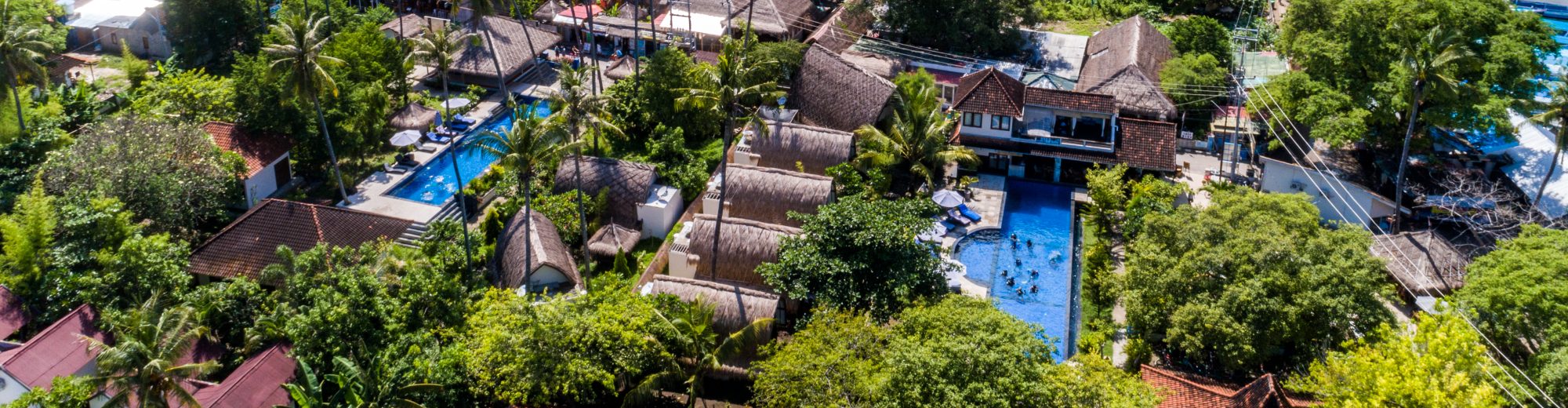
Scuba Diving Gili Islands | Scuba Diving Indonesia | SSI ITC Dive Resort Oceans 5 Gili Air
Have you ever wondered why so many divers say that scuba diving changed their lives? For some, it starts as a holiday activity. For others, it becomes a lifelong passion, a career, or even a completely new way of looking at the world.
Scuba diving is much more than swimming underwater. It is an activity that combines adventure, relaxation, learning, fitness, and nature into one unforgettable experience.
1. Discover a World That Most People Never See
More than 70% of our planet is covered by water, yet only a small percentage of people ever experience what lies beneath the surface.
Every dive is different. One day you may swim alongside graceful sea turtles. The next day you could discover colorful coral reefs, schools of tropical fish, reef sharks, nudibranchs, or even a fascinating shipwreck. Every descent feels like entering another world.
2. Improve Your Mental Well-Being
Many divers describe scuba diving as a form of underwater meditation.
Because you breathe slowly and deeply through your regulator, your mind naturally begins to relax. Underwater there are no phone calls, emails, or social media—just the sound of your breathing and the beauty of the ocean.
Research suggests that scuba diving may help reduce stress and improve mood through controlled breathing, immersion in water, physical activity, and mindful focus. While it is not a replacement for professional medical care, many divers report feeling calmer and more refreshed after diving.
3. A Great Way to Stay Active
Scuba diving is excellent low-impact exercise.
While diving you are constantly moving, improving your:
Cardiovascular fitness
Core strength
Leg muscles
Balance and coordination
Flexibility
Unlike many sports, the water supports your body, making diving enjoyable for people of many different ages and fitness levels.
4. Build Confidence
Remember your first bicycle ride?
Learning to scuba dive gives you that same feeling of achievement. Every new skill you master builds confidence.
Whether it’s clearing your mask, hovering effortlessly above a coral reef, or completing your first night dive, every accomplishment makes you a more confident diver—and often a more confident person above the surface too.
5. Make Friends Around the World
Scuba diving has one of the friendliest communities you will ever meet.
Divers love sharing experiences, helping each other, and exploring together. Whether you travel to Indonesia, Egypt, Mexico, or Australia, you’ll immediately have something in common with fellow divers.
Many lifelong friendships begin on a dive boat.
6. Become an Ocean Ambassador
The more time you spend underwater, the more you begin to appreciate how incredible—and fragile—the marine environment really is.
Many divers become passionate about marine conservation because they have seen coral reefs, turtles, sharks, and other marine life with their own eyes.
When people experience the underwater world, they are often inspired to help protect it for future generations.
Start Your Diving Journey at Oceans 5 Gili Air
At Oceans 5 Gili Air, we believe scuba diving should be safe, enjoyable, and taught without rushing. Every student learns at their own pace with experienced SSI professionals in small groups.
Whether you have never breathed underwater before or dream of becoming a professional dive instructor, we have a course for you.
We offer the complete range of SSI programs, including:
Located on the beautiful island of Gili Air, surrounded by warm tropical waters, healthy coral reefs, turtles, reef sharks, and some of Indonesia’s best dive sites, there is no better place to begin—or continue—your diving adventure.
Your adventure starts with just one breath underwater. Where it takes you is entirely up to you.
The Best Night Dive on Gili Air | Dive Resort Oceans 5 Gili Islands
When people think about diving around Gili Air, they usually imagine turtles, clear blue water, colorful coral reefs, and beautiful daytime dives. But what if we told you that some of the strangest and most fascinating marine life only appears after the sun goes down?
At Oceans 5 Gili Air, we organize night dives every day on request, and many divers tell us afterward that their night dive became the highlight of their entire holiday.
Why Dive at Night?
The ocean completely changes after sunset.
Fish that hide during the day come out to hunt. Octopuses leave their dens. Pipefish move through the darkness searching for food. Crustaceans emerge from the sand. Suddenly, the reef becomes a completely different world.
A night dive is not just another dive. It is like visiting an entirely new dive site.
The Harbor Night Dive: Gili Air’s Best-Kept Secret
Many divers would never guess that one of the most exciting night dives around Gili Air is right in the harbor.
At first glance, the harbor doesn’t look spectacular. Like many harbors around the world, there is debris and man-made structure on the seabed. But this is exactly what attracts an incredible variety of marine life.
The harbor has become a haven for macro creatures and underwater photographers.
During our night dives, it is common to encounter:
Various species of pipefish
Octopuses hunting across the bottom
Crabs and shrimps
Juvenile reef fish
Fascinating nocturnal creatures rarely seen during the day
Every dive is different, and every torch beam reveals something new.
The Hidden Secret of the Mandarin Fish
Most divers know that mandarin fish are famous for their short mating display at dusk.
What many divers don’t know is that the harbor of Gili Air is one of the hidden secrets for finding mandarin fish.
While other locations require perfect timing and a lot of luck, sightings here are remarkably consistent. In fact, many divers are surprised to discover that mandarin fish can often be seen outside the typical dusk window.
Although nature never gives guarantees, this is probably one of the closest things to a “mandarin fish guarantee” you will find around the Gili Islands.
Four Divers or More? We Go to Mentigi!
When four or more divers join the night dive, we load the boat and head to Mentigi.
Forget the postcard coral reefs.
Mentigi is a true muck diving paradise.
The volcanic black sand may not look impressive at first, but hidden in that sand is an extraordinary world of small marine life.
Every square meter can contain something unusual.
Expect to search for:
Rare crustaceans
Tiny octopuses
Pipefish
Night-active reef creatures
Camouflaged marine life that is almost impossible to spot during the day
For divers who love macro photography and critter hunting, Mentigi is one of the most exciting dive sites around Gili Air.
A Completely Different Diving Experience
Many visitors come to Gili Air for turtles and coral reefs. That’s fantastic.
But night diving shows you a side of the ocean that most tourists never experience.
The darkness sharpens your senses. Every creature feels like a discovery. Every dive becomes an underwater treasure hunt.
It is exciting, peaceful, and unforgettable all at the same time.
Join a Night Dive at Oceans 5 Gili Air
Night dives are available every day on request at Oceans 5 Gili Air. Whether you want to explore the mysterious harbor critters or join a boat trip to Mentigi, our experienced team will guide you safely through one of the most fascinating underwater experiences the Gili Islands have to offer.
The question is not whether you will see something unusual.
The question is: how many strange creatures can you spot before your buddy does?
Book your night dive with Oceans 5 Gili Air and discover why some divers say the best diving starts after dark. 🌙🐙🔦
New Dive Instructors Gili Islands | Scuba Diving Training Indonesia | SSI Dive Resort Oceans 5 Gili Air
Oceans 5 Gili Air: The Best Dive Resort on Gili Air by Far
Looking for the best dive resort on Gili Air? Stop searching. You just found it.
Every year, thousands of travelers arrive on Gili Air dreaming of crystal-clear water, sea turtles, colorful coral reefs, and unforgettable scuba diving adventures. But there is one question almost every diver asks before booking:
And no, it’s not because we say so. It’s because Oceans 5 combines world-class diving facilities, professional instruction, comfortable accommodation, conservation programs, and an incredible community atmosphere that is difficult to find anywhere else in Indonesia.
Let’s look at why Oceans 5 Gili Air stands out from the competition.
A True Dive Resort, Not Just a Dive Shop
Many businesses on Gili Air call themselves dive resorts, but in reality, they are simply dive shops working together with nearby hotels.
Oceans 5 is different.
Everything is located on one spacious property. Guests can wake up, enjoy breakfast, prepare their equipment, attend diving courses, relax by the pool, and join dive trips without ever leaving the resort.
The resort offers comfortable accommodation, training facilities, dive boats, classrooms, equipment rooms, swimming pools, and social areas all in one location.
This creates a much more relaxed and enjoyable experience for guests.
The Largest and Most Impressive Training Facilities on Gili Air
If you are learning to dive, facilities matter.
A lot.
Oceans 5 has invested heavily in creating one of the most professional training environments in Indonesia.
The resort features two large training pools, spacious classrooms, dedicated equipment areas, and plenty of room for students to learn comfortably.
Unlike many dive centers where confined water sessions feel crowded, students at Oceans 5 have the space they need to develop confidence at their own pace.
This is one of the reasons why so many students leave Oceans 5 feeling genuinely comfortable underwater rather than simply certified.
Small Groups, Big Difference
One of the biggest complaints divers have about popular holiday destinations is overcrowding.
Nobody wants to spend their holiday squeezed into a group of ten divers following a guide.
At Oceans 5, the philosophy is different.
Groups are kept small, with a maximum of four divers per guide or instructor.
This means:
More personal attention
Better safety
Less stress
Better buoyancy coaching
More opportunities to see marine life
More enjoyable dives
It’s a simple concept, but it makes a massive difference underwater.
Some of the Most Experienced Instructors in Indonesia
Oceans 5 has built its reputation over more than fifteen years by focusing on instructor quality rather than instructor quantity.
The team consists of experienced professionals who teach everything from beginner programs all the way to professional-level instructor training courses.
Whether you are taking your first breath underwater or becoming a dive professional, you are learning from people who genuinely care about developing confident and capable divers.
Many instructors working throughout Southeast Asia today actually completed their professional training at Oceans 5.
That says a lot.
An Instructor Training Center Means Higher Standards
Here’s something many visitors don’t realize.
Oceans 5 is not only a recreational dive center.
It is also an Instructor Training Center.
That means future dive professionals are trained here.
To teach instructors, standards must be exceptionally high.
Every procedure, every briefing, every safety protocol, and every teaching technique is continuously evaluated and improved.
When you choose Oceans 5 for your Open Water Course, Advanced Course, Rescue Course, Divemaster Program, or Instructor Training, you benefit from the same professional standards used to train future instructors.
Equipment That Actually Gets Maintained
Let’s be honest.
Not all dive equipment is maintained equally.
At Oceans 5, equipment maintenance is taken seriously.
Regulators, BCDs, cylinders, compressors, and safety equipment receive regular inspections and servicing.
The resort continually upgrades its facilities and equipment to ensure guests enjoy comfortable and reliable dives.
When you enter the water, you want to focus on enjoying the dive—not wondering whether your gear is working properly.
The Best Location on Gili Air
Location matters.
Oceans 5 is strategically located close to the harbor of Gili Air, making arrivals and departures easy.
No dragging heavy luggage across the island.
No long walks carrying dive equipment.
Guests arriving from Bali or Lombok can quickly settle into their accommodation and start enjoying their holiday almost immediately.
The location is also surrounded by restaurants, cafés, shops, and other facilities that make a stay on Gili Air even more enjoyable.
More Than Diving: A Community
Many dive centers offer dives.
Very few create a community.
Oceans 5 has built a reputation for making guests feel like family.
People arrive as customers and often leave as friends.
Many return year after year.
Some visitors originally came for a single dive and ended up staying for months, completing professional courses and changing their lives completely.
That sense of belonging is difficult to describe until you experience it yourself.
Conservation Is Not a Marketing Trick
Nowadays, many businesses talk about protecting the ocean.
At Oceans 5, conservation is part of daily life.
The team has organized regular beach cleanups for years, supports marine conservation initiatives, collaborates with local organizations, and works together with university students conducting marine research around the Gili Islands.
Environmental awareness is integrated into diving courses from beginner level all the way to professional training.
The goal is simple:
Create divers who love the ocean and know how to protect it.
Incredible Diving Right on Your Doorstep
Of course, none of this would matter without great diving.
Fortunately, Gili Air offers some of Indonesia’s most accessible and enjoyable diving.
Divers regularly encounter:
Green sea turtles
Hawksbill turtles
Reef sharks
Moray eels
Octopus
Frogfish
Nudibranchs
Schools of reef fish
Beautiful coral reefs
Whether you’re interested in relaxed beginner dives, drift diving, deep diving, wreck diving, underwater photography, or technical diving, there is something for everyone.
And Oceans 5 knows exactly where to find the best conditions.
The Verdict: The Best Dive Resort on Gili Air
There are plenty of places to dive around the Gili Islands.
But if you’re looking for:
✅ Professional instructors ✅ Small groups ✅ Excellent safety standards ✅ Comfortable accommodation ✅ Two large training pools ✅ Well-maintained equipment ✅ Conservation programs ✅ Instructor-level expertise ✅ Friendly atmosphere ✅ Amazing diving
Then there is one clear choice.
Oceans 5 Gili Air is not just another dive shop. It is the complete dive resort experience.
So the next time somebody asks you where the best dive resort on Gili Air is, you can confidently tell them:
It’s Oceans 5 Gili Air—and it’s not even close. 🌊🐢🤿
Responsibility, Conservation, and the Future of the Gili Islands
Gili Air | Holiday Destination Asia | Dive Resort Oceans 5 Gili Air
The dream of owning a business on a tropical island sounds perfect. White beaches, turquoise water, sea turtles swimming in front of your restaurant, and tourists arriving every day to enjoy paradise. But many people forget one important fact: the Gili Islands are not just a tourism destination. They are located inside a protected marine park called Gili Matra Marine Tourism Park. That changes everything.
Owning a hotel, dive center, restaurant, beach club, villa, or any other business inside a marine park comes with responsibilities. The success of businesses on Gili Air, Gili Meno, and Gili Trawangan depends entirely on the health of the environment around them. Without healthy reefs, clean beaches, and clear water, the tourism industry that supports thousands of local jobs would quickly disappear.
What Is Gili Matra?
Many visitors have never heard the name Gili Matra, even though they spend their holidays there.
Gili Matra stands for Gili Meno, Gili Air, and Gili Trawangan. The area was officially designated as a marine conservation area and later became a national Marine Tourism Park under the management of the Indonesian Ministry of Marine Affairs and Fisheries. The protected area covers approximately 2,954 hectares and includes coral reefs, seagrass beds, marine habitats, and the surrounding coastal environment.
The marine park was created because the waters surrounding the islands are part of the Coral Triangle, one of the most biodiverse marine regions in the world. The reefs support turtles, reef sharks, countless fish species, corals, mollusks, and many other marine organisms.
Today, the marine park is not only important for conservation but also for the local economy. Diving, snorkeling, accommodation, restaurants, transport services, and tourism activities all depend on the marine environment remaining healthy.
A Marine Park Is Not Just a Name
Many people see the term “marine park” as a marketing tool. It sounds attractive for tourism brochures and social media campaigns.
In reality, a marine park is a protected area with regulations and responsibilities.
Indonesia created marine protected areas to:
Protect biodiversity
Preserve coral reefs
Protect turtle nesting and feeding areas
Maintain fish populations
Support sustainable tourism
Protect coastal communities from environmental degradation
Preserve ecosystem services for future generations
These goals are not optional. They form the foundation of the regulations that apply within Gili Matra.
The Small Islands Regulation
The Gili Islands are classified as small islands under Indonesian coastal management regulations.
Why is this important?
Because small islands are extremely vulnerable.
Unlike larger land masses, small islands have:
Limited freshwater resources
Limited waste management capacity
Fragile ecosystems
High dependence on coastal protection
Limited land availability
High exposure to climate change and sea level rise
A mistake made on a small island can have consequences much faster than on larger islands.
When coral reefs are damaged, beaches can erode. When mangroves disappear, coastal protection is reduced. When groundwater is overused, saltwater intrusion can occur.
The regulations surrounding small islands therefore aim to balance development with environmental protection. The goal is not to stop economic growth but to ensure that development does not destroy the very resources that support local communities and tourism.
The 100-Meter Rule from the High Tide Line
One of the most discussed regulations in coastal areas across Indonesia is the coastal setback requirement, often referred to as the 100-meter rule from the high tide line.
When buildings are constructed too close to the shoreline, several problems can occur:
Increased beach erosion
Loss of public coastal access
Damage from storms and waves
Destruction of turtle nesting areas
Reduced natural coastal protection
Pressure on marine ecosystems
The setback zone acts as a buffer between human development and the natural coastal environment.
The idea is not to prevent development but to ensure that future generations still have beaches, coastal vegetation, and functioning ecosystems.
For small islands such as Gili Air, Gili Meno, and Gili Trawangan, these buffer zones become even more important because there is very little room for environmental mistakes.
Why Coral Reefs Matter More Than Buildings
Many business owners focus on what happens on land.
The reality is that the true economic engine of the Gili Islands lies underwater.
Tourists do not travel thousands of kilometers to see concrete walls.
They come to see:
Coral reefs
Sea turtles
Reef fish
Clear water
Healthy marine ecosystems
White sand beaches
Studies consistently show that marine tourism creates enormous economic value for Gili Matra. Diving and snorkeling are among the primary reasons tourists visit the islands.
Without healthy reefs:
Dive centers lose customers.
Hotels lose bookings.
Restaurants lose visitors.
Boat operators lose income.
Local communities lose jobs.
Every business owner in the marine park therefore has a direct economic interest in protecting the environment.
Conservation is not separate from business.
Conservation is business.
What Happens When Development Goes Too Far?
This is the challenge facing many tropical islands around the world.
As tourism grows, more accommodation is built.
As more tourists arrive:
More waste is produced.
More freshwater is consumed.
More sewage is generated.
More coastal land is developed.
More boat traffic occurs.
More pressure is placed on reefs.
Research on Gili Matra has repeatedly identified increasing tourism pressure and environmental degradation as major management challenges. Coral reef damage and institutional management issues continue to be concerns for the long-term sustainability of the area.
If growth happens faster than environmental management, the natural assets that attract visitors can gradually disappear.
This is not a theoretical problem.
Many tropical destinations worldwide have experienced declining reef health, beach erosion, and environmental degradation because development outpaced conservation efforts.
Why Existing Businesses Should Care
Some business owners see environmental regulations as obstacles.
In reality, they should see them as insurance.
Imagine if:
Coral reefs disappear.
Beaches erode.
Turtle populations decline.
Water quality decreases.
Snorkeling visibility becomes poor.
Every tourism business on the islands would suffer financially.
Environmental regulations are designed to prevent that scenario.
The marine park protects the asset that every business depends on.
Without environmental protection, the tourism economy eventually collapses.
This is why responsible businesses often support:
Beach cleanups
Waste management programs
Reef conservation projects
Sustainable mooring systems
Coral restoration efforts
Environmental education
Responsible diving and snorkeling practices
These initiatives are not simply good public relations.
They are investments in the future of the islands.
The Global Importance of Gili Matra
The importance of Gili Matra extends beyond Indonesia.
In 2024, the International Maritime Organization designated the waters around Gili Matra and Nusa Penida as a Particularly Sensitive Sea Area (PSSA) due to their ecological, scientific, and socioeconomic importance. This recognition highlights the global value of the ecosystems found in the Lombok Strait and the need for additional protection against environmental risks.
This international recognition confirms something many local residents already know:
The Gili Islands are not ordinary islands.
They are part of an ecosystem that is important on a global scale.
Living and Working Inside a Marine Park
Living and working in a marine park means accepting a simple reality.
You are not only a business owner.
You are also a caretaker.
Every hotel owner, dive operator, restaurant manager, villa developer, boat captain, and tourism worker benefits from the beauty of Gili Matra.
With those benefits come responsibilities.
The future of the Gili Islands depends on finding the balance between tourism and conservation.
Too little development and opportunities are lost.
Too much development and the environment that supports tourism disappears.
The challenge for the next generation is not choosing between conservation and business.
The challenge is understanding that on islands like Gili Air, Gili Meno, and Gili Trawangan, conservation and business are the same thing.
The coral reefs, beaches, turtles, and marine ecosystems are not separate from the local economy.
They are the local economy.
And protecting them is not just the responsibility of government agencies or conservation groups—it is the responsibility of everyone who lives, works, and profits from life inside the Gili Matra Marine Tourism Park.
Turtle Diving Indonesia | SSI Instructor Training Center Oceans 5 Gili Air
Planning a trip to Asia this year? Thinking about visiting Indonesia? Then there’s something happening right now that many travelers haven’t fully realized yet: scuba diving in Indonesia has become more affordable than ever for foreign visitors.
While airlines are opening new routes to Indonesia and more travelers are discovering destinations beyond Bali, another factor is making holidays even more attractive. The Indonesian Rupiah has been under pressure against many international currencies, meaning that visitors from Europe, Australia, North America, and other parts of the world are finding that their money goes further than it did just a few years ago.
And when your money stretches further, activities that once felt expensive suddenly become surprisingly affordable.
Including scuba diving.
Why Are More Travelers Choosing Indonesia?
Indonesia has always been one of the world’s top diving destinations, but affordability is now becoming another major reason why travelers are choosing the country over neighboring destinations.
Think about it:
Affordable accommodation
Inexpensive local transportation
Great value restaurants and cafes
Affordable domestic flights
And now even better value scuba diving
For many travelers, a diving holiday in Indonesia can cost significantly less than similar experiences elsewhere in Southeast Asia while offering world-class underwater environments.
And that is a combination that is difficult to ignore.
Indonesia Is Not Just Bali
When many people hear the word “Indonesia,” they immediately think of Bali.
But Indonesia is much bigger than Bali.
In fact, Indonesia consists of more than 17,000 islands stretching over 5,000 kilometers from west to east. The country is so large that the distance from one end of Indonesia to the other is roughly comparable to the distance between Amsterdam and New York.
That enormous size creates an incredible diversity of diving environments.
You can explore:
Colorful coral reefs
Volcanic underwater landscapes
Historic shipwrecks
Drift diving locations
Macro diving hotspots
Manta ray cleaning stations
Shark habitats
Turtle nesting areas
Few countries on Earth can offer such variety.
The Coral Triangle: The Amazon of the Ocean
One of Indonesia’s greatest advantages is its location in the famous Coral Triangle.
Marine scientists often describe the Coral Triangle as the “Amazon Rainforest of the Ocean.”
Why?
Because nowhere else on Earth contains such a high concentration of marine biodiversity.
Indonesia sits right in the middle of this underwater paradise.
Divers regularly encounter:
Sea turtles
Reef sharks
Moray eels
Octopus
Nudibranchs
Frogfish
Schools of reef fish
Healthy coral gardens
Even experienced divers who have traveled around the world often rank Indonesia among the very best destinations they have ever visited.
Warm Water All Year Round
Another reason Indonesia attracts so many divers is the water temperature.
Forget thick wetsuits and freezing conditions.
Many diving destinations in Indonesia enjoy water temperatures between 27°C and 30°C throughout much of the year.
That means:
Longer dives
More comfort
Easier learning conditions
Better experiences for beginner divers
For someone considering their first underwater adventure, warm tropical water makes learning to dive significantly more enjoyable.
Perfect Conditions for Beginners
Many people believe scuba diving is difficult.
The truth is very different.
Modern scuba diving courses are designed to be safe, comfortable, and accessible to almost anyone with reasonable health and fitness.
Indonesia offers ideal conditions for beginner divers:
Warm water
Good visibility
Calm conditions
Abundant marine life
Professional dive schools
Many first-time divers are amazed at how quickly they gain confidence underwater.
The biggest challenge is often simply taking that first step and trying it.
Why Gili Air Should Be on Your Bucket List
If you’re looking for the perfect place to learn to dive, one destination consistently stands out.
Located between Bali and Lombok, Gili Air offers a unique combination of tropical island charm and exceptional diving conditions.
Unlike many busy tourist destinations, Gili Air maintains a relaxed atmosphere.
There are:
No cars
No motorbikes
Beautiful beaches
Crystal-clear water
Spectacular sunsets
Friendly local community
Life moves at a slower pace here.
And that’s exactly why so many travelers fall in love with the island.
The Underwater World Around Gili Air
The waters surrounding Gili Air are famous for their marine life.
Divers frequently encounter:
Green turtles
Hawksbill turtles
Reef sharks
Stingrays
Octopus
Moray eels
Thousands of tropical reef fish
Visibility often reaches 20 to 30 meters, creating excellent conditions for underwater exploration.
Whether you’re a complete beginner or an experienced diver, the Gili Islands offer dive sites suitable for every level.
“I’ve Never Dived Before”
Perfect.
Some of the best divers in the world started exactly where you are right now.
Every year, thousands of people take their first underwater breaths in Indonesia.
Many begin with an introductory experience before deciding to continue with a full certification course.
The feeling is difficult to describe.
One moment you’re on a tropical island.
The next moment you’re floating weightlessly among coral reefs and sea turtles.
For many people, it becomes one of the most memorable experiences of their lives.
Why Oceans 5 Gili Air?
For visitors looking to start their diving journey, Oceans 5 Gili Air has built a reputation for focusing on quality rather than quantity.
The dive center is known for:
Small groups
Professional instructors
Spacious facilities
Large training pools
Modern equipment
Relaxed learning environment
Instead of rushing students through courses, the focus is on helping divers become comfortable and confident underwater.
For many first-time divers, that personal attention makes a huge difference.
The Cheapest Time to Start Diving?
Maybe Right Now.
With favorable exchange rates for many international visitors, diving courses, accommodation, food, and daily expenses in Indonesia are offering exceptional value.
Of course, exchange rates can change.
Airfares can change.
Accommodation prices can change.
But right now, many travelers are discovering that their diving budget stretches significantly further than expected.
And that creates an opportunity.
An opportunity to finally try something you’ve always wanted to do.
The Question Is Not “Why?”
The real question is:
Why haven’t you tried it yet?
Indonesia already offered world-class diving.
It already offered tropical islands.
It already offered incredible marine life.
Now it also offers exceptional value for international travelers.
Whether you’re planning a holiday to Bali, Lombok, or the Gili Islands, there has rarely been a better moment to take your first underwater breaths.
So if you’re already booking that flight to Asia, maybe it’s time to add one more thing to your travel plans.
Scuba diving.
Because Indonesia’s reefs are waiting.
And there has never been a better time to discover them than right now on the beautiful island of Gili Air.
And Why Celebrating It on Gili Air Feels Different
Idul Adha Indonesia | Dive Resort Oceans 5 Gili Air
Every year, millions of Muslims around the world celebrate Idul Adha, also known as Eid al-Adha, one of the most important religious holidays in Islam. In Indonesia, the world’s largest Muslim-majority country, the celebration is deeply woven into daily life, local culture, and community traditions. From the busy streets of Jakarta to the small villages of Lombok and the Gili Islands, Idul Adha is a moment when families, neighbors, and entire communities come together.
But celebrating Idul Adha on a small tropical island like Gili Air feels different. The atmosphere changes completely. The island slows down, families gather together, and visitors suddenly experience a side of Indonesia that many tourists never truly see.
What Is Idul Adha?
Idul Adha, often translated as the “Festival of Sacrifice,” honors the story of Prophet Ibrahim (Abraham), who was willing to sacrifice his son as an act of obedience and faith to God. According to Islamic tradition, before the sacrifice took place, God provided a ram to be sacrificed instead.
Because of this story, sacrifice, generosity, and helping others are central themes during Idul Adha. Across Indonesia, animals such as goats, sheep, or cows are sacrificed, and the meat is distributed among family members, neighbors, and especially people in need.
The holiday is not only about religion. It is also about community, sharing, gratitude, and supporting each other.
Indonesia Comes Together During Idul Adha
During Idul Adha, Indonesia changes rhythm. Early in the morning, mosques fill with people attending special prayers. Families dress in traditional clothes, children run through the streets, and villages become gathering places filled with food and conversation.
Unlike some holidays that focus mainly on celebration, Idul Adha also carries a strong social message. The idea of sharing food with people who may not normally afford meat reflects an important value in Indonesian culture: community comes before the individual.
This spirit is especially visible on smaller islands and villages, where people still know each other personally and traditions remain strong.
Why Gili Air Feels So Special During Idul Adha
Gili Air is already known for its relaxed atmosphere, white beaches, and beautiful underwater world. But during Idul Adha, visitors experience something completely different from the normal holiday vibe.
The island becomes quieter in some ways, but much more alive in others.
Families gather together. Local restaurants and small warungs become places where people meet relatives and friends. Children play outside late into the evening. Music, conversations, and laughter fill the small streets of the island.
For travelers, this is often one of the few moments where they truly see daily Indonesian island life instead of only the tourism side of the Gili Islands.
The celebration reminds visitors that Gili Air is not only a tropical destination. It is also a living local community with traditions, culture, and strong social connections.
A Holiday Built Around Community
One of the most beautiful aspects of Idul Adha on Gili Air is the strong community spirit.
On larger tourist destinations, holidays can sometimes feel commercial. On Gili Air, Idul Adha still feels personal.
People help each other prepare food. Families share meals with neighbors. Local communities organize the distribution of meat so everyone can participate in the celebration. Even visitors often notice how welcoming and open the atmosphere becomes during the holiday period.
This community feeling is one of the reasons why so many people fall in love with Gili Air. The island has managed to maintain much of its local identity despite the growth of tourism over the years.
Respecting Local Culture as a Visitor
For tourists visiting Indonesia during Idul Adha, the holiday is also an opportunity to better understand the country and its culture.
Indonesia is incredibly diverse, with thousands of islands, hundreds of local languages, and multiple religions living together. Understanding local celebrations like Idul Adha helps travelers connect more deeply with the places they visit.
On Gili Air, visitors may notice temporary closures of some businesses during prayer times or community activities. This is part of the island’s rhythm during important religious celebrations.
For many travelers, witnessing these traditions becomes one of the most memorable parts of their trip because it offers a genuine cultural experience beyond beaches and sunsets.
The Peaceful Side of the Holiday
Another reason why Idul Adha feels special on Gili Air is the peaceful atmosphere that comes with it.
The island already has no cars or motorbikes, which creates a calm environment year-round. During Idul Adha, this peaceful atmosphere becomes even more noticeable. People spend more time with family, fewer things feel rushed, and there is a stronger focus on gratitude and togetherness.
For many visitors escaping busy city life, this atmosphere becomes a reminder of how important simple human connections really are.
Tourism and Local Traditions Can Exist Together
The Gili Islands have grown significantly over the last decade, but holidays like Idul Adha show why protecting local culture remains important.
Tourism brings jobs and opportunities, but traditions and community values are what give islands like Gili Air their real identity. Without local culture, tropical islands can quickly start to feel the same everywhere in the world.
Celebrating Idul Adha reminds both locals and visitors that Gili Air is more than just a holiday destination. It is home to families, traditions, and generations of island life.
Diving During Idul Adha on Gili Air
For divers visiting the island, the holiday period can actually be a beautiful time to explore the underwater world around the Gili Islands.
Oceans 5 Gili Air and other dive centers around the island continue diving operations while respecting local traditions and prayer schedules. The relaxed atmosphere on the island often creates a calmer overall experience for visitors.
The waters around the Gili Islands remain full of life during this period, with turtles, reef fish, coral gardens, and drift dives continuing to attract divers from around the world.
But many visitors discover that during Idul Adha, the experience above the water becomes just as meaningful as the diving itself.
A Reminder About What Really Matters
In many ways, Idul Adha carries a universal message that goes far beyond religion. The holiday reminds people about sacrifice, generosity, family, gratitude, and helping others.
On a small island like Gili Air, these values become very visible.
Whether you are local to Indonesia, visiting from Europe, Australia, or anywhere else in the world, the atmosphere during Idul Adha often leaves a lasting impression. It is a reminder that sometimes the most special travel experiences are not only about what you see, but also about the people you meet and the traditions you are invited to witness.
And that is exactly why celebrating Idul Adha on Gili Air feels so unique.
Tourism and conservation have always had a complicated relationship.
On one side, tourism brings jobs, income, education, and opportunities to local communities. Entire islands, villages, and coastal regions depend on tourism for survival. Restaurants, hotels, dive centers, boat operators, transport services, and local shops all benefit from visitors arriving from around the world.
But on the other side, tourism also creates pressure.
More buildings. More boats. More waste. More freshwater usage. More stress on coral reefs. More development along fragile coastlines. More people entering ecosystems that were never designed for mass tourism.
And this creates an important question:
Can tourism and conservation still work together?
At first glance, the answer seems simple. Many tourism businesses today market themselves as “eco-friendly,” “green,” or “sustainable.” But real sustainability is far more complicated than placing a recycling bin outside a dive shop or organizing one beach cleanup per year.
Real conservation often requires difficult decisions. It requires limits, long-term thinking, cooperation with governments and local communities, and sometimes accepting slower economic growth to protect ecosystems for future generations.
This discussion has become increasingly important on tropical islands around the world, including places like Gili Air in Indonesia.
Tourism Depends on Nature
The reality is simple: most tropical tourism exists because of nature.
People do not fly across the world to see concrete walls, polluted beaches, dead coral reefs, or overcrowded coastlines. They travel to places like the Gili Islands because they want to experience clear water, marine life, white sand beaches, sunsets, and relaxed island life.
For dive tourism, the connection is even stronger.
Without healthy coral reefs, turtles, reef sharks, and marine biodiversity, many dive destinations would lose their appeal very quickly.
This means conservation is not separate from tourism.
Without environmental protection, the tourism economy slowly destroys the exact thing visitors came to see in the first place.
The Pressure on Tropical Islands Is Increasing
The problem is that many tropical destinations are becoming victims of their own popularity.
A small island can only handle a limited number of visitors before infrastructure starts struggling. Waste management systems become overloaded. Freshwater becomes limited. Coastal construction increases. Coral reefs receive more pressure from divers, snorkelers, and boats.
And often, development happens faster than regulation or environmental planning.
Around Southeast Asia, many islands are facing these exact challenges. Coral bleaching events linked to rising sea temperatures already place enormous stress on reefs. When this is combined with wastewater issues, coastal construction, overfishing, and increasing tourism numbers, ecosystems become even more vulnerable.
The Gili Islands are no exception.
Over the years, tourism around Gili Air, Gili Trawangan, and Gili Meno has grown rapidly. Hotels expanded. Restaurants increased. Beachfront development became more aggressive. More dive boats arrived. More tourists visited the reefs every day.
At the same time, local organizations, dive centers, and conservation groups have worked hard to protect the marine park.
This creates a constant balancing act between economic growth and environmental protection.
Marine Parks Exist for a Reason
Many tourists do not realize that the Gili Islands are part of Gili Matra Marine Park, one of Indonesia’s protected marine areas.
Marine parks are not created simply for marketing purposes. They exist to protect fragile ecosystems and create rules that allow tourism and conservation to exist together.
These protections often include:
Zoning systems
Building regulations
Fishing restrictions
Marine protected areas
Environmental permits
Coral protection policies
Visitor fees
In theory, these systems are designed to create sustainable tourism.
But sustainability only works if regulations are respected and enforced consistently.
This is where many tropical destinations struggle.
Conservation Cannot Exist Only on Paper
One of the biggest problems in modern tourism is that conservation is often discussed more than it is practiced.
It is easy for businesses to advertise themselves as environmentally friendly. It is much harder to make difficult decisions that truly reduce environmental impact.
For example:
Limiting guest numbers reduces income.
Small dive groups earn less money than large groups.
Proper wastewater systems are expensive.
Sustainable construction costs more.
Enforcing environmental rules can upset customers.
Because of this, there is often tension between short-term profit and long-term sustainability.
Some businesses genuinely try to protect the environment. Others simply use “eco-tourism” as a marketing tool while continuing harmful practices behind the scenes.
Real conservation requires consistency.
It requires businesses, governments, local communities, and tourists to work together instead of blaming each other.
Diving Tourism Can Help Conservation
Despite these challenges, diving tourism can still play an important role in conservation when managed properly.
Dive centers are often among the first businesses to notice changes underwater. Instructors and divemasters spend thousands of hours observing reefs, fish populations, coral health, algae outbreaks, and marine animal behavior.
Many conservation projects around the world now rely on partnerships with dive operators because they provide:
Local knowledge
Boat access
Trained divers
Long-term observations
Citizen science programs
Education platforms
At Oceans 5 Gili Air, conservation has always been connected to diving education.
Since 2010, the dive center has organized weekly beach cleanups involving staff, divemaster candidates, instructor candidates, tourists, and local volunteers. The goal is not only removing rubbish but also creating awareness about how much waste reaches the ocean every week.
Oceans 5 also works with Indonesian universities and conservation organizations by supporting marine research projects around the Gili Islands.
These partnerships allow local students to collect valuable scientific data while gaining field experience in marine conservation.
Education Is One of the Most Powerful Conservation Tools
One of the most overlooked parts of conservation is education.
Many environmental problems are not caused by bad intentions. They are caused by lack of awareness.
For example, many beginner snorkelers or divers do not realize how fragile coral reefs are. Some tourists stand on coral simply because they do not understand the damage it causes. Others chase turtles or touch marine life for photos without understanding the stress this creates for animals.
This is why dive education matters.
A professional diving course should not only teach skills. It should also teach responsibility.
At Oceans 5 Gili Air, environmental awareness is integrated into diving courses from beginner level onward. Students learn buoyancy control, respect for marine life, and how to minimize their impact underwater.
Good diving habits help protect reefs in the long term.
And the reality is simple: a well-trained diver is usually much safer for coral reefs than an uneducated snorkeler standing on coral in shallow water.
Tourism Can Also Fund Conservation
Another important reality is that conservation requires money.
Marine park management, scientific research, coral restoration projects, beach cleanups, environmental patrols, and education programs all cost money.
Tourism can help provide this funding.
Visitor fees, diving permits, marine park tickets, and eco-tourism programs can generate income that supports conservation work and local employment.
Without tourism, many conservation projects would simply not have the financial support needed to continue.
The challenge is making sure that tourism revenue is actually used effectively for environmental protection.
This requires transparency, cooperation, and proper management.
The Future Depends on Limits
One of the biggest discussions in sustainable tourism today is carrying capacity.
In simple terms:
How many visitors can an island realistically handle before the environment starts suffering?
This is a difficult conversation because tourism economies naturally want growth. More hotels, more restaurants, more tourists, and more development often mean more income in the short term.
But ecosystems have limits.
A coral reef cannot endlessly absorb increasing pressure without consequences. Small islands have limited freshwater supplies, waste systems, and land space.
At some point, every destination must decide whether it wants unlimited growth or long-term sustainability.
Some marine parks around the world already use quota systems that limit visitor numbers or diving activity in sensitive areas.
These systems are not always popular, but they may become increasingly necessary in the future.
Tourists Also Have Responsibility
Conservation is not only the responsibility of governments or businesses.
Tourists themselves also play an important role.
Every visitor makes choices:
Choosing responsible dive centers
Respecting marine life
Avoiding touching coral
Reducing plastic waste
Supporting local conservation projects
Following environmental rules
Sustainable tourism only works when visitors understand that they are guests inside fragile ecosystems.
The ocean is not a theme park.
It is a living environment that requires protection.
Can Tourism and Conservation Still Work Together?
The answer is yes — but only if tourism changes its mindset.
Tourism cannot continue focusing only on growth while expecting ecosystems to survive endless pressure. Conservation cannot simply exist as a marketing slogan.
Real sustainable tourism requires:
Responsible development
Environmental education
Small-scale quality tourism
Enforcement of regulations
Scientific research
Cooperation with local communities
Respect for marine ecosystems
Long-term thinking
At Oceans 5 Gili Air, the philosophy has always been that tourism and conservation must support each other, not compete against each other.
The dive center continues to focus on small dive groups, environmental education, beach cleanups, marine conservation partnerships, and responsible diving practices because protecting the underwater world is directly connected to the future of diving tourism itself.
Because in the end, healthy coral reefs are not only important for marine life.
They are also essential for the future of tropical islands, local communities, and everyone who dreams of exploring the underwater world.
Final Thoughts
Tourism can either protect nature or slowly destroy it.
The choice depends on the decisions made today.
Around the world, tropical islands are reaching a critical moment where sustainability is no longer optional. Climate change, overdevelopment, pollution, and increasing tourism pressure are forcing destinations to rethink how tourism should work in the future.
The good news is that many people within the diving and conservation community still believe change is possible.
Education is improving. Awareness is growing. More divers are becoming environmentally conscious. More businesses are investing in sustainability.
But there is still a long way to go.
If tourism and conservation are going to work together in the future, they must stop being treated as opposites.
Because without conservation, tourism eventually loses everything that made these destinations special in the first place.
Reefs Indonesia | Scuba Diving Gili Air | Oceans 5 Dive Resort
Gili Air
Gili Air diving has long been known as one of the most accessible and rewarding experiences in Indonesia. Crystal-clear water, vibrant coral reefs, and regular turtle encounters have made the island a favorite for both beginner and experienced divers.
But in 2026, a growing question is being asked:
Is Gili Air still a sustainable diving destination?
The answer is not black and white. Gili Air remains a unique dive destination, but increasing tourism and development are putting pressure on the environment. Sustainability today depends on how the island evolves—and how divers choose to interact with it.
Gili Air and the Gili Matra Marine Park
Gili Air is part of the protected Marine Park, which includes Gili Trawangan and Gili Meno. This marine conservation area was established to protect coral reefs, marine biodiversity, and coastal ecosystems while supporting tourism.
This dual purpose creates a challenge:
Tourism drives economic growth
Conservation aims to protect the environment
In recent years, tourism has grown faster than sustainability efforts can keep up. This imbalance is at the core of the discussion about sustainable diving in Indonesia.
Why Gili Air Diving Became So Popular
The success of Gili Air diving is no coincidence. The island offers ideal conditions for learning and enjoying scuba diving:
Warm water temperatures around 28°C
Visibility between 20–30 meters
Short boat rides to dive sites
High chances of seeing turtles and reef sharks
Green Sea Turtle Gili islands | SSI ITC Center Oceans 5 Gili Air
Compared to its neighbors:
Gili Air is busier and more developed
Gili Air is quieter but less active
Gili Air offers a balanced experience
This combination has made Gili Air one of the most popular places in Southeast Asia to start diving.
The Reality of Diving Gili Air in 2026
1. Coral Reefs Under Pressure
Coral reefs are the foundation of Gili Islands diving, but they are under increasing stress.
Main challenges include:
Coral damage in high-traffic dive areas
Anchor damage and coastal activity
Climate-related coral bleaching
Climate change is an additional threat, with rising sea temperatures increasing the likelihood of bleaching events. This means the reefs are facing both local and global pressures.
2. Tourism Growth and Overdevelopment
Tourism growth continues across Gili Air, with new hotels, villas, and businesses being developed.
This creates environmental pressure:
Increased wastewater production
Higher demand for freshwater
More waste generation
Coastal modification and erosion
The island’s small size means it has limited capacity. Without careful planning, overdevelopment can impact both the environment and the diving experience.
3. Waste Management Challenges
Waste management remains one of the biggest challenges for sustainable diving in Indonesia.
Key issues include:
Limited waste processing capacity
Seasonal increases in rubbish during high season
Marine debris affecting reefs and marine life
Plastic pollution directly impacts marine life, including turtles and coral reefs.
4. Marine Life Under Pressure
Marine life is still abundant, but increasing human activity has an impact:
Boat traffic can injure marine animals
Uncontrolled divers can damage reefs
Busy dive sites reduce natural behavior of marine life
The ecosystem is resilient—but not unlimited.
Why Gili Air Diving Is Still Worth It
1. Marine Park Protection
The Gili Matra Marine Park provides a structured framework for conservation:
Marine park fees support protection efforts
Dive operators require permits
Monitoring and regulation are improving
This system helps maintain the long-term future of Gili Air diving.
2. Growing Conservation Efforts
Conservation initiatives are increasing across the island:
Beach and reef cleanups
Coral restoration projects
Marine research collaborations
Environmental education programs
These efforts show that the island is actively working toward sustainability.
3. Responsible Diving Practices
Responsible dive centers play a crucial role in protecting the environment by:
Limiting group sizes
Teaching neutral buoyancy
Promoting marine awareness
Following strict diving standards
These practices significantly reduce environmental impact.
What Sustainable Diving Means in 2026
Sustainability today goes beyond protecting coral reefs. It includes:
Environmental protection
Economic balance
Social responsibility
For Gili Air:
Economic sustainability is strong
Infrastructure sustainability is developing
Ecological sustainability is under pressure
This makes Gili Air a fragile but still viable diving destination.
What Needs to Improve
To remain a top destination for Gili Islands diving, several improvements are needed:
Stronger enforcement of environmental regulations
Controlled and responsible development
Improved waste management systems
Better education for tourists and divers
Closer cooperation between stakeholders
The Role of Divers in Sustainable Diving
Divers are part of the solution.
You can reduce your impact by:
Maintaining good buoyancy
Not touching marine life
Avoiding contact with coral
Choosing responsible dive operators
Reducing plastic use
Every small action contributes to the future of sustainable diving in Indonesia.
Final Verdict: Is Gili Air Still Sustainable?
Yes—but with conditions.
Gili Air remains:
A beautiful diving destination
Rich in marine biodiversity
Supported by conservation frameworks
But it is also:
Under environmental pressure
Facing challenges from rapid development
Dependent on responsible tourism
A Destination at a Crossroads
Gili Air in 2026 is at a turning point.
The future of Gili Air diving depends on:
Government decisions
Business responsibility
Visitor behavior
Gili Air is still worth diving—but only if we protect it together.
Java Sidemount Diving Indonesia | SSI ITC Dive Resort Oceans 5 Gili Air
Why You Should Dive Sidemount with the JAVA System at Oceans 5 Gili Air
Sidemount diving has become one of the most popular ways to dive for divers who want more comfort, better trim, and a more streamlined setup underwater. What started as a configuration mainly used by cave and technical divers is now becoming more common in recreational diving as well. More and more divers are discovering that sidemount is not only practical, but also a fantastic way to improve diving skills and overall comfort in the water.
If you have never tried sidemount before, you might wonder why so many divers are switching from traditional backmount systems. The answer is simple. Sidemount offers better balance, easier access to your equipment, and a more flexible way of diving. And when you combine this with the JAVA Sidemount System, you get one of the most streamlined and comfortable sidemount setups available today.
At Oceans 5 Gili Air, divers can discover sidemount in a professional and relaxed environment. Did you know that Oceans 5 offers sidemount courses and has JAVA sidemount equipment available? That means you can learn sidemount with high-quality equipment and under the guidance of experienced instructors.
What Is Sidemount Diving?
Sidemount diving is a scuba configuration where the tanks are worn on the sides of the diver’s body instead of mounted on the back. This creates a lower profile in the water and gives the diver easier access to valves, regulators, and the tanks themselves. Instead of having one cylinder behind you, sidemount allows you to carry one or two tanks at your sides, depending on the dive and the training level.
This setup was first developed for cave diving, where tight spaces made a traditional back-mounted tank less practical. Over time, divers realized that the advantages of sidemount also work perfectly for recreational diving, technical diving, wreck diving, and underwater photography.
Why Should You Dive Sidemount?
1. Better Comfort Above and Underwater
One of the biggest advantages of sidemount diving is comfort. Many divers immediately notice that sidemount feels less heavy on the back and shoulders. Instead of carrying all the weight in one place, the cylinders are distributed along the sides of the body. This makes the system feel more balanced and often more comfortable, especially for divers who have back or shoulder issues.
Java Sidemount Diving Indonesia | SSI ITC Dive Resort Oceans 5 Gili Air
It is also easier to move around on land. Instead of walking to the water with heavy cylinders on your back, divers can often carry the tanks separately and clip them on in the water. This makes sidemount a very attractive option for divers who want a more relaxed way to handle equipment.
2. Improved Trim and Buoyancy
Sidemount diving can significantly improve your body position in the water. Because the cylinders are clipped next to your body, it becomes easier to achieve a flat, horizontal trim position. Good trim reduces drag, improves buoyancy control, and makes finning more efficient.
This is not only useful for technical diving, but also for recreational diving. A diver with better trim uses less energy, consumes less air, and moves more smoothly through the water. It also makes diving more environmentally friendly, because better trim means less chance of accidentally touching the reef or disturbing marine life.
3. More Streamlined in the Water
A good sidemount setup creates a very streamlined profile. Tanks sit neatly along the diver’s sides, creating less drag than many traditional setups. This means less resistance in the water and a more relaxed dive.
For divers who enjoy drift dives, underwater photography, or longer dives, this extra streamlining can make a big difference. You feel more in control, more stable, and more efficient with every movement.
4. Easier Access to Your Equipment
One of the practical advantages of sidemount is that your tank valves and regulators are easy to see and reach. In a traditional backmount system, the valves are behind your head, which can make them harder to access. In sidemount, everything is visible and within reach.
Java Sidemount Diving Indonesia | SSI ITC Dive Resort Oceans 5 Gili Air
This gives divers more awareness of their equipment and makes problem solving easier. If there is an issue with a regulator or valve, it can often be handled more quickly and calmly. This is one of the reasons why sidemount is so popular in technical and cave diving.
5. Redundancy and Safety
When diving with two sidemount cylinders, you have two separate gas supplies. This creates an extra level of redundancy. Each cylinder has its own regulator, which means there is more flexibility in managing gas and dealing with potential problems.
For many divers, this increased redundancy provides an additional feeling of safety and confidence underwater. Even recreational divers can appreciate the benefits of learning how to manage multiple cylinders in a calm and organized way.
6. Great for Continuing Your Dive Education
Sidemount is also an excellent specialty for divers who want to improve their diving knowledge and expand their skills. It teaches equipment configuration, trim, buoyancy, awareness, and gas management in a different way than a standard recreational setup.
For divers who are considering technical diving in the future, sidemount is often a very logical next step. But even if you never plan to go into technical diving, sidemount can still make you a more skilled, more aware, and more comfortable diver.
Why the JAVA Sidemount System?
Not all sidemount systems are the same. The design of the harness, attachment points, and wing can make a huge difference in comfort and performance. This is where the JAVA Sidemount System stands out.
1. Streamlined Design
The JAVA system is known for its clean and streamlined design. It keeps the cylinders close to the body and helps divers maintain excellent trim in the water. A well-designed sidemount system makes the entire dive feel more natural and balanced, and the JAVA system is built exactly for that purpose.
2. Comfortable Fit
Comfort is one of the key reasons why divers choose sidemount, and the JAVA system supports that perfectly. The harness is designed to provide a secure but comfortable fit, allowing divers to move freely in the water without feeling restricted.
Good equipment should work with the diver, not against the diver. The JAVA system offers a setup that feels natural and allows for flexibility in different diving situations.
3. Easy to Use
Some divers think sidemount looks complicated, but the right system makes a huge difference. The JAVA Sidemount System is designed to be practical and user-friendly. This makes it a great choice for divers who are learning sidemount for the first time, as well as for more experienced divers who want a reliable configuration.
4. Built for Modern Diving
The JAVA system fits perfectly with modern diving philosophy. Divers today are looking for flexibility, comfort, efficiency, and better control underwater. That is exactly what the JAVA system offers. It supports recreational training, skill development, and more advanced diving goals.
Why Learn Sidemount at Oceans 5 Gili Air?
If you want to learn sidemount, the place where you take your course matters. At Oceans 5 Gili Air, the focus is on quality teaching, small groups, and helping divers become confident and comfortable underwater. This makes it an excellent place to discover sidemount diving.
Oceans 5 offers sidemount courses and has JAVA sidemount equipment available, which means students can train with proper equipment from the beginning. Instead of trying to figure sidemount out on your own, you can learn it step by step with instructors who understand buoyancy, trim, and equipment configuration.
Training at Oceans 5 Gili Air also means diving in a fantastic environment. The Gili Islands are famous for their clear water, easy boat access, warm temperatures, and beautiful marine life. These conditions are perfect for learning a new diving skill in a relaxed and enjoyable setting.
Who Should Try a Sidemount Course?
A sidemount course is suitable for many different types of divers. It is a great option for divers who:
want to improve trim and buoyancy,
are looking for a more comfortable equipment setup,
have back or shoulder discomfort with back-mounted tanks,
want to continue into technical diving later,
enjoy trying new skills and modern diving configurations.
Even experienced backmount divers are often surprised by how much they enjoy sidemount. It offers a fresh perspective on diving and helps divers become more aware of their equipment and body position in the water.
Sidemount Diving on Gili Air
Learning sidemount on Gili Air adds another advantage to the course. The island has a relaxed atmosphere, easy access to dive sites, and warm tropical water all year round. Diving around the Gili Islands gives students the chance to practice their new sidemount skills in comfortable conditions.
Because Oceans 5 Gili Air focuses on small groups and high teaching quality, students receive personal attention throughout the course. This is especially important when learning sidemount, because small adjustments in trim, tank position, and body posture can make a huge difference underwater.
Conclusion
Sidemount diving is no longer just for cave or technical divers. It has become one of the most exciting ways for recreational divers to improve comfort, trim, safety, and overall diving performance. With better balance, easier equipment access, and a more streamlined position in the water, sidemount offers clear advantages for many divers.
And when you combine sidemount diving with the JAVA Sidemount System, you get a setup that is modern, practical, and comfortable. The JAVA system helps divers experience sidemount the way it should feel: streamlined, efficient, and enjoyable.
If you want to discover sidemount for yourself, Oceans 5 Gili Air is the perfect place to start. Oceans 5 offers sidemount courses and has JAVA sidemount equipment available, giving you the chance to learn with quality equipment in one of the best diving destinations in Indonesia.
If you are ready to improve your diving skills, increase your comfort underwater, and experience a different way of diving, a sidemount course at Oceans 5 Gili Air could be your next great step.
Book Your Sidemount Course at Oceans 5 Gili Air
Would you like to learn more about sidemount diving or try the JAVA Sidemount System for yourself? Contact Oceans 5 Gili Air and discover how a sidemount course on Gili Air can take your diving to the next level.
Drift Diving Gili Islands | Scuba Diving Indonesia | SSI ITC Dive Resort Oceans 5 Gili Air
Drift Diving Gili Islands
The Gili Islands, located on the northwest side of Lombok, are famous for scuba diving in Indonesia. Divers from around the world come to the Gili Islands for clear water, warm temperatures, colorful reefs, and the chance to see turtles, juvenile white tip reef sharks, and wrecks. The islands are also one of the most popular places in Indonesia to learn how to dive, with many people choosing to complete their Open Water certification here.
But there is another side to diving around the Gili Islands that many divers quickly fall in love with: drift diving. Gliding with the current over the reef is one of the most relaxing and enjoyable ways to dive. Around the Gili Islands, drift dives are not extreme or intimidating. In most cases, they are smooth, easy, and full of marine life.
If you want to experience the beauty of the currents in a safe and enjoyable way, drift diving around the Gili Islands should be on your list.
Why the Gili Islands Are So Popular for Diving
There are many reasons why the Gili Islands have become such a well-known destination for divers. The diving conditions are ideal for both beginners and experienced divers, and the dive sites are close to shore, making every dive easy and comfortable to plan.
Visibility: often between 20 and 30 meters
Water temperature: around 28 degrees Celsius
Dive sites: maximum 30 minutes away by boat
Currents: usually mild, but always present
Marine life: turtles, reef sharks, schools of fish, and reef life
These conditions make the Gili Islands perfect not only for dive training, but also for enjoying drift dives in warm tropical water.
What Is Drift Diving?
Drift diving means diving with the current instead of against it. Rather than swimming hard during the dive, you let the current move you along the reef while you relax, control your buoyancy, and enjoy the underwater scenery.
This style of diving is one of the most natural ways to explore the ocean. Instead of working against the movement of the water, you go with it. The result is a smoother, calmer, and more energy-efficient dive.
Why Drift Dives Around the Gili Islands Are So Enjoyable
There will always be currents around the Gili Islands. One day they may be a little stronger, while on another day they may be very soft and gentle. That changing movement is part of what makes the diving here so interesting.
Drifting along the reef has several important advantages.
1. Less Kicking
During a drift dive, the current helps move you along. This means you do not need to kick as much as on a normal dive. Less effort means you can focus more on the reef, the fish, and your buoyancy.
2. Saving Energy
Because you are not swimming hard against the water, drift diving is much less tiring. Divers often find this style of diving more comfortable and more relaxing, especially on longer dives.
3. Better Air Consumption
Using less energy usually means better air consumption. For many divers, drift dives feel easier and more efficient, which helps them enjoy the dive even more.
4. A More Relaxing Experience
Many divers describe drift diving as flying underwater. You simply hover above the reef and let the ocean carry you. It is one of the most peaceful ways to dive.
5. Great Fish Encounters
Big fish often position themselves into the current while looking for food. This means that during a drift dive you often have a good chance to see marine life behaving naturally in the moving water. Around the Gili Islands this can include turtles, reef fish, and juvenile white tip reef sharks.
Drift Diving Safety Around the Gili Islands
Safety is an important part of every drift dive. Around the Gili Islands, drift diving is organized in a simple and effective way. One of the biggest differences compared to other dive destinations is that here you do not need to find the boat again after the dive.
The boat will find you.
At Oceans 5 Gili Air, every divemaster and instructor carries a Surface Marker Buoy (SMB) as standard equipment. When the divers ascend to the surface, the SMB is deployed so the boat crew can clearly spot the group from a distance.
This system makes drift diving around the Gili Islands comfortable and safe. Divers can enjoy the dive without worrying about swimming back to the boat after surfacing.
Why the Currents Around the Gili Islands Are Good for Learning
The currents around the Gili Islands are a great way to build confidence in moving water. They are strong enough to give you the real experience of drift diving, but in many cases still mild enough to be manageable for divers who want to improve their skills.
This makes the Gili Islands a good location for divers who want to move beyond basic reef diving and become more comfortable with the natural movement of the ocean.
Learning how to relax in current, stay close to your group, use proper buoyancy, and understand the flow of the water are all useful skills for future dive trips in other parts of Indonesia and around the world.
Learn More With the SSI Waves, Tides and Currents Specialty
This is a two-dive specialty that can be completed in one day. During the course, divers learn more about the movement of water, how to understand local current conditions, and how to dive safely and comfortably in current.
The course is a great option for divers who want to:
Improve confidence in drift diving
Understand how waves, tides, and currents work
Learn more about safe dive planning in moving water
Become more relaxed and efficient underwater
For divers who enjoy drift dives or want to prepare for diving in areas with stronger water movement, this specialty is an excellent next step.
Why Choose Oceans 5 Gili Air for Drift Diving?
Oceans 5 Gili Air is well positioned for divers who want to experience drift dives around the Gili Islands in a professional and relaxed environment. With experienced divemasters and instructors, strong safety procedures, and SMB use as standard equipment, drift dives are planned to be both safe and enjoyable.
Combined with the short boat rides, warm water, excellent visibility, and beautiful reef systems around the islands, Oceans 5 Gili Air is an ideal place to discover why so many divers love drift diving in the Gili Islands.
Drift Diving Gili Islands: A Must-Do Experience
If you are planning to dive in Indonesia, the Gili Islands should be high on your list. And if you are diving around Gili Air, Gili Meno, or Gili Trawangan, make sure to try a drift dive.
Drift diving is relaxing, energy-efficient, and full of life. It allows you to move with the ocean, enjoy the reef from a different perspective, and experience the underwater world in a calm and natural way.
Whether you are newly certified or already an experienced diver, drift dives around the Gili Islands are an unforgettable part of diving in this tropical paradise.
If you want to learn more about currents and become even more confident underwater, ask about the SSI Waves, Tides and Currents Specialty at Oceans 5 Gili Air.