Tag Archives: dive resort gili islands

Whats the primary benefit of using enriched air (nitrox)?

Why Nitrox?

Nitrox exposes you to less nitogen. This has the advantages of longer allowable bottom times, less need to push the air no decompression limits and less overall nitogen load when making multiple dives.

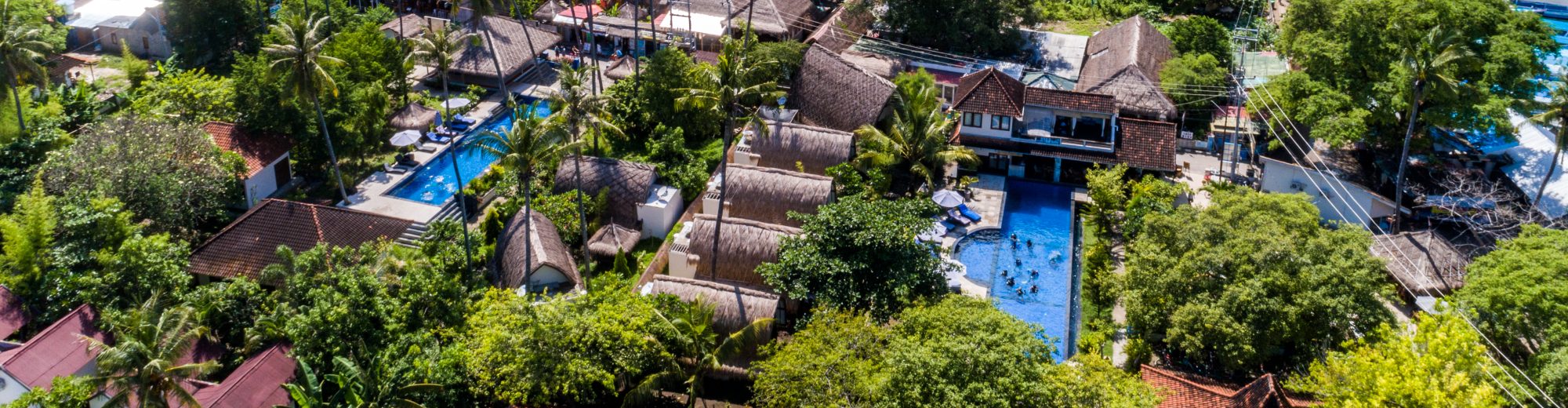
Oceans 5 dive resort offers Nitrox course. They start every day. If you are 12 year old and older and you have an Open Water Certification you can begin. Enjoy the tast of Nitrox!

Facts about Trumpetfish

TRUMPETFISH (Aulostomus chinensis)

Also known as Trumpet, Atlantic Trumpetfish, Caribbean Trumpetfish, Trumpeter and Painted Flutemouth. You can find them everywhere around the Gili Islands when you are snorkeling or divinvg.

The Trumpetfish can be recognised by its long body, tubular snout with minute teeth, its chin barbel and the series of short dorsal spines.Their bodies are inflexible, supported by interwoven struts of bone. The colouration of this species is variable. It is often brown or green with pale stripes and bars, and white spots posteriorly. A yellow colour variety is common in some areas. Individual fish have the ability to change their colours very quickly. Trumpetfish have the capability to rapidly expand their jaws into a circular gaping hole almost the diameter of their body when feeding.

The trumpetfish is the true master-hunter on the coral reef. Yes, this fish looks rather benign and yes it is a relative of the passive sea horses, but it is truly a fish-killing machine! The trumpetfish employ a variety of strategies to capture their fish neighbors. One of the most spectacular is referred to by fish behaviorists as “hunting by riding” (a.k.a. shadow stalking). This is where the trumpetfish uses another fish as a blind to sneak-up on its unsuspecting quarry. The hunter-extraordinaire will lie along the back of the larger fish as the latter swims over the reef. The species that the trumpetfish uses as a blind are usually large herbivores (e.g., parrotfishes) or omnivores (e.g., angelfishes). Because these species don’t cause small fish to flee (because they do not feed on them), the trumpetfish can hide behind them to get close. Once the distance between predator and its prey reaches a critical point, the trumpetfish will dart out from its living blind like an amphibious arrow! While it may look like the trumpetfish has a relatively small mouth, the floor of the narrow snout is very expandable, which enables it to distend so larger prey can pass into the stomach. If you see a trumpetfish while diving, stay back and watch it for a while. There is a good chance you will see it engage in this fascinating hunting behavior.

What is coral bleaching?

What is coral bleaching?

A coral colony is made up of numerous individual coral polyps. Corals use their tentacles to feed on zooplankton, but depend primarily on microscopic, algae known as zooxanthellae located inside their tissues to provide them with food. Corals are very dependent on this symbiotic relationship, receiving up to 90% of their energy from the zooxanthellae. Healthy corals usually appear tan, brown or green from the presence of the algae within their tissues. Some types of corals have additional pigments so may appear more blue or purple.

Coral bleaching is a stress response that occurs when the coral-algae symbiotic relationship breaks down. The term “bleaching’ describes the loss of color that results when zooxanthellae are expelled from the coral polyps or when chlorophyll within the algae are degraded. When the zooxanthellae leave the coral, the white of the coral skeleton is then clearly visible through the transparent coral tissue, making the coral appear bright white or ‘bleached’. Some corals, such as our lobe coral, have additional pigments in their tissue, so when they ‘bleach’ they may turn a pastel shade of yellow, blue or pink rather than bright white.

What causes coral bleaching?

Coral bleaching can be caused by a wide range of environmental stressors such as pollution, oil spills, increased sedimentation, changes in salinity, low oxygen, or disease. However, the primary cause of mass coral bleaching is increased sea temperatures. Corals are very sensitive animals so water temperatures need only increase 1-2 degrees Celsius above normal levels for bleaching to occur. The corals are still alive after bleaching but begin to starve. Most corals struggle to survive without their zooxanthellae. If the stressful conditions return to normal rather quickly, the corals can regain or regrow their zooxanthellae and survive. If the stressors are prolonged, the corals are more susceptible to disease, predation, and death because they are without an important energy source.
Not all corals are equally susceptible to bleaching. Fast-growing branching and plate corals are often the first to bleach and are more likely to die from bleaching. Slower growing massive corals usually take longer to bleach and tend to be able to survive for longer in the bleached state.

Past, Present… Future?

Localized coral bleaching has been recorded for over 100 years but only in the last 20 years have we seen mass coral bleaching events. Mass bleaching has now affected every reef region in the world. A particularly severe worldwide bleaching event occurred in 1998, effectively destroying 16 percent of the world’s reefs.

When coral bleaching causes extensive death of corals, recovery is very slow and dependent on new, young corals (called recruits) settling and growing on the reef. Regrowth of reefs that have been severely damaged by bleaching may take decades. Recovery is especially difficult for reefs in locations suffering from other stresses such as pollution, overfishing or other chronic pressures. The last coral bleaching event was in 2010 around the Gili Islands. A lot of corals specially in the shallow parts of Hans Reef, Halik and around Villa Ombak were highly affected.

Coral bleaching is predicted to occur much more frequently due to higher sea temperatures associated with global climate change. Human populations continue to grow placing more and more stress on the coral reefs. The time to protect our reefs is NOW before these valuable resources are lost forever.

Facts about Sea Snakes

Sea snakes are venomous reptiles that live most or all of their lives in the sea. They’re so adapted to life in the ocean that few species can crawl on land. They swim like eels with their paddle-like tail and laterally compressed body. Like marine mammals, they lack gills and must come to the surface to breathe.

Sea-snakes are cold-blooded reptiles, so they live mostly in warm tropical waters, like the Gili Islands. During the diving around the Gilis you will meet some Sea snakes. Sea snakes are fully adapted to breathe, feed, breed and grow in the sea. For air-breathing animals, sea-snakes are remarkable divers. Some species can dive to 100 metres or more, and remain submerged for up to 80 minutes. This may be partly due to the remarkable ability of some species to absorb part of the oxygen they need through their skins. Their nostrils have valves that close when they are under the water.

Sea snakes inject venom with their bites to subdue and kill prey, which is then grabbed in the jaws and swallowed whole. As with other snakes, the skullbones of sea-snakes are loosely attached and they can dislocate their lower jaws and slide them sideways to allowing them to swallow very large prey. Sea-snakes tend to be fussy eaters. Some only eat catfish, another only eats the eggs of two families of fish. Others dine on eels, fish, prawns, crabs and worms.

Sea snake venom is among the most venomous of all snakes, yet sea snakes rarely inject enough venom to significantly harm a person. In fact, very few human deaths from sea snakes have been reported. They prey mainly on fish and other sea creatures.

Sea snake venom has properties that may one day help in surgeries. Scientists are currently researching whether sea snake venom can be used as an anesthetic.

Female sea snakes sometimes attract attention from more than one suitor and mate in the open water. They give birth to live young at sea. The mother then leaves the young to fend for themselves.

No species of sea snakes are listed as threatened, although the distribution and status of most species is not very well known.

Facts about White tip reef sharks

Sharkpoint, West Gili Trawangan, Indonesia is one of the most exciting divesites around the Gili Islands. It takes 30 minutes by boat from Oceans 5 dive resort to get there. The main attraction are the White Tip Reef Sharks. You will find them between the 20 and 30 meters in the sandy patches between the reefs, mostly sleeping.

Description and Behavior

Whitetip reef sharks, Trianodon obesus, are a slender species with a short, blunt snout. They are brown-gray on their dorsal (top) sides, white on their ventral (lower) sides. They have scattered dark gray spots along the sides of their bodies.

The tips of their first dorsal fin and upper caudal (tail) fin lobe are brilliant white. The tip of their second dorsal fin and lower caudal fin lobe are also white in some animals. Spiracles usually present, teeth are tricuspidate (three-pronged, with a smaller secondary cusp on either side of the central blade) numbering 47-50 upper/44-46 lower jaw, in at least 2 functional rows.

This species is reported to grow to 2.3 meters in length but adults over 1.6 meters long are rarely seen. Maximum published weight is 18 kg and the maximum reported age is 25 years.

World Range and Habitat

Whitetip reef sharks are found in tropical marine waters, are most abundant on the fore-reef, and during daylight hours are often associated with coral reefs or lying on the bottom in caves and under ledges. Individuals often return to favored resting sites at the same times each day, often for several years. Highly social, these sharks often lie together in groups on the bottom, stretched out side-by-side and even stacked like chord wood. Home ranges of individuals are very small, typically only 0.5 km² or so.

In Australia they are recorded from northwestern Australia, around the tropical north and south to the Queensland coast. They are one of the most abundant species found near coral reefs, together with blacktip reef sharks, Carcharhinus melanopterus, and gray reef sharks, C. amblyrhynchos. They prefer shallow water, but have been found down to 330 m. These sharks live near the bottom or in caves and crevices. Compared to typical reef sharks (requiem sharks), this species swims in a more undulating manner. They are primarily nocturnal, but seem to be correlated with tidal ranges. They can be found in the same area for months (a few square kilometers) but territoriality is not known. They are sluggish inhabitants of lagoons and seaward reefs where they are often found resting in caves or under coral ledges during the day, or usually on a sand patch, or in a channel. They are more active at night or during slack tide in areas of strong currents. They are known to travel distances from about 0.3-3 km in periods up to about 1 year.

Feeding Behavior (Ecology)

Whitetip reef sharks feed nocturnally on benthic animals such as fishes, octopuses, spiny lobsters, and crabs. They have been observed feeding cooperatively at night at Cocos Island, Costa Rica, moving over the reef face like a phalanx of soldiers, flushing out sleeping prey. Foraging individuals often pause to wriggle their elongate bodies into crevices and under coral heads, twisting and turning violently and often breaking off coral and tearing their fins and skin. As such, the whitetip reef shark occupies a niche more like that of a moray eel than a typical shark.

Life History

One to five 60 cm young per litter. Mode: dioecism. Fertilization: internal (oviduct). Reproductive guild: internal live bearers. Description of life cycle and mating behavior: Viviparous, with 1-5 young per litter. Gestation is about 12 months. Size at birth 52-60 cm total length. Distinct pairing with embrace. One to 11 males follow a female until one gently nips her gill region; if she accepts him, he grasps one of her pectoral fins in his mouth and mates with her, their heads close together on the bottom and their bodies entwined and extending up into the water column at an angle of about 45 degrees. Mating typically lasts 1.5 to 3 minutes. They reach sexual maturity at an age of about 8 years and a length of about 1 m (males and females). Size at birth 52-60 cm total length.

Conservation Status and Comments

Check the Conservation Status of Whitetip Reef Sharks Note: if there are no entries found, it only means that this species has not yet been evaluated.

The whitetip reef shark is a curious species that often approaches divers. It is not considered dangerous to humans. Its restricted habitat, depth range, small litter size and moderately late age at maturity suggest that, with increasing fishing pressure, this species may become threatened .

Rarely reported to attack humans, but is potentially dangerous, particularly when when fish have been speared. Probably fished wherever it occurs (no data). Meat and liver utilized fresh for human consumption. The liver of this shark has been reported as toxic.
Facts about Moray Eel

The moray eel is a large species of eel found in warm and temperate waters all around the world. They are also around the Gili Islands. Despite their snake-like appearance, moray eels (along with other eel species) are in fact fish and not reptiles.

Moray eels are found in both deep and shallow waters in tropical and sub-tropical regions. Although moray eels can be find in cooler waters occasionally, they tend to remain in the crevices deep in the ocean rather than venturing into shore. The largest populations of moray eels are found around tropical coral reefs where they are numerous different marine species found in large numbers. Specially when you are diving the dive sites around the Gili Islands named Halik, Hans and Bounty wreck you will see them.

There are around 200 different species of moray eel than can range in size from just 10cm long to nearly 2 meters in length. Despite their varying size and colour all moray eels are fairly similar in appearance with an elongated body, slightly flattened towards the tail. Moray eels also have large eyes and mouths which contain large teeth.

The moray eel is a relatively secretive animal, spending much of its time hiding in holes and crevices amongst the rocks and coral on the ocean floor. By spending the majority of their time hiding, moray eels are able to remain out of sight from predators and are also able to ambush any unsuspecting prey that passes.

Like many other large fish, the moray eel is a carnivorous animal surviving on a diet that consists of only meat. Fish, molluscs including squid and cuttlefish and crustaceans such as crabs are the main source of food for the moray eel.

The moray eel is often one of the most dominant predators within its environment but moray eels are hunting by some other animals including other large fish like grouper and barracuda, sharks and humans.

Moray eels tend to mate when the water is warmest towards the end of the summer. Moray eel fertilisation is oviparous, meaning that eggs and sperm are fertilised outside of the womb, in the surrounding water, which is known as spawning. More than 10,000 eggs can be released at a time, which develop into larvae and become part of the plankton. It can take up to year for the moray eel larvae to have grown big enough to swim down to the ocean floor to join the community below

Facts about the Mandarin Fish

Mandarin fish

The Mandarin fish is a beautiful colourful fish. Oceans 5 dive resort is lucky to have 20-30 pieces of them in front of their House reef. But what do we know about them?

Design

The mandarinfish produces a thick mucous that covers its body. This mucous smells bad and tastes bitter. Scientists believe that this secretion could ward off potential predators. The bright colors of this fish could also give warning of its toxicity. These features may not have served this purpose until after the Fall of man since before the Fall all animals were vegetarian.

Features

■ The mandaranfish is distinguished by its bright colors and unusual shape.
■ Its body is primarily blue with orange, red, and yellow wavy lines.

Fun Facts

■ The mandarinfish does not have scales; instead it produces a stinky mucous that covers its body.
■ This fish is also called the mandarin dragonet.
■ Mating between mandarinfish involves a ritualized dance.
■ This is a very popular aquarium fish exported from the Philippines.

CLASS: Actinopterygii (ray-finned fishes)
ORDER: Perciformes (perch-like fishes)
FAMILY: Callionymidae (dragonets)
GENUS/SPECIES: Synchiropus splendidus

Size: Up to 6 cm in
Depth: Found at depths up to 18 meters
Habitat: Western Pacific tropical waters of the Philippines, Indonesia, Hong Kong, Australia, New Guinea, and the Ryukyu Islands in coral reefs and shallow lagoons

If you like to see the around the Gili Islands, and you like to dive with them, contact us, info@oceans5dive.com

Weekly reef clean up great success at Oceans 5 dive resort!

Diving around the Gili Islands is fantastic. To make your dives more joyable and to make you more aware about what garbage, rubbish can do with the underwater world, Oceans 5 organise every week beach and reef clean ups.

In the last few months we collected a lot of rubbish. And at his time we see more marinelife than before. A few days ago we spotted a white tip reef shark, a wonderpus and a few robust pipefish in the harbor. We are really happy that all our work and time results in a better reef and a broader awareness of reef conservation on the island.

But we are not there, there are many things that we individually can do! We can as divers create a good dive behavior, not touching and taking things away. We can improve our bouyancy. But even as a non diver you can help us to take some batteries we have back to the western world where they recycle them.

If you like to know more about Gili Air, eco projects or clean ups: info@oceans5dive.com

Emergency first response instructor course (EFRI) finished at Gili Air, Gili Islands.

Last week 5 candidates finished their Emergency First Response Instructor (EFRI) course here at Oceans 5 dive resort on Gili Air, Gili Islands, Indonesia.

The EFR Instructor courses at Oceans 5 dive resort are run throughout the year when demand dictates. Courses takes 1 or 2 days and includes all elements of primary and secondary care, use of the AED, the provision of Oxygen and Care for Children. This course is open to anyone who has the provider qualifications. There is no requirement to be a diving instructor to undertake this training course. Prerequisites: To enter the Emergency First Response Instructor course, you must be 18 years old and have completed adult, child and infant CPR and first aid training in the past 24 months or a be a practicing medical professional such as a physician, Emergency Medical Technician, Paramedic and Registered Nurse.

If you like to have more information about EFR instructor courses, EFR courses, or EFR update programes please contact us: info@oceans5dive.com

Beach and reef clean ups during high season at Oceans 5 dive resort Gili Air

It were busy times the last few week at the Gili Islands. So didnt had time to write about the weekly beach and reef clean ups at Oceans 5 dive resort.

But even during the high season there were beach and reef clean ups. The result is there! The reef in front of Oceans 5 dive resort has a lot of nice creatures. Yesterday we saw during a divemaster trainee workshop 2 times a wonderpus totally free. But if you like seahorses, pipefish, gurnets, all kind of lionfish, some nudis or flatworms, the Oceans 5 house reef is a great one to dive.

Oceans 5 like to thank Peter and Daniel who organised all the clean up during high season. But we dont want to forget all the people who joined and helped us to get a better and cleaner reef! Thank You!!!!