Tag Archives: indonesia

Facts about Sail Fish

Atlantic sailfish (Istiophorus albicans)

Description

The Atlantic sailfish (Istiophorus albicans) cuts a truly striking profile, taking its name from the large and distinctive dorsal fin which runs along the length of its body. When extended, the dorsal fin is taller than the width of the body

The Atlantic sailfish (Istiophorus albicans) cuts a truly striking profile, taking its name from the large and distinctive dorsal fin which runs along the length of its body. When extended, the dorsal fin is taller than the width of the body, and, with its pronounced upper jaw that is modified into a long, circular bill, an elongate torso and a strongly forked tail fin, this fish is one of the most magnificent of all ocean creatures.

Read more…

Facts about Black Marlins


Black marlin (recently reclassified as Istiompax indica, after formerly being known as Makaira indica) are considered by many authorities to be amongst the world’s premiere game fish. They certainly have size on their side, with the all tackle world record black marlin weighing in at 1560lb (707.6kg) taken by Alfred Glassell way back in 1953 off Cabo Blanco, Peru. Experienced skippers have reported seeing, and sometimes becoming connected to, black marlin that were probably even larger than Glassell’s catch, perhaps even approaching the size of some of the biggest blue marlin (Makaira nigricans). The latter have been caught on rod and reel up to 819 kg and are known to grow to at least 900 kg and possibly over a tonne, based on commercial catches of fish over this size.

Genetic evidence suggests that black marlin are more closely related to striped/white marlin than blue marlin, the latter being more closely related to sailfish. Compared to other marlin, black marlin are more solidly built with a relatively short bill and a lower, rounded dorsal fin. Black marlin can also be easily distinguished from other marlins as they are the only marlin that have rigid pectoral fins that cannot be folded flat against the body.

This oceanic pelagic species is distributed throughout the tropical Indian and Pacific Oceans and is found in surface waters above the thermocline at temperatures from 15 to 30°C. A few days ago 6 Black Marlins were spotted between Gili Meno and Gili Air, Lombok, Indonesia. Black marlin migrate huge distances and relatively small tagged fish have been recaptured after travelling over 8000 km. Occasionally they will enter temperate waters, and small numbers sometimes stray into the Atlantic Ocean by way of the Cape of Good Hope, although the existence of Atlantic breeding stocks is unlikely. Despite their oceanic environment, large back marlin can sometimes be encountered very close to land, particularly near offshore islands and coral reefs, while juveniles commonly range closer inshore and can even be caught by landbased game anglers at specific locations when conditions are right.

Read more….
Do you like to dive in Plastic?

If you have a choice to dive in a soup of plastic, the smell of petrol around you, seeing more rubbish than fish or diving in crystal clear water? The choice is easy isn’t it?

857355_10151433050608361_1522705639_o

Marine debris also affects reefs in many areas. Marine debris is any human-made object that is discarded, disposed of, or abandoned that enters coastal and ocean waters. Debris may enter directly from a ship or indirectly when washed out to sea via rivers, streams, and storm drains. Hundreds of human-made items end up as marine debris, including plastics (from bags to balloons, hard hats to fishing line), glass, metal, rubber (millions of tires!), and even entire vessels.

Read more….

Facta about Stargazers

Stargazers (Uranoscopidae)

Stargazers are named for their peculiar appearance with eyes positioned dorsally on the head, usually with protruding eyes that are directed upward. The body is moderately elongate and depressed anteriorly. The large head is almost entirely encased in sculptured bones and also flattened. The large, nearly vertical mouth is equipped with small teeth and there is a peculiar respiratory valve inside the lower jaw that functions as a lure for attracting fish prey. The lips are fringed with numerous papillae in most species. They are also numerous tiny cirri along the fleshy posterior margin of the operculum. The gill openings are very broad and equipped with dorsal, valve like openings, which aid respiration when partially buried. A stout cleithral spine situated just behind each dorsal gill opening. This spine is venomous in at least some species and serious injuries have been reported.

Read more…..

Facts about Goatfish

a href=”http://www.oceans5dive.com/blog/wp-content/uploads/2013/01/goat-fish-gili-islands.jpg”>

Goatfish (Mullidae)

Goatfish are common in all tropical and warm temperate seas, like around the Gili Islands, Lombok, Indonesia, forming an integral component of the reef fish community throughout the Indo Pacific region. Their distincive appearance includes a slender shape, relatively elongate, pointed snout, a small. slightly ventral, protrusible mouth with maxilla partially hidden under the preorbital, finely ctenoid, moderately large scales, two well separated dorsal fins ans a pair of barbels or chin “whiskers”.

Read more…

New guests at Oceans 5

A few day ago a fishermen arrived in the early morning at Oceans 5 with a few plastic buckets. He asked us if we could do  something for the little turtels he bought.

We were surpised what we saw. In the plastic buckets were around a`100 baby turtles, just born, and very small. He told us if we didnt do anything that these turtles are going to the fish market in Lombok.

Oceans 5 bought the turtles but told the fishermen that this was the only and last time that we pay for turtles.

Nun, one of staff members and an expert in turtles caring, will take care of the 100 little baby ones. We will observe them carefully, and monitor their growth.

At this moment we are building for the turtles a  new houses, so that the can grow up stress free.

By Oceans 5 dive resort

Climax of Volleyball Tournament Gili Air

Tonight we all will know! Who is the best volleyball team of Gili Air 2011!

All teams of the tournament did an amazing job, but tonight the best 2 teams are in the final! The teams are Sultan and Villa Karang. Both team have brilliant players and its hard to tell which one takes the trophy back to home.

The final start at 17.00 at the volleyball court of Oceans 5 dive resort. If you want to support your team you are more than welcome….

Dive Gili Air: Gili Islands Dive Resort Oceans 5 supports Reef Check survey January 2011

From 28-30 January 2011, our friends from Reef Check Foundation Indonesia visited the Gili Islands again to monitor the development of the reef prior to bleaching and to have a better understanding of the resilience and recovery level of the reef.
We conducted a post bleaching survey, to identify how the reefs respond the increased temperature last mid year. The result of the survey is really important in providing information for reef managers to determine the right measure in managing coral reef under the warming climate.
Reef Check monitored Hans Reef and the snorkel area in front of Chill out bar in Gili Air and Halik reef, Rainbow reef on Gili Trawangan and Meno slope with help of Oceans 5 and the Gili Eco Trust.
Soon the results of the survey will be published.
Check out: http://www.reefcheck.or.id/ for more information about Reef Check Indonesia.

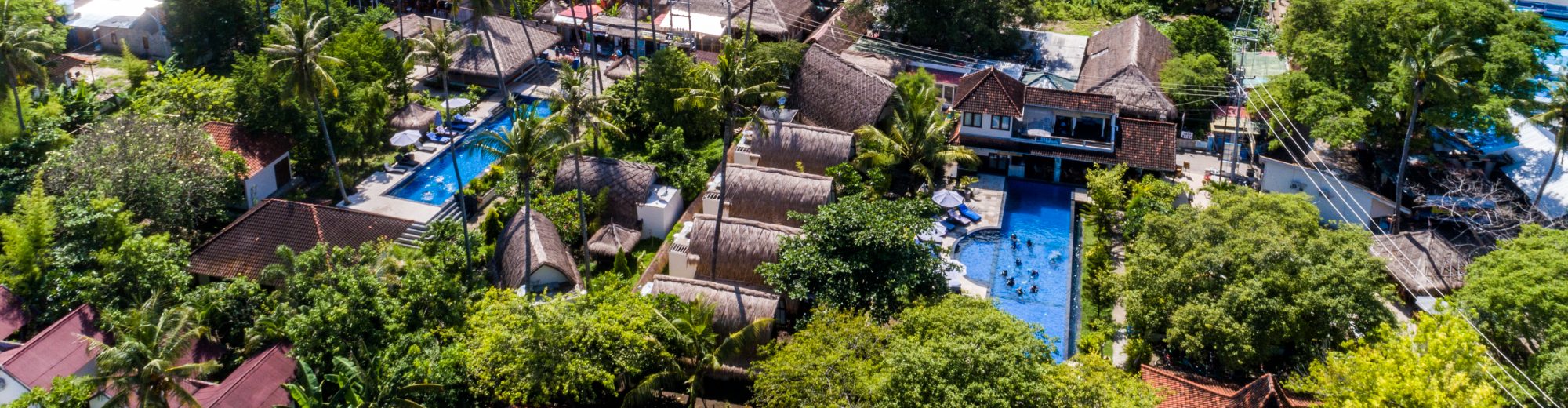
http://www.oceans5dive.com