Tag Archives: gili air

New Years Eve At Gili Air, Indonesia

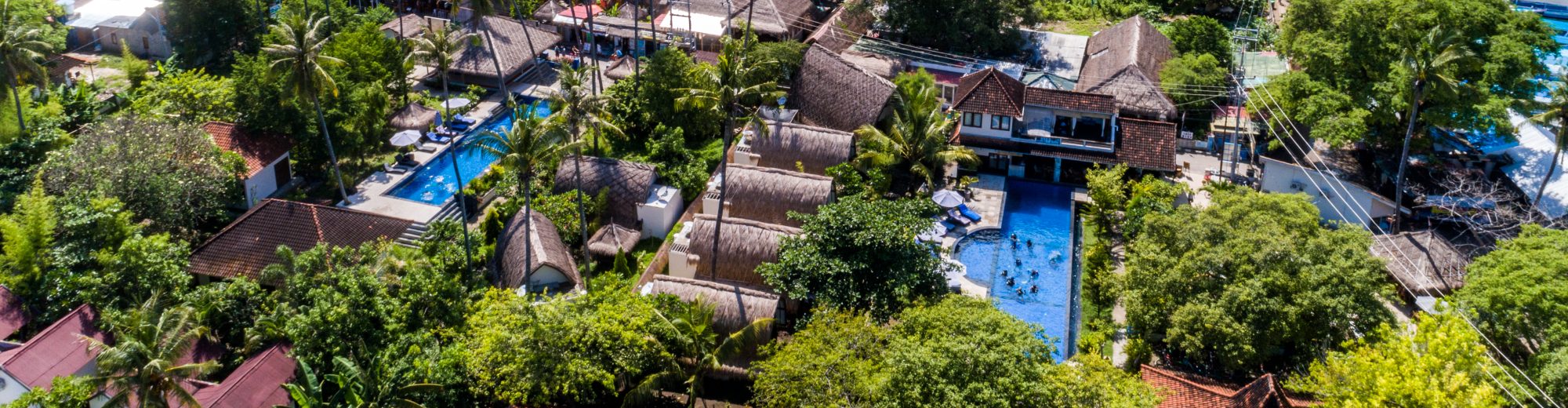
Oceans 5 dive resort Gili Air organized New Years Eve a dinner for friends. Friends of all over the world were joining us; Spain, England, Australia, Netherlands, Belgium, Germany, France, Sweden, Norway, Indonesia etc…

The dinner was a roasted chicken, specialty of one of our dearest friend Madjid. He prepared the last 2 days of 2012 this meal.

Oceans 5 likes to thank all the people who where there and our staff for an unforgettable night.

It was a long a messy night afterwards! šŸ™‚

See you all next year!

Release of the Hawksbill Sea Turtle at Gili Air

It was time for their release. After being at Oceans 5 for 8 months these Hawksbill sea turtles were ready to return to their home, The Ocean.

The people who were taking care of them, Nun, Uding and Bahry, helped to get the turtles to the beach. There they were released! Some of them were shy and didnt know what to do with their freedom, other enjoyed the first minute and run into the ocean as it was not new for them.

A new adventure has started for them, they have to swimm and catch their own food. Hopefully we see them in the future underwater! Enjoy your stay turtles, see you soon.

Facts about the Giant Trevallie

Description

All twenty-five species of trevally have elongated, compressed bodies and deeply forked caudal fins, with long, sickle shaped pectoral fins. The Giant Trevally (also known as the ulua, ronin jack and ā€œGTā€) is the most prized of the species by anglers and is identifiable by an ovoid patch of small scales located on the breast ahead of the ventral fins. Coloration for the Giant Trevally can range from silvery-white to almost jet-black.

The Giant Trevally uses its superior swimming abilities and power to hunt and smash baitfish. The Giant Treavally is known for stunning prey with its first strike and then circling back to engulf the wounded and/or disoriented baitfish. They will usually devour the prey quickly with one bite, as competition can be fierce from other members of the pack. As they grow, larger specimens move to deeper water and congregate over coral reefs and other underwater structure. Giant Trevally also venture onto flats, headlands and shallow water to hunt food. Giant Trevallies can be found along the reef edge and points where large pounding swells crash on the reef and rocks stirring up food and creating the ideal environment to hunt.

Pound for pound, these are among the hardest-fighting fish in the sea. The current record comes from a plug cast from shore in Japan. Fishing for trevally is best in hotspots like the Seychelles and the edge of the outside reef at Christmas Island, which is also a world-class bonefishing destination.

Average Length

23 inches – 5 feet

Average Weight

30 – 60 lbs

Habitat

The Giant Trevally ranges from estuaries to coral reefs. Juvenile fish are prevalent in estuaries and river systems.


.

Range

Distribution is widespread. They’re found in the warm tropical waters of the Pacific and Indian Oceans as far south as New South Wales in Australia, east to the Hawaiian Islands, west to the eastern islands of Africa and north to Japan. You will find Giant trevallies on the dive sites around the Gili Islands. Specially Deep Turbo, Halik and Sharkpoint are famous for seeing the trevallies.
. .

Whats the primary benefit of using enriched air (nitrox)?

Why Nitrox?

Nitrox exposes you to less nitogen. This has the advantages of longer allowable bottom times, less need to push the air no decompression limits and less overall nitogen load when making multiple dives.

Oceans 5 dive resort offers Nitrox course. They start every day. If you are 12 year old and older and you have an Open Water Certification you can begin. Enjoy the tast of Nitrox!

What is coral bleaching?

What is coral bleaching?

A coral colony is made up of numerous individual coral polyps. Corals use their tentacles to feed on zooplankton, but depend primarily on microscopic, algae known as zooxanthellae located inside their tissues to provide them with food. Corals are very dependent on this symbiotic relationship, receiving up to 90% of their energy from the zooxanthellae. Healthy corals usually appear tan, brown or green from the presence of the algae within their tissues. Some types of corals have additional pigments so may appear more blue or purple.

Coral bleaching is a stress response that occurs when the coral-algae symbiotic relationship breaks down. The term ā€œbleaching’ describes the loss of color that results when zooxanthellae are expelled from the coral polyps or when chlorophyll within the algae are degraded. When the zooxanthellae leave the coral, the white of the coral skeleton is then clearly visible through the transparent coral tissue, making the coral appear bright white or ā€˜bleached’. Some corals, such as our lobe coral, have additional pigments in their tissue, so when they ā€˜bleach’ they may turn a pastel shade of yellow, blue or pink rather than bright white.

What causes coral bleaching?

Coral bleaching can be caused by a wide range of environmental stressors such as pollution, oil spills, increased sedimentation, changes in salinity, low oxygen, or disease. However, the primary cause of mass coral bleaching is increased sea temperatures. Corals are very sensitive animals so water temperatures need only increase 1-2 degrees Celsius above normal levels for bleaching to occur. The corals are still alive after bleaching but begin to starve. Most corals struggle to survive without their zooxanthellae. If the stressful conditions return to normal rather quickly, the corals can regain or regrow their zooxanthellae and survive. If the stressors are prolonged, the corals are more susceptible to disease, predation, and death because they are without an important energy source.
Not all corals are equally susceptible to bleaching. Fast-growing branching and plate corals are often the first to bleach and are more likely to die from bleaching. Slower growing massive corals usually take longer to bleach and tend to be able to survive for longer in the bleached state.

Past, Present… Future?

Localized coral bleaching has been recorded for over 100 years but only in the last 20 years have we seen mass coral bleaching events. Mass bleaching has now affected every reef region in the world. A particularly severe worldwide bleaching event occurred in 1998, effectively destroying 16 percent of the world’s reefs.

When coral bleaching causes extensive death of corals, recovery is very slow and dependent on new, young corals (called recruits) settling and growing on the reef. Regrowth of reefs that have been severely damaged by bleaching may take decades. Recovery is especially difficult for reefs in locations suffering from other stresses such as pollution, overfishing or other chronic pressures. The last coral bleaching event was in 2010 around the Gili Islands. A lot of corals specially in the shallow parts of Hans Reef, Halik and around Villa Ombak were highly affected.

Coral bleaching is predicted to occur much more frequently due to higher sea temperatures associated with global climate change. Human populations continue to grow placing more and more stress on the coral reefs. The time to protect our reefs is NOW before these valuable resources are lost forever.

Facts about Razor Fish

Diving around the Gili Islands gives you the oppurtunity to see unusual fish, like the Razor fish. You will find the in the harbor of Gili Air, in the front of Oceans 5 dive resort.

These are small, unusually shaped fish that are related to pipefish and seahorses. They are characterised by an extremely thin or flattenend and nearly transparent body, which is encased in an integument of thin, sutured plates. The unusual appearance is further enhanced by their peculiar vertical orientation with the snout pointing downwards. However they are capable of rapid bursts of horizontal swimming when chased by a diver or preditor. Razor fish often occur in large synchronised groups, sometimes containing more than 50 individuals. The family is restricted to the tropical Indo Pacific region and contains two genera and four species, 3 of which occur in the East Indian region.

The fish’s diet consists of a variety of zoo-plankton and minute crustaceans. When in captivity, it is fed bait shrimp and a variety of small, live marine food. It swallows its food whole. This fish, like its closest relative, the seahorse, is toothless. As a young fish, it is prey to many larger fish. As an adult, however, the fish is thought to have little, if any, predators. This is thought to be because of its great camouflage and its “armor”. The life span of the fish, unlike the reproduction method, is unknown.

Maximium size to about 14 cm. Pale yellowish brown on the back and white on lower half with dark brown to black stripe from snout, through eye, to base of caudal fin. Sometimes seeks refuge among sea urchin spines.

Facts about Moray Eel

The moray eel is a large species of eel found in warm and temperate waters all around the world. They are also around the Gili Islands. Despite their snake-like appearance, moray eels (along with other eel species) are in fact fish and not reptiles.

Moray eels are found in both deep and shallow waters in tropical and sub-tropical regions. Although moray eels can be find in cooler waters occasionally, they tend to remain in the crevices deep in the ocean rather than venturing into shore. The largest populations of moray eels are found around tropical coral reefs where they are numerous different marine species found in large numbers. Specially when you are diving the dive sites around the Gili Islands named Halik, Hans and Bounty wreck you will see them.

There are around 200 different species of moray eel than can range in size from just 10cm long to nearly 2 meters in length. Despite their varying size and colour all moray eels are fairly similar in appearance with an elongated body, slightly flattened towards the tail. Moray eels also have large eyes and mouths which contain large teeth.

The moray eel is a relatively secretive animal, spending much of its time hiding in holes and crevices amongst the rocks and coral on the ocean floor. By spending the majority of their time hiding, moray eels are able to remain out of sight from predators and are also able to ambush any unsuspecting prey that passes.

Like many other large fish, the moray eel is a carnivorous animal surviving on a diet that consists of only meat. Fish, molluscs including squid and cuttlefish and crustaceans such as crabs are the main source of food for the moray eel.

The moray eel is often one of the most dominant predators within its environment but moray eels are hunting by some other animals including other large fish like grouper and barracuda, sharks and humans.

Moray eels tend to mate when the water is warmest towards the end of the summer. Moray eel fertilisation is oviparous, meaning that eggs and sperm are fertilised outside of the womb, in the surrounding water, which is known as spawning. More than 10,000 eggs can be released at a time, which develop into larvae and become part of the plankton. It can take up to year for the moray eel larvae to have grown big enough to swim down to the ocean floor to join the community below

Facts about Barracudas

When you are diving around the Gili Islands you have a chance to see at the divesites Sharkpoint, Hans or Halik the Barracuda. Also in the evenings when you pass all the BBQ places for dinner, the barracuda is one of the most seen dishes. But how does it looks like?

Description

The great barracuda has a slender, streamlined body that is round in the mid-section. The top of the head between the eyes is nearly flat and the mouth is large, containing many large sharp teeth and a projecting lower jaw. The pectoral fin tips extend to the origin of the pelvic fins. The spinous and soft dorsal fins are widely separated and the double emarginate tail fin exhibits pale tips on each lobe. Body coloration of the great barracuda is brownish or bluish gray on the dorsum and upper side, with a greenish cast shading to silvery on the sides and a white belly. The upper side may have 18-23 dark bars most often observable when the fish is resting or over a variegated substrate. The black spots on the lower sides of the great barracuda distinguish it from other species of barracuda. The second dorsal fin, anal, and caudal fins are violet to black with whitish tips. Young barracuda exhibit pale reticulations on the dorsum and a dark stripe on either side that breaks into spots as the fish grows. These patterns are somewhat ephemeral though as juveniles can alter their color patterns to closely match that of their surroundings. These changes in coloration serve to camouflage the fish from predators as well as well as wary prey. Adults have similar coloration along with a more silvery appearance that is advantageous to a fish that swims near the surface of the water.

Habitat

Great barracuda commonly occur in nearshore coral reefs, seagrasses, and mangroves. They may also reside in the open ocean, living predominantly at or near the surface, although they are at times found at depths to 100 meters. Barracudas tend to be solitary but are sometimes found in small aggregations over reefs and sandy bottoms. Juveniles mature amongst mangroves and seagrass beds, habitats that offer cover from predators. During the second year of life, barracuda move to deeper reef habitats. Juveniles and some adults have been observed in areas that receive high amounts of freshwater input, however adults generally tend to avoid areas of brackish water.

Diet

Great barracudas feed on an array of prey including fishes such as jacks, grunts, groupers, snappers, small tunas, mullets, killifishes, herrings, and anchovies. Barracudas have a large gape and very sharp teeth, enabling them to feed on large fishes by chopping them in half. An opportunistic predator, great barracuda feed throughout the water column. Generally a diurnal fish, great barracuda locate their prey largely by sight. The body plan of the great barracuda is designed for speed and it is estimated that top speed for the species may be as fast as 60 km/h.

Fishery

Although not prized as a commercial fish in North American waters, the great barracuda puts up a good fight and is therefore esteemed by some anglers as a gamefish. They may be caught with a variety of gear including handlines, rod and reel, seines, trammel nets, and gill nets. The great barracuda has been implicated in cases of ciguatera poisoning within certain areas of its range. Ciguatera poisoning is caused by the bioaccumulation of ciguatoxins in the flesh of tropical marine fishes. Ciguatoxins are produced by marine dinoflagellates that grow attached to marine algae and as such may be incidentally ingested by herbivorous fishes. Large piscivorous reef dwelling fishes occupying the apex of the food chain become reservoirs for the highest amounts of ciguatoxin by feeding on other members of the reef community. Poisoned people report gastrointestinal maladies that may last several days, a general weakness in their arms and legs, and a reversal in the ability to differentiate hot versus cold. The illness is serious and symptoms may persist for weeks.

Size

Great barracuda are large fish. The record for a hook and line caught great barracuda is 1.7 meters, 44 kg and the species is reported to attain a size of 2 meters, 50 kg. Any barracuda over 4.8 feet (1.5 m) in length can be considered very large. Based on scale analysis of large specimens, great barracuda have a lifespan of at least 14 years. Sexual maturity is reached at a length of about 60 cm.

Range

Occurring worldwide in near shore tropical and subtropical seas (30°N – 30°S), the great barracuda is common in the western Atlantic Ocean from Massachusetts (U.S.) to Brazil. It is also found in the Gulf of Mexico and the Caribbean Sea as well as the eastern Atlantic Ocean, Indo-Pacific, and the Red Sea. It is rare or absent in areas of the eastern Pacific Ocean.

For mor information: http://www.oceans5dive.com
Facts about Scorpion fish

A scorpion fish is a group of predatory, marine fish that are found amongst coral reefs and in shallow waters in the more temperate oceans. The scorpion fish is most closely related to the lionfish and is most commonly found in the Indian and South Pacific oceans. You can find them if you dive around the Gili Islands at the dive sites Hans reef, Halik and the Bounty. Oceans 5 dive resort finds almost every dive a scorpion fish.

There are more than 200 recognised species of scorpion fish, hiding amongst the ocean reefs and in artificial aquariums around the world. Scorpion fish are kept in tanks by numerous people because of their interesting appearance and behaviour.

The body of the scorpion fish is often cover in feathery fins that help the scorpion fish to camouflage itself into the surrounding coral. The colours and markings of the scorpion fish are also used to help the scorpion fish to hide.

Scorpion fish are nocturnal predators, and spend the daylight hours resting in a hidden crevice in the coral. Scorpion fish are also able to ambush their prey from this position and often catch small fish by surprise.

Scorpion fish are omnivorous fish and hunt small fish, crustaceans and snails on the coral reefs. Scorpion fish are able to stun their prey with their venom before eating it. Scorpion fish also use their venomous sting to fend off unwanted predators.

The scorpion fish is a very dominant predator in it’s environment, and therefore the scorpion fish has very few natural predators. The human catching the scorpion fish to keep in tanks is the biggest threat to the scorpion fish along with habitat loss from the destruction of coral reefs. Large fish and sea lions are also known to hunt scorpion fish.

The female scorpion fish releases between 2,000 and 15,000 eggs into the water which are fertilised by the male scorpion fish. The scorpion fish pair then quickly hide so that their eggs can float into the ocean before being spotted by predators that eat the eggs. The scorpion fish eggs hatch in just 2 days and the tiny scorpion fish fry remain near the surface of the water until they are bigger. When the scorpion fish fry reach nearly an inch in length, they swim down into the ocean to join the reef community.

Facts about the Mandarin Fish

Mandarin fish

The Mandarin fish is a beautiful colourful fish. Oceans 5 dive resort is lucky to have 20-30 pieces of them in front of their House reef. But what do we know about them?

Design

The mandarinfish produces a thick mucous that covers its body. This mucous smells bad and tastes bitter. Scientists believe that this secretion could ward off potential predators. The bright colors of this fish could also give warning of its toxicity. These features may not have served this purpose until after the Fall of man since before the Fall all animals were vegetarian.

Features

ā–  The mandaranfish is distinguished by its bright colors and unusual shape.
ā–  Its body is primarily blue with orange, red, and yellow wavy lines.

Fun Facts

ā–  The mandarinfish does not have scales; instead it produces a stinky mucous that covers its body.
ā–  This fish is also called the mandarin dragonet.
ā–  Mating between mandarinfish involves a ritualized dance.
ā–  This is a very popular aquarium fish exported from the Philippines.

CLASS: Actinopterygii (ray-finned fishes)
ORDER: Perciformes (perch-like fishes)
FAMILY: Callionymidae (dragonets)
GENUS/SPECIES: Synchiropus splendidus

Size: Up to 6 cm in
Depth: Found at depths up to 18 meters
Habitat: Western Pacific tropical waters of the Philippines, Indonesia, Hong Kong, Australia, New Guinea, and the Ryukyu Islands in coral reefs and shallow lagoons

If you like to see the around the Gili Islands, and you like to dive with them, contact us, info@oceans5dive.com